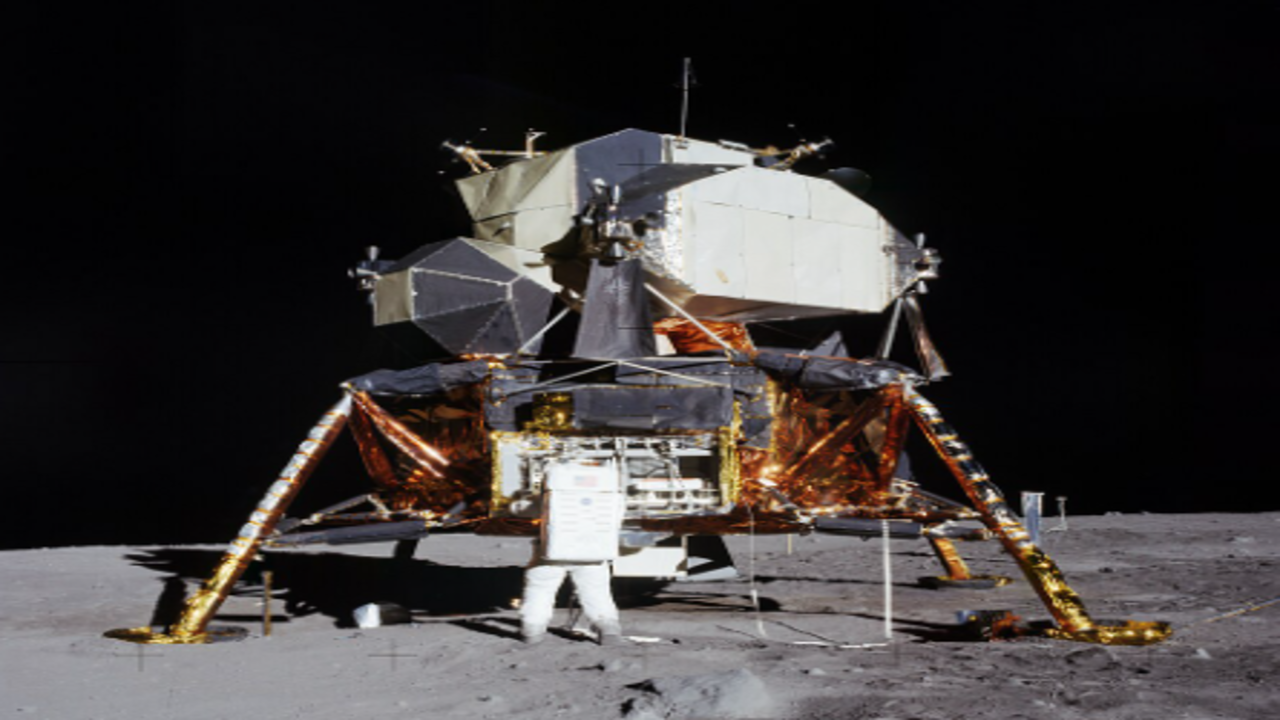
When Neil Armstrong and Buzz Aldrin stepped onto the Sea of Tranquility in July 1969, they deployed several scientific instruments during their moonwalk, including one designed not to study rocks or footprints but to detect seismic activity on the Moon. It was a seismometer, the first instrument placed on another world to detect the equivalent of earthquakes. That single, short-lived experiment marked the beginning of lunar seismology, a field that eventually let scientists build a detailed picture of what lies beneath the Moon's surface, though it took data from several later missions, not Apollo 11 alone, to complete that picture.
Get breaking news anytime, anywhere. Download the TOI app now!
The instrument Armstrong and Aldrin deployed was called the Passive Seismic Experiment. As described on NASA's official science page for the device , it packed four separate seismometers, three long-period sensors and one short-period vertical sensor, into a single unit powered by two solar panels. The device was also sensitive enough to measure the vibrations produced by the movement of the astronauts as well as the activities of people around the lander. When activated, it sent seismic measurements back to receiving stations on Earth, enabling researchers to examine the magnitude, duration, and origin of the events.
Because it was powered by sunlight and lacked thermal control, it could operate only during lunar daytime. This, along with the intense lunar noon heat, ended the experiment. NASA's report states that the instrument package ceased responding to commands at 0400 UT on 25 August 1969, probably due to overheating.
Short but memorable period
Twenty days might seem insignificant, but that period was enough to show that seismology could be applied to other celestial bodies. In its description of the scientific findings from the Apollo program, NASA mentions that the Passive Seismic Experiment discovered moonquakes and provided scientists with information about the internal structure of the Moon, as summarized on NASA's astrobiology mission page . During its short operational life, the same instrument detected an estimated 100 to 200 meteorite impacts, while the later Apollo network detected 1,700 meteoroid impacts over a longer service period.
Recognizing the value of the short dataset, NASA developed improved designs for the instrument. The later seismometers were powered by radioisotope thermoelectric generators, fitted with improved thermal regulation, and installed at the Apollo 12, 14, 15, and 16 landing sites. In contrast to the Apollo 11 instrument, the more advanced seismometers deployed at the Apollo 12, 14, 15, and 16 landing sites operated as a long-duration network and transmitted data to Earth until September 1977, according to the NASA Astrobiology mission page for Apollo 11.
Constructing the detailed map
The map we have today of the Moon’s interior was built from this joint effort, which began with Apollo 11. NASA technical report from the mission's science teams, Results From the Apollo Passive Seismic Experiment , available through the NASA Technical Reports Server , documents how researchers used the accumulated seismic data to trace how energy from moonquakes and impacts traveled through the Moon's crust, mantle, and core, revealing a layered interior with a crust, mantle, and core, while also showing that the Moon is smaller, less seismically active, and thermally more evolved than Earth.
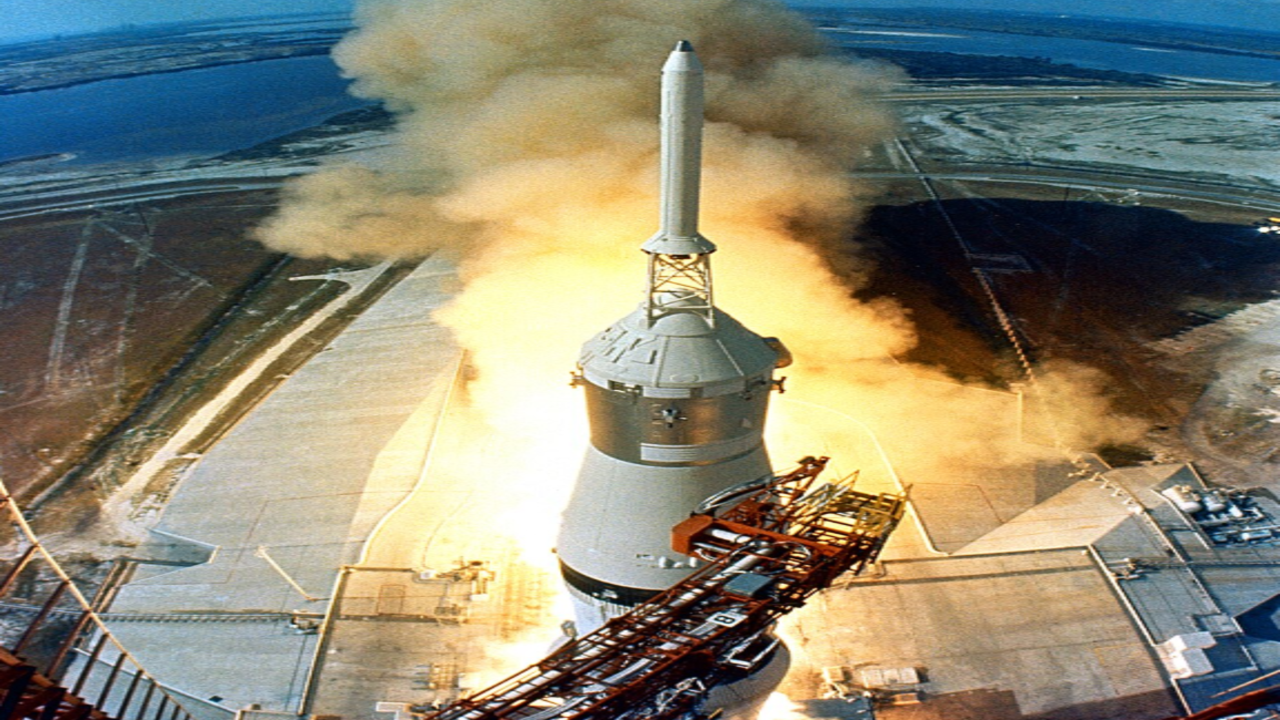
Over almost eight years, this network recorded many thousands of seismic events, including deep and shallow moonquakes, artificial impulses, and more than a thousand meteoroid impacts. The most common type of moonquake was the deep kind, which occurred hundreds of kilometers below the surface and repeated at specific phases of the Moon’s tidal cycle. Another, rarer type of moonquake was the shallow kind, which occurred closer to the surface and may have been caused by tectonic activity within the lunar crust. Analysis of wave propagation and attenuation helped scientists understand the thickness of the lunar crust, distinguish it from the mantle below, and detect the presence of a tiny core inside the Moon, information that could not have been discovered by Apollo 11 alone in just 20 days.
A timeless basis for continued discoveries
More than fifty years later, the information gained from Apollo 11’s initial measurements and the subsequent missions remains a source of discovery. Modern researchers re-evaluate the old records using up-to-date methods of computation, finding signals that were not analyzed properly before. While Armstrong and Aldrin’s passive seismology experiment during their first spacewalk on the Moon was small-scale and short-lived, it helped launch an entire field of study.