Get all your news in one place.
100’s of premium titles.
One app.
Start reading
Reuters
Reuters
Science
Joey Roulette

Apollo 11 astronaut returns to launch pad where first humans lifted off for the moon

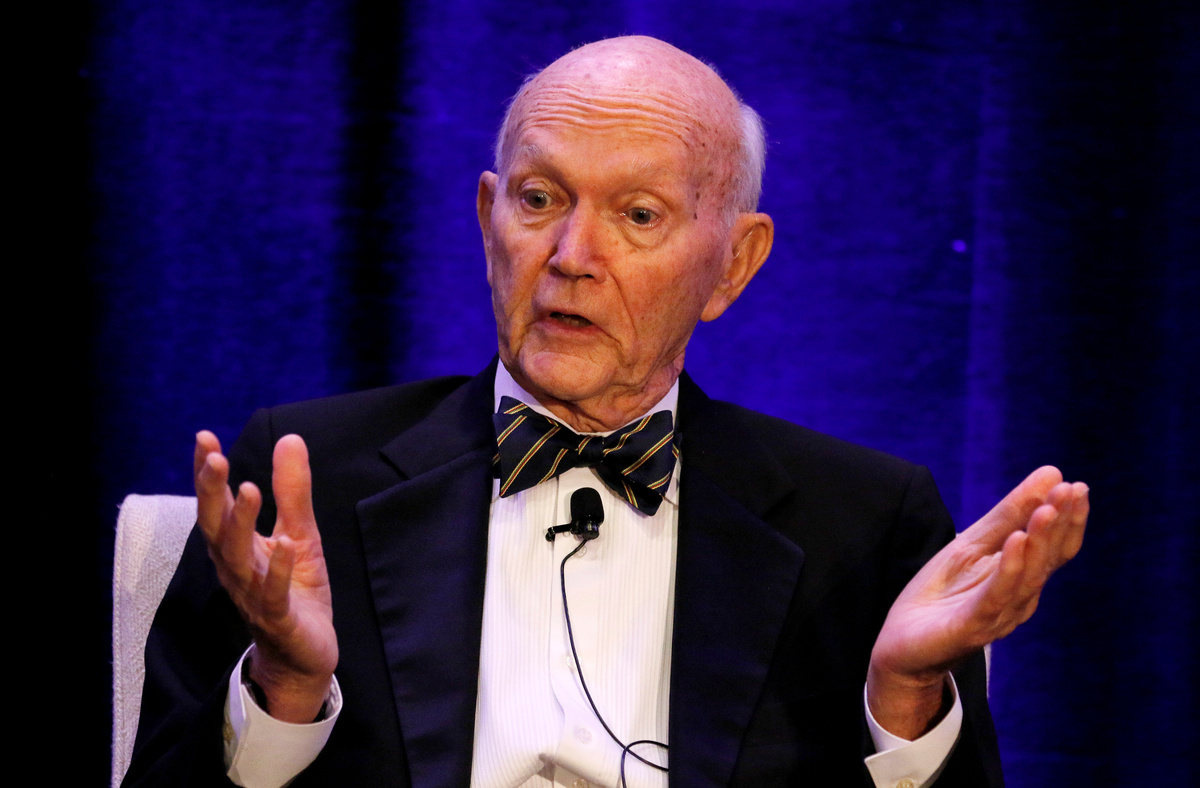
Apollo 11 astronaut Michael Collins speaks at a panel discussion on the 50th anniversary of the launch, in Cocoa Beach, Florida, U.S., July 16, 2019. REUTERS/Joe Skipper

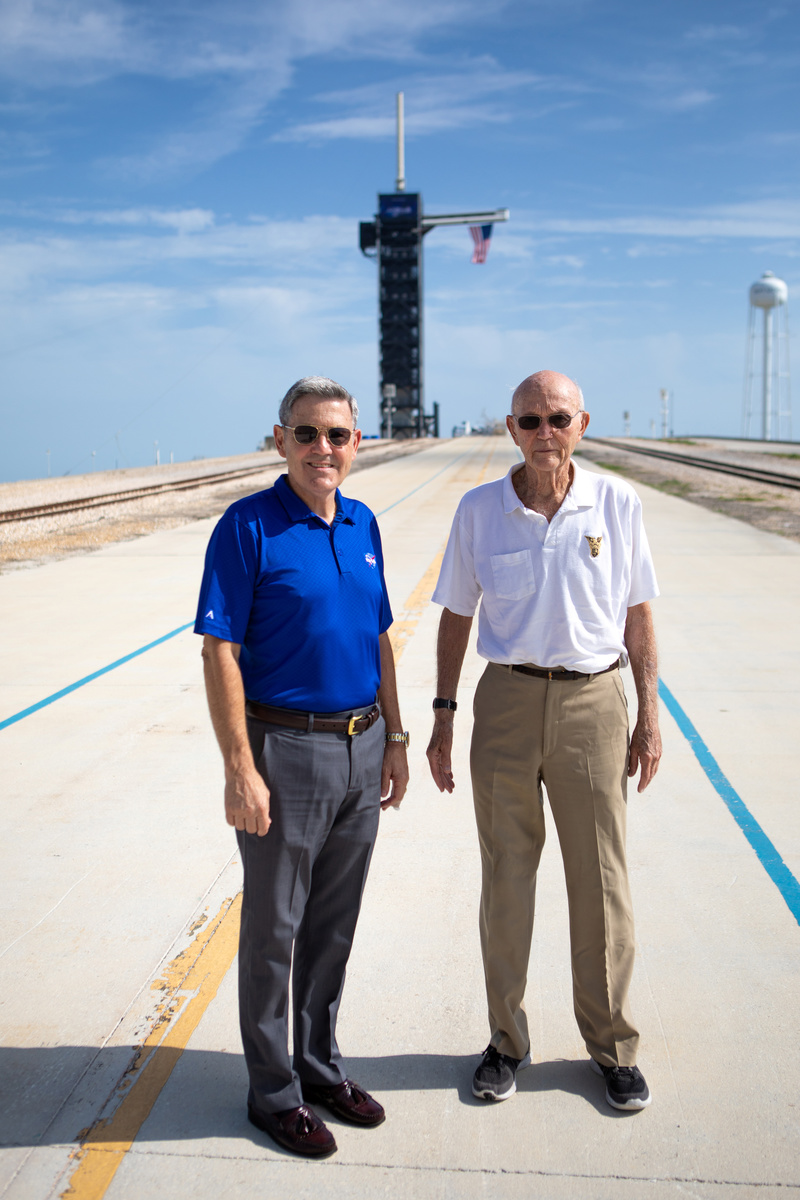
CAPE CANAVERAL, Fla. (Reuters) - Apollo 11 astronaut Michael Collins returned to the launch pad Tuesday at NASA’s Kennedy Space Center in Florida where he flew to the moon 50 years ago along with the late Neil Armstrong and Buzz Aldrin.

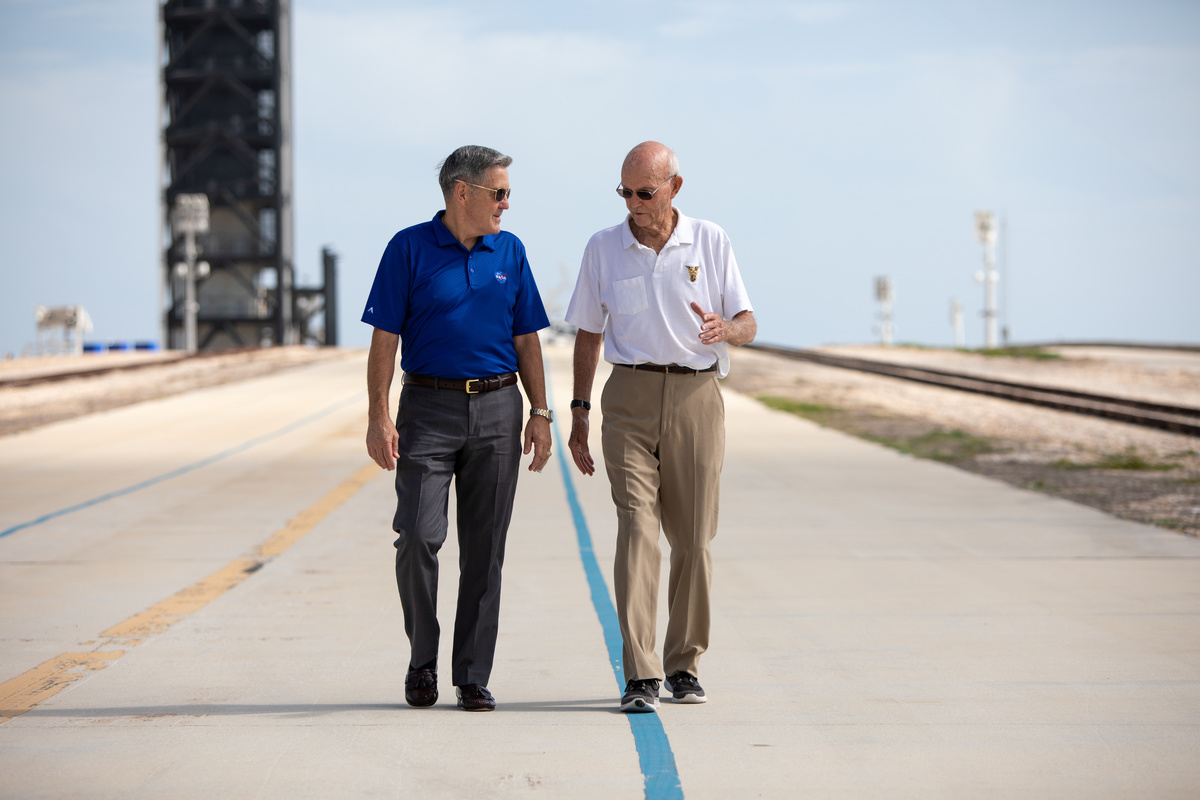
“Wonderful feeling to be back at launch pad 39A,” Collins, the command module pilot for Apollo 11, said in an interview on the pad with Kennedy Space Center Director Bob Cabana, himself a veteran of four space shuttle launches and a former shuttle commander.
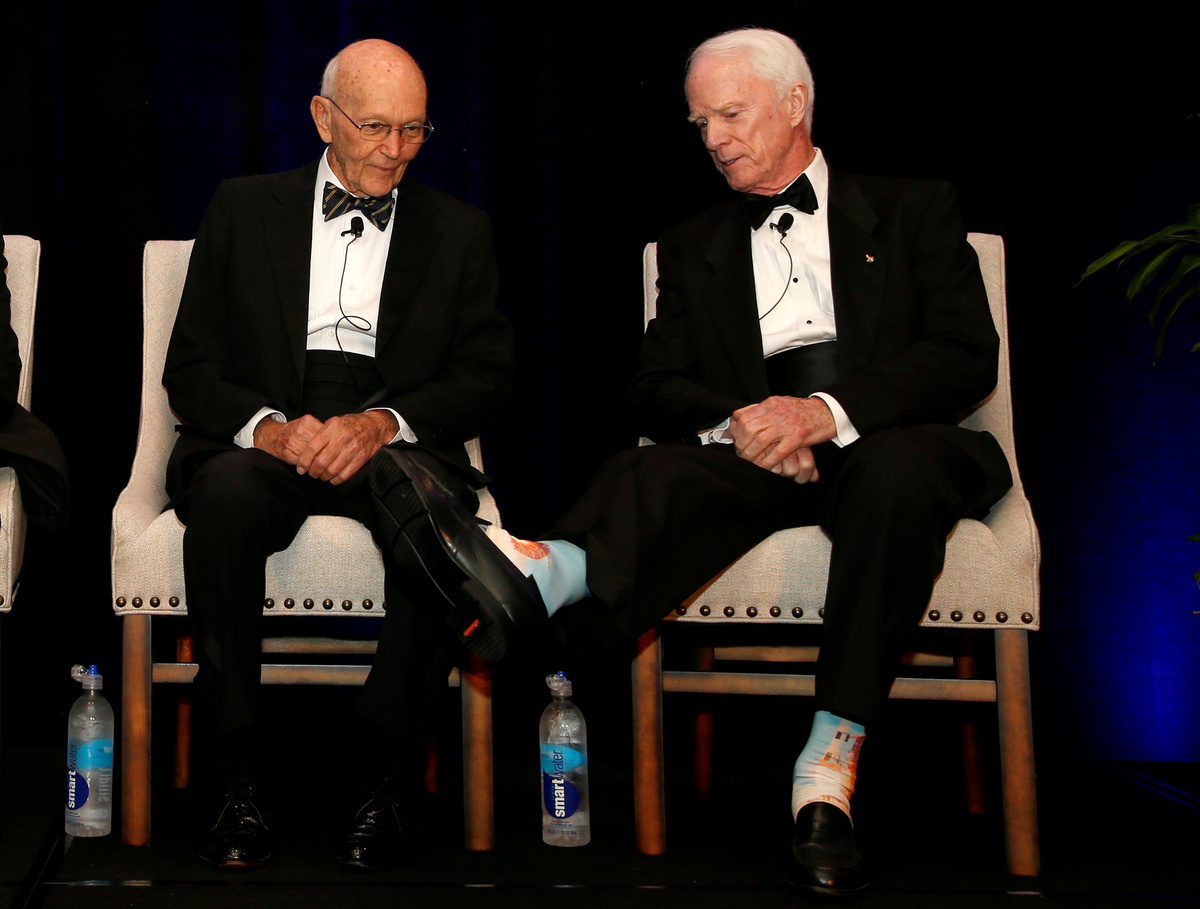
Apollo 11 astronaut Michael Collins (L) looks at socks picturing Saturn V rocket worn by Apollo 9 astronaut Rusty Schweikart as they take part in a panel discussion on the 50th anniversary of Apollo 11 launch, in Cocoa Beach, Florida, U.S., July 16, 2019. REUTERS/Joe Skipper

In the iconic 1969 moon mission, Collins, 88, stayed in lunar orbit while his crew mates Armstrong and Aldrin stepped foot on the lunar surface, an event that enraptured Americans and marked a preeminent chapter in human spaceflight.

Aldrin, 89, was to join Collins on the launch pad but canceled. Armstrong died in 2012 at the age of 82.

Collins referred to an often quoted September 1962 speech by President John F. Kennedy vowing to put a man on the surface of the moon by the end of that decade.
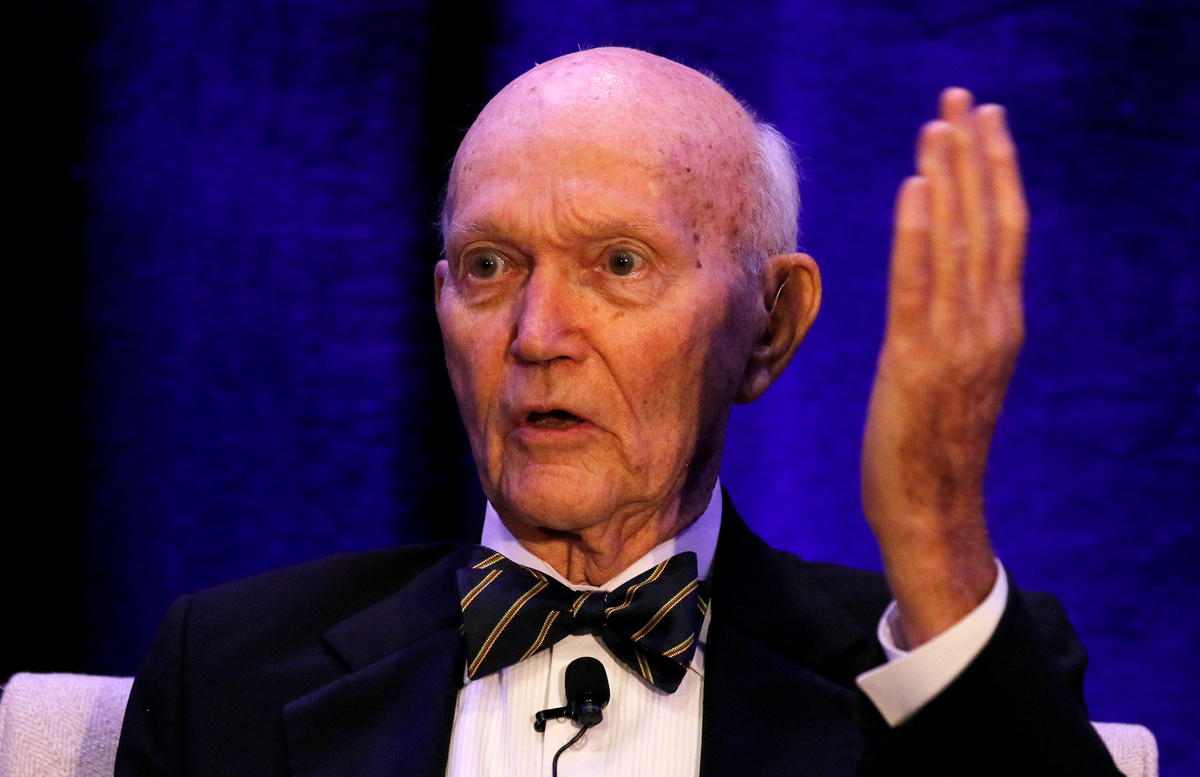
Apollo 11 astronaut Michael Collins speaks at a panel discussion on the 50th anniversary of the launch in Cocoa Beach, Florida, U.S., July 16, 2019. REUTERS/Joe Skipper

“What Kennedy said helped us so much in our preparation for the first lunar landing,” Collins told Cabana, seen on a livestream from the launch pad, which has been refurbished by Elon Musk’s SpaceX for future crewed missions under NASA’s Commercial Crew Program.

“I’d like to transfer that spirit from where we are to where we might go and I would propose going direct to Mars under what I would call a JFK Mars Express,” Collins said.

In another commemoration of the historic launch, the spacesuit that Armstrong wore during the mission went on public display for the first time in 13 years at the Smithsonian's Air and Space Museum in Washington.
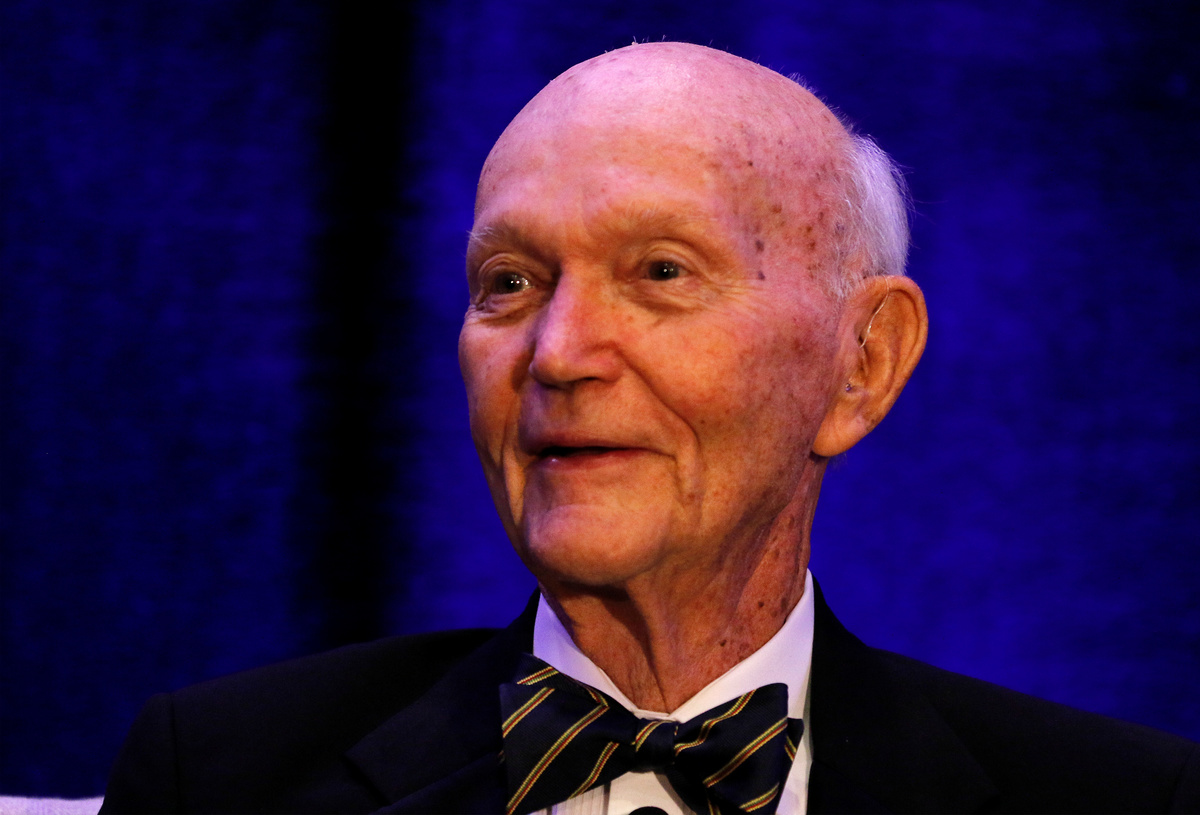
Apollo 11 astronaut Michael Collins speaks at a panel discussion on the 50th anniversary of the launch in Cocoa Beach, Florida, U.S., July 16, 2019. REUTERS/Joe Skipper

BEYOND THE MOON

NASA is aiming to send humans back to the moon as soon as 2024 in a hastened timeline set by U.S. Vice President Mike Pence in a March speech to the National Space Council, the White House’s revived space policy body. Collins said there was "a great deal of merit" to the recent push for a lunar return.
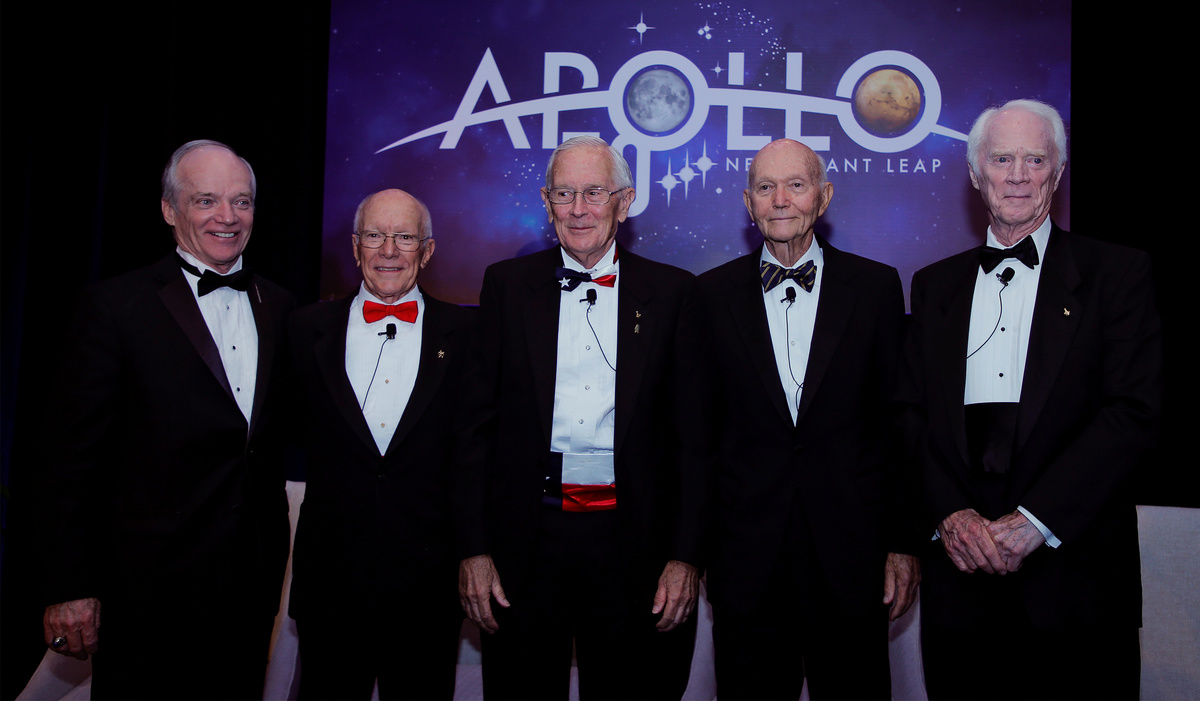
Space shuttle astronaut Charles Precourt, Apollo Flight Director Gerry Griffin, Apollo 16 astronaut Charlie Duke, Apollo 11 astronaut Michael Collins and Apollo 9 astronaut Rusty Schweikart stand together at the conclusion of a panel discussion on the 50th anniversary of launch of Apollo 11 in Cocoa Beach, Florida, U.S., July 16, 2019. REUTERS/Joe Skipper

He joined Cabana as the U.S. space agency counted down to the exact minute in which the Apollo 11 crew’s massive Saturn V rocket roared into blue skies on a sunny day in 1969.

As Americans celebrate the moonshot anniversary for most of this week, with Saturday being the anniversary of the lunarlanding, NASA is aiming to revive its new lunar program dubbed Artemis, the Greek goddess and twin sister of Apollo.

“Well I love the word Artemis, the twin of Apollo. I think that’s a wonderful name, and more important than the name, it’s a wonderful concept,” Collins said of the lunar initiative.
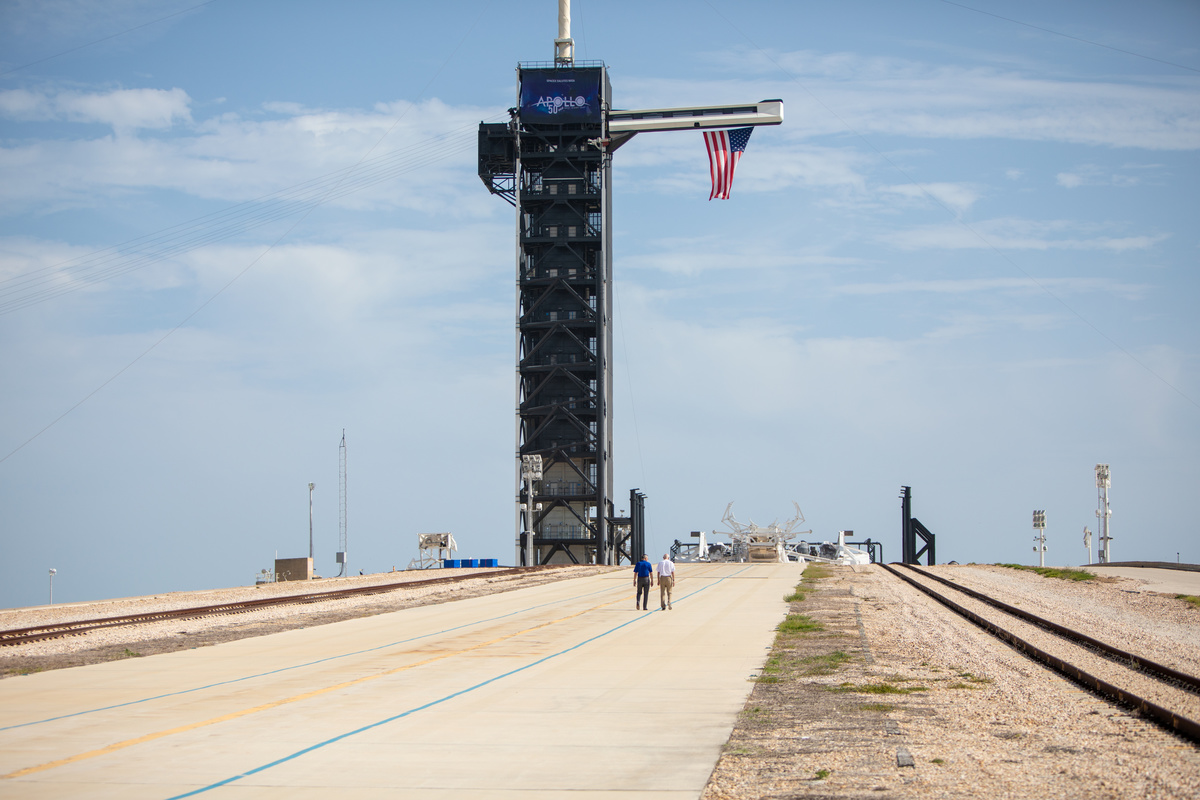
Astronaut Michael Collins (R) walks with NASA's John F. Kennedy Space Center Director Robert Cabana at Launch Pad 39A at the NASA's John F. Kennedy Space Center on the 50th anniversary of the launch of the Apollo 11 mission to the moon, in Cape Canaveral, Florida, U.S., July 16, 2019. Frank Michaux/NASA/Handout via REUTERS

NASA chief Jim Bridenstine has repeated that the United States will return humans to the lunar surface as part of a broader goal to reach Mars. The Mars mission requires a deep understanding of living in space, which the moon could provide as a “proving ground” beforehand, according to Bridenstine.

Collins was to be joined Tuesday evening at a gala in Cape Canaveral, Florida, by Charles Duke, the youngest human to walk on the moon as an Apollo 16 astronaut, Apollo flight director Gerald Griffin, Apollo 9 astronaut Rusty Schweickart, and four-time shuttle veteran Charlie Precourt.
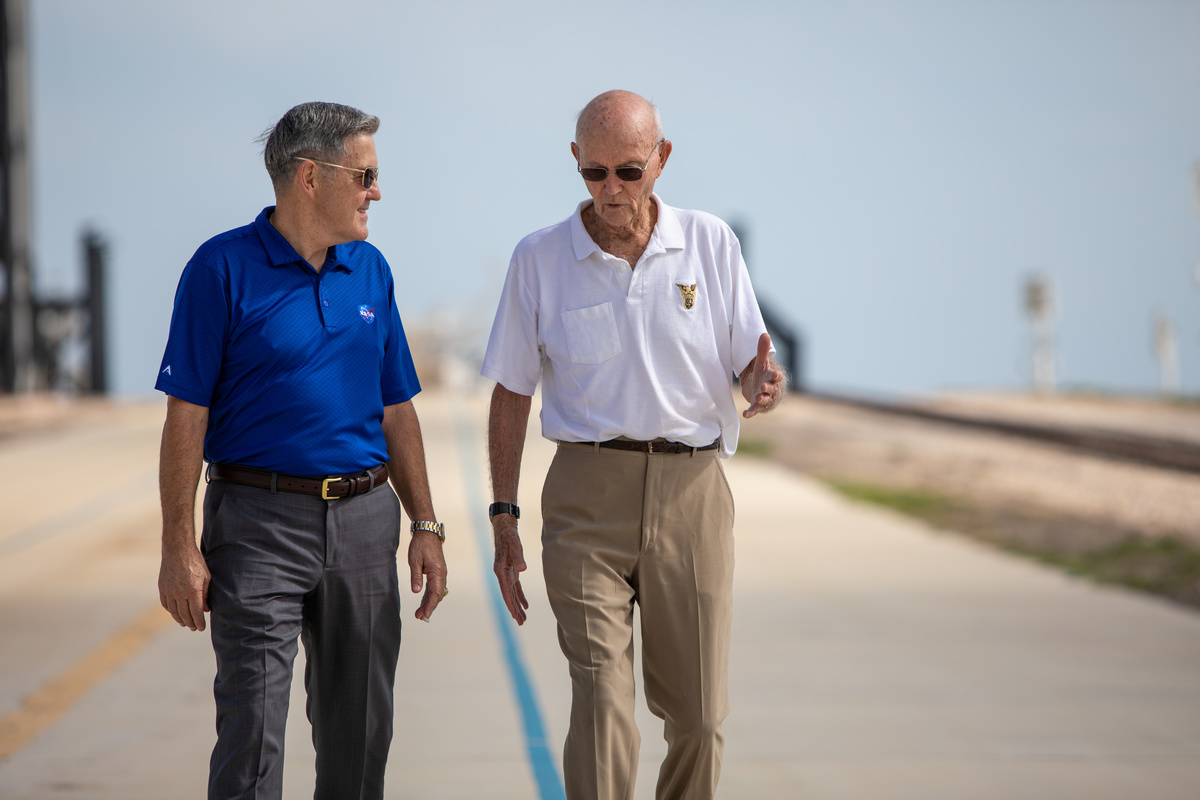
Astronaut Michael Collins (R) speaks with NASA's John F. Kennedy Space Center Director Robert Cabana at Launch Pad 39A at the NASA's John F. Kennedy Space Center on the 50th anniversary of the launch of the Apollo 11 mission to the moon, in Cape Canaveral, Florida, U.S., July 16, 2019. Frank Michaux/NASA/Handout via REUTERS

(Writing by Bill Tarrant in Los Angeles; Editing by Tom Brown)
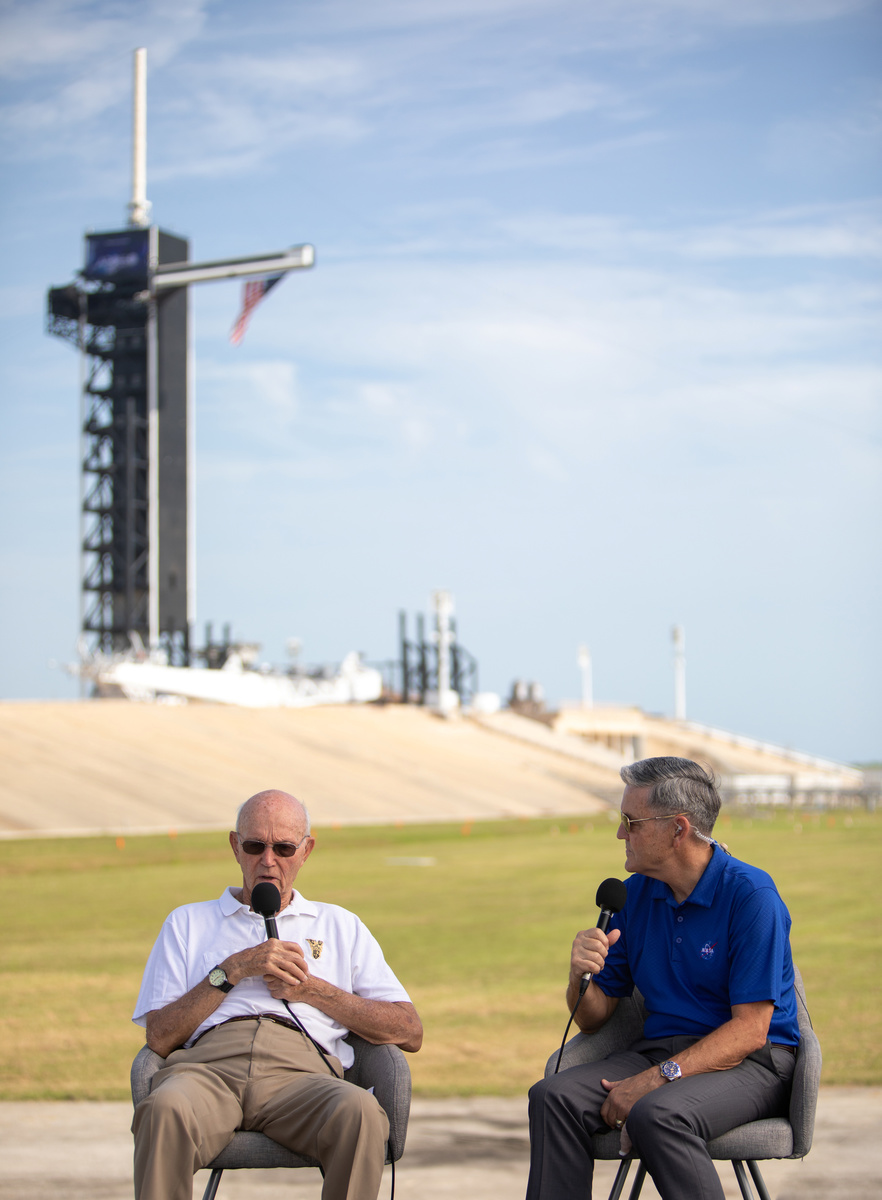
Astronaut Michael Collins (L) speaks with NASA's John F. Kennedy Space Center Director Robert Cabana at Launch Pad 39A at the NASA's John F. Kennedy Space Center on the 50th anniversary of the launch of the Apollo 11 mission to the moon, in Cape Canaveral, Florida, U.S., July 16, 2019. Frank Michaux/NASA/Handout via REUTERS ATTENTION EDITORS - THIS IMAGE WAS PROVIDED BY A THIRD PARTY.
Astronaut Michael Collins (R) speaks with NASA's John F. Kennedy Space Center Director Robert Cabana at Launch Pad 39A at the NASA's John F. Kennedy Space Center on the 50th anniversary of the launch of the Apollo 11 mission to the moon in Cape Canaveral, Florida, U.S., July 16, 2019. Frank Michaux/NASA/Handout via REUTERS
Astronaut Michael Collins (R) speaks with NASA's John F. Kennedy Space Center Director Robert Cabana at Launch Pad 39A at the NASA's John F. Kennedy Space Center on the 50th anniversary of the launch of the Apollo 11 mission to the moon, in Cape Canaveral, Florida, U.S., July 16, 2019. Frank Michaux/NASA/Handout via REUTERS
Sign up to read this article
Read news from 100’s of titles, curated specifically for you.
Already a member? Sign in here
Related Stories
Top stories on inkl right now
One subscription that gives you access to news from hundreds of sites
Already a member? Sign in here
Our Picks
Fourteen days free
Download the app
One app. One membership.
100+ trusted global sources.