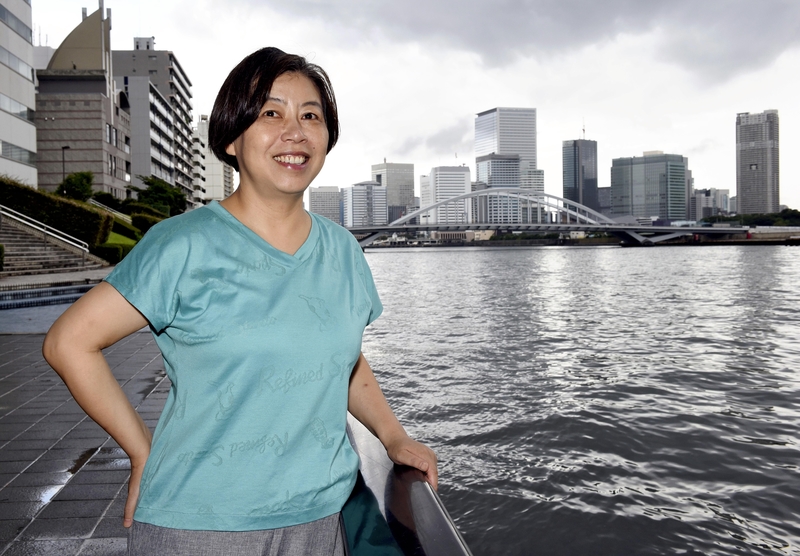
Award-winning writer Yang Yi recently spoke to Yomiuri Shimbun staff writer Shinya Machida, looking back on changes in society during the about eight years of former Prime Minister Shinzo Abe's administration. The following are excerpts from the interview.
"Living in an affluent society, Japanese university students are apathetic and resigned to accept the current situation." I've felt this way since I started to come into contact with them through teaching literary creation at the Nihon University College of Art, while working as a writer. I'm especially concerned that they're so hopeless about the future.
I've had my students write an essay about Japanese politics. Many of them wrote things like "many policies are favorable to the elderly" and "young people are neglected." These answers may stem from today's difficult societal conditions. During their job-hunting activities, it seems they first think about how to make themselves look good on a resume and in job interviews to get a job offer, rather than thinking about the kind of job they want to do. They seem to pay attention only to superficial matters, not essential matters.
In my mind, these students' apathy overlaps with the image of society under Prime Minister Shinzo Abe's administration, which lasted seven years and eight months. Reflecting on his own short-lived former administration, Abe must have tackled politics with considerable resolve.
He launched the Abenomics economic policy package, advocated for the dynamic engagement of all citizens and succeeded in bidding for the Tokyo Olympics and Paralympics. Many people, however, saw these actions as somewhat like staged performances and received them unenthusiastically.
Maybe it's because Japan is rich as ever and thus people don't have to be interested in politics. Young people escape into their favorite narratives, imaginary worlds and internet spaces. Students don't read classic literary works, in which people with different backgrounds clash with each other, such as "Les Miserables" by Victor Hugo and "The Old Man and the Sea" by Ernest Hemingway, which I loved reading in the past. Young people instead like fantasy novels and young adult novels that depict worlds that are easy for them to understand.
-- China's move
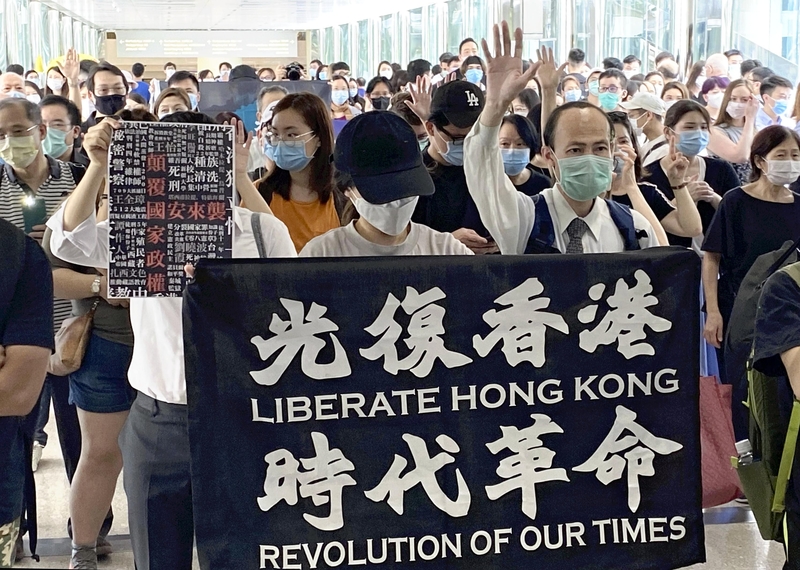
On the other hand, if we look around the world, it's obvious that it doesn't work to just run away from reality. Xi Jinping became president of China in 2013. He's been strengthening the country's overseas expansion with his Belt and Road Initiative, which is intended to create a huge economic bloc. In Hong Kong, the national security law came into effect in June to crack down on anti-government activities. China also has made sovereignty over the Senkaku Islands an issue.
China is under the dictatorship of the Communist Party. There is no freedom of speech. Some people say Chinese society is diverse, but that's nonsense, as they just look at diversity alone and not at the real politics. I believe that Japan must significantly reconsider its diplomacy, in light of the fact that this neighboring country is completely different from itself.
I was born in 1964 in Harbin, China. My maternal grandfather, who was a landowner, fled to Taiwan when civil war was raging before the founding of the People's Republic of China. My father taught literature at university. In 1970, in the middle of the Cultural Revolution, all our family was sent down to a provincial area under the 'down to the countryside' policy. We engaged in agriculture in the area, where the temperature is minus 30 C in winter. We were allowed to return to Harbin 3-1/2 years later, but the discrimination against us did not stop, partly because of my grandfather's background. I came to Japan in 1987 when I was 22 years old, because I had been fascinated by a color photo taken in Japan and sent with a letter by my uncle living in Japan.
When I arrived in Japan, I felt like I'd escaped from China. I thought I would no longer need to think about politics and could live my life thinking only about myself. I did various part-time jobs, including working for a factory. I studied at Ochanomizu University. I raised my children. I started to write novels in Japanese, as I wanted Japanese people to know about China. I eventually won the Akutagawa literary prize.
-- Let's discuss politics
Lately, I've realized that I was wrong to think I didn't need to think about politics. Thinking about politics is thinking about my own life. When raising my children, I was directly affected by the high cost of education in Japan. When affected by the novel coronavirus today, I didn't understand why the government distributed "Abenomasks," which are so inconvenient. If you avoid facing politics, you won't be able to protect what you hold dear.
I have my own way of getting to know the personalities of politicians. Find their photos in newspapers, cover the part below their eyes, and just look at their eyes. This can reveal the true self of the person. By doing so, I've felt former Prime Minister Abe is timid yet ambitious, and newly elected Prime Minister Yoshihide Suga appears to hide something deep in his mind. We should understand that once people have power, they don't want to let it go. We also need to see politicians more carefully with our own eyes. We then need to judge them for ourselves and show our determination through voting in the elections.
-- Yang Yi
Born in 1964, she won the prestigious Akutagawa literary prize in 2008 for "Toki ga Nijimu Asa" (A morning when time blurs), which depicts the Tiananmen Square incident and other matters. She has also written "Kingyo Seikatsu" (Goldfish life) and "Suki-yaki" among other novels. She became a naturalized Japanese citizen in 2011. She has served as a professor at Nihon University College of Art since 2015.
Read more from The Japan News at https://japannews.yomiuri.co.jp/