New roads. New town halls. New shopping centers. The scars are disappearing from Japan’s northeast coast as people rebuild from the tsunami that wrecked the region 10 years ago.
But some towns have decided to preserve reminders of the March 11, 2011, disaster — as a symbol of their resilience, to remember their dead loved ones, and as a lesson for future generations.
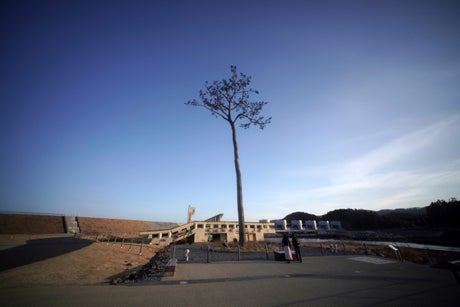
In Rikuzentakata where more than 1,700 people died, townspeople refurbished the lone pine tree that initially survived the tsunami, which flattened the surrounding coastal forest. When the tree, which is known as the “Miracle Pine,” began dying from seawater exposure, it was taken down, treated and then reerected to create a memorial that has become a symbol of hope for the region.
Some of the damage has been preserved despite fierce debate among survivors in whom it inspires mixed feelings of pain, sorrow and hope. Many also have differing ideas about how they should remember their dead loved ones.
It took five years before the residents and survivors in the city of Ishinomaki — where more than 3,000 people were killed in the tsunami — decided to preserve the Okawa elementary school. Eighty-four people died there, including 74 children.
In 2014, about one third of the families of the children sued the city and Miyagi prefecture, accusing authorities of mishandling the evacuation. In 2019, the Supreme Court ruled that the city and prefecture were negligent for failing to have a crisis management plan. After a divisive debate over what to do with the school building, the city decided to keep it as a memorial site.
In the coastal town of Minamisanriku, which is known for oyster and scallop farming, residents are still discussing what to do with a structure that used to be a city disaster prevention center.
For some survivors, the structure is a painful reminder; for others, it’s a place to remember loved ones who worked until the last minute to save people before the tsunami swallowed the 12 meter-high (40-foot-high) building, along with some 80 people inside. About 800 people were killed across the town.
"Both sides are right,” Mayor Jin Sato said.
For now, the structure is being kept around as a symbol. It is under the prefecture’s control for another 10 years, and officials hope this will allow time for the residents to come to a consensus.