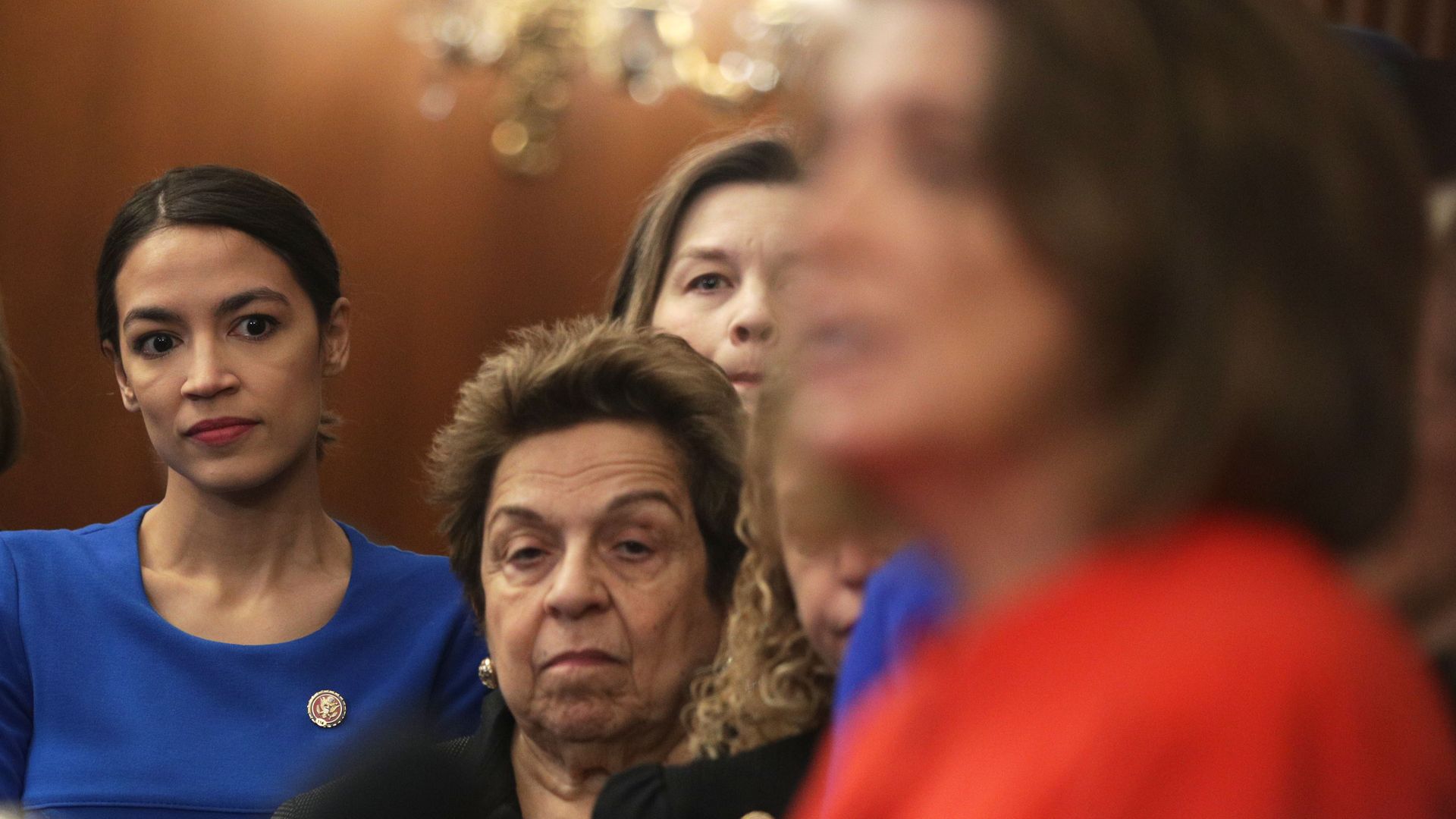
Rep. Alexandria Ocasio-Cortez (D-N.Y.) accused House Speaker Nancy Pelosi (D-Calif.) of "singling out" newly elected women of color in Congress, in an interview with the Washington Post on Wednesday.
The big picture: Ocasio-Cortez made the comments after Pelosi warned progressives in a closed-door meeting Wednesday to privately air party grievances, according to WashPost, Politico, USA Today and other outlets, citing sources present in the room.
- The outlets quote Pelosi as saying, "You got a complaint? You come and talk to me about it. But do not tweet about our members and expect us to think that that is just OK."
- Rep. Ayanna Pressley (D-Mass.) told WashPost she found Pelosi's comments "demoralizing."
Context: Both parties have publicly aired disagreements in recent days. On Saturday, Pelosi singled out Reps. Ilhan Omar (D-Minn.), Rashida Tlaib (D-Mich.) Ayanna Pressley (D-Mass.) and Ocasio-Cortez in an interview with the New York Times.
- Ocasio-Cortez tweeted in response, "That public 'whatever' is called public sentiment. And wielding the power to shift it is how we actually achieve meaningful change in this country."
Why it matters: The situation highlights the political and generational divide between the most powerful woman in U.S. politics and the progressives trying to push the party left, as WashPost notes.