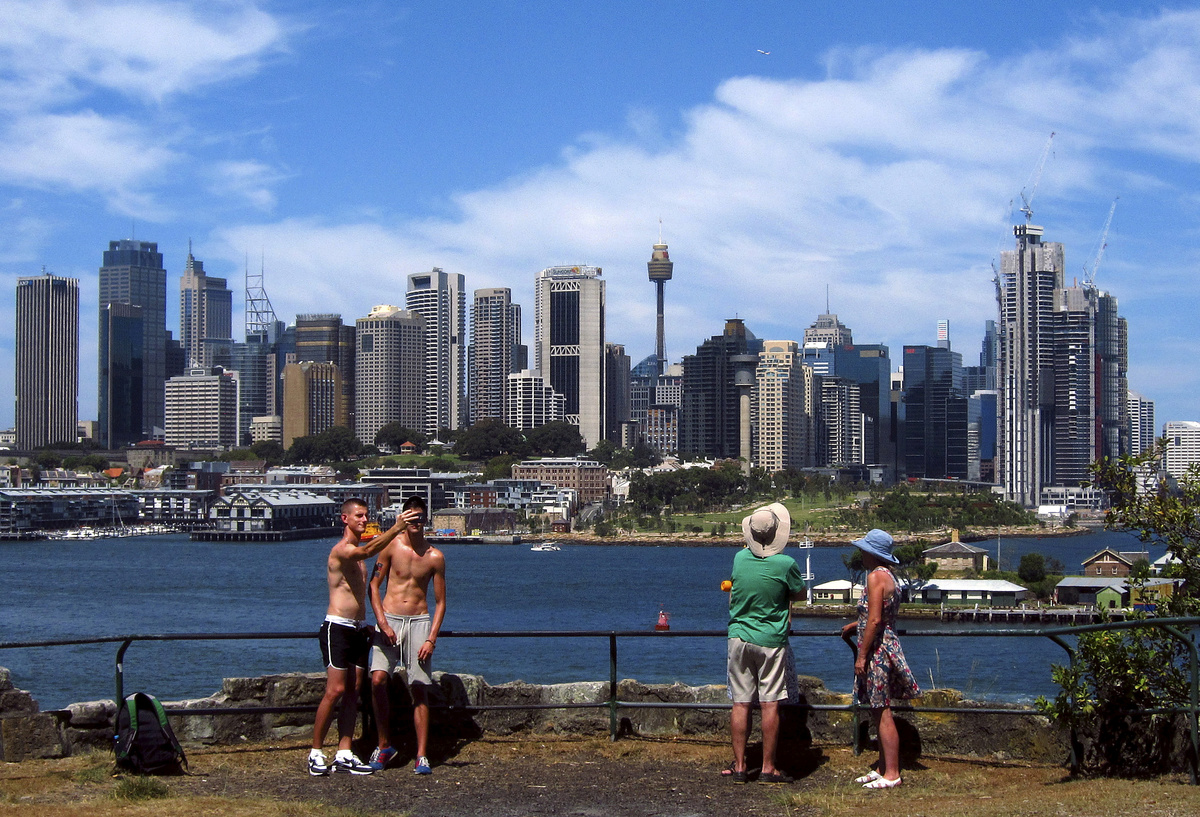
SYDNEY (Reuters) - Australia's coveted triple-A sovereign rating would not be threatened by increased government spending, Fitch Ratings said on Wednesday as calls for fiscal stimulus get louder to help stave off a possible recession in the resource-rich economy.
Data out on Wednesday showed growth in Australia's A$1.9 trillion economy slowed to a decade low last quarter, underlining the need for aggressive policy support.
The country's central bank has responded to the slowdown by lowering its cash rate to a record low 1.25%, putting some onus on the newly re-elected government of Prime Minister Scott Morrison to do its part.
Fitch Ratings' Associate Director Jeremy Zook told Reuters there was some headroom for the government to increase spending, if needed.
"Right now, Australia is right in the middle of the AAA median in terms of its debt-to-GDP ratio," Zook said over the phone.
According to government forecasts, net debt as a share of Australia's gross domestic product is seen at 18 percent in 2019/20 and 16.8 percent in 2020/21. Budget projections show net debt eliminated by 2029/30.
"So, there is a little bit of fiscal space for the government to work with, going forward. I don't think a slight increase in government spending would impact the triple A rating," he said.
Prime Minister Morrison has said he is deeply committed to delivering a budget surplus in the new financial year starting July 1, helped by a barnstorm in prices for the country's top exports - iron ore and coal.
Economists and academics say Morrison should administer some fiscal stimulus in the coming months, rather than remain fixated on delivering Australia's first budget surplus in a decade.
The government has already responded by reducing some pressure on the cost of living by raising subsidies for childcare, encouraging power companies to cut electricity bills and announcing lower income taxes.
But analysts say more aggressive measures are needed if Australia is to avoid slipping into a recession for the first time in almost three decades.
"We see a higher risk of an Australian recession in 2020," said AMP Chief Economist Shane Oliver. "More Reserve Bank interest rate cuts along with fiscal stimulus are likely to be necessary to offset the threat to growth."
(Reporting by Swati Pandey; Editing by Shri Navaratnam)