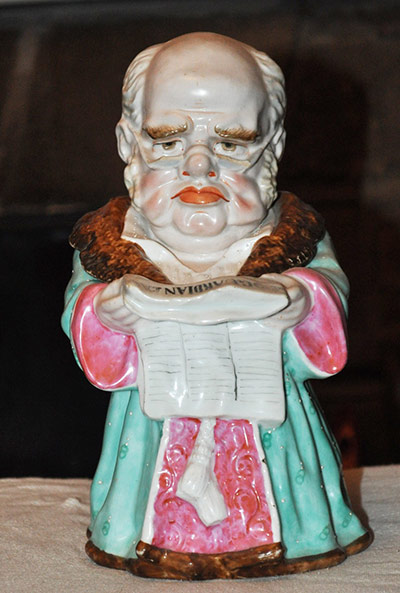
'During the late 19th century to early 20th century, many German porcelain factories made novelty tobacco boxes. This particular model, featuring a man reading a copy of the Guardian, was made in the late 19th century and may well be the work of the firm of Conta & Boehme, who produced similar pieces at their factory in Pössneck in Thuringia, Germany.
'There are collectors of such pieces, but they are not very expensive when they appear at auction. We valued this novelty jar at £100-£150.' Photograph: John Wild
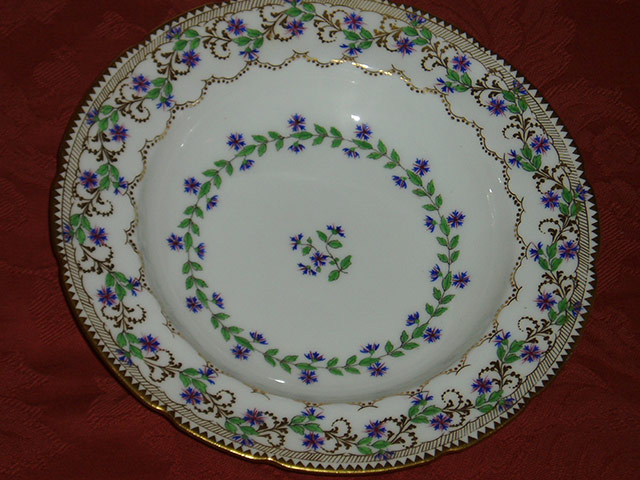
'These eight plates were made circa-1890 by the Minton factory in Staffordshire and retailed by the renowned New York firm of Davis Collamore & Co, which added its mark on the underneath of each plate.
'They are typical of the service ware being produced by various Staffordshire factories at this time, but they were made in large quantities and are not rare. However, these plates were once owned by the reader’s grandmother who used to be a cook to Richard Nixon, and the fascinating provenance of the actual plates adds a premium. We therefore valued them at £300-£500.' Photograph: Joyce Buchan
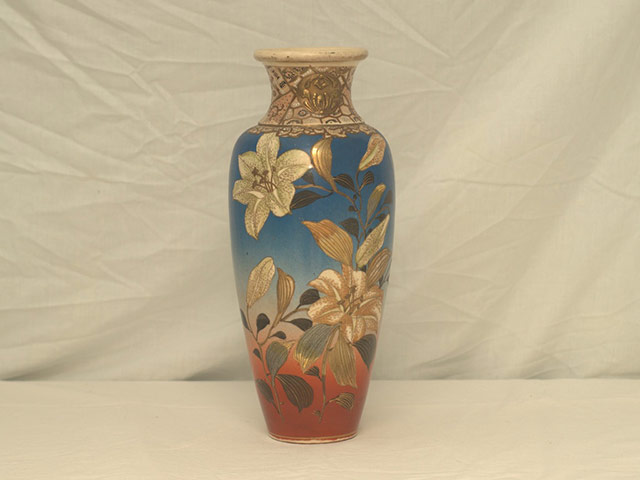
'This was brought to England in the 1930s by a member of the current owner’s family who was in the merchant navy and travelled to east Asia frequently. Satsuma ware was an export style developed in Kyoto in the early part of the 19th century. The style began in a very miniaturist style, but became bolder over the years, and employed the ‘moriage’ method of painting in thick blobs, a style which is not popular now.
'Among the marks on the underneath of the vase was a particular character reading 'right', meaning the vase was intended to sit on the right of a set of vases. We valued the vase at £200-£300.' Photograph: Andrew Rowley

'We were sent this mysterious coin which was found in a field somewhere in Somerset and became very curious about it. Unfortunately it turned out to be a modern "fantasy" penny coin based on the pennies of 10th-century Viking ruler Eric Bloodaxe of York. As such, it has no commercial value, but it is certainly an interesting find.' Photograph: Robert Thompson
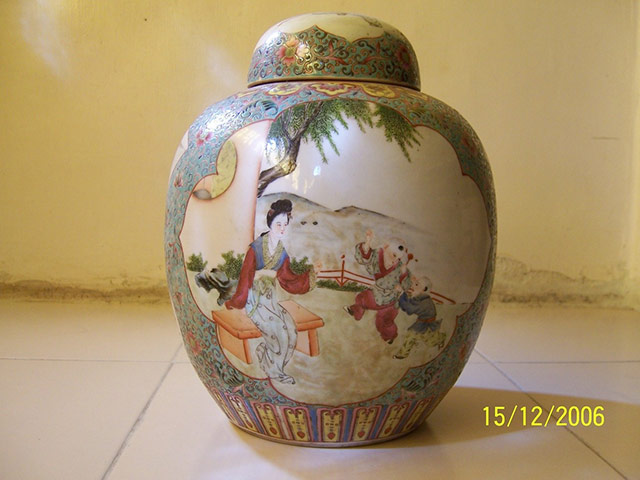
'This Chinese porcelain famille-rose enamelled ovoid “boys” jar with domed cover bears the marks of the Qianlong dynasty (1736-1795), but this particular jar was made in the early 20th century. Interestingly, the marks were not added in an attempt to deceive the collector, but out of respect.
'These Chinese porcelain artefacts often depict people in traditional dress taking part in tea ceremonies or official functions, thus giving the piece an added attractive feature. We value it at £100-£200.' Photograph: Kaveri Aggarwal