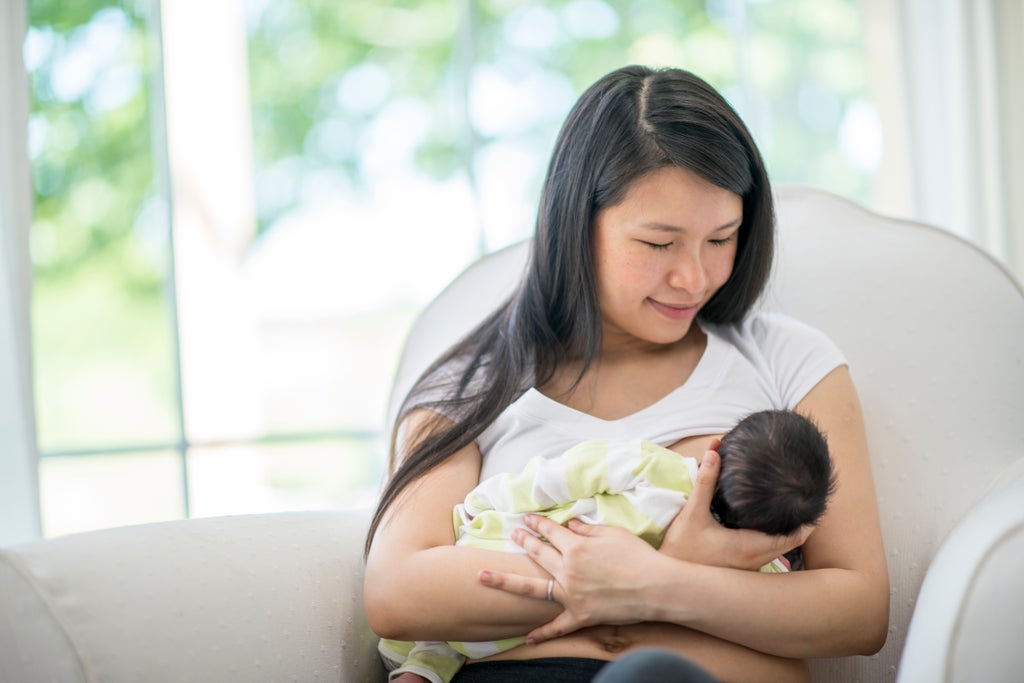
The breastmilk of women who have been infected with Covid-19 contains virus-neutralising antibodies for up to 10 months, according to new research.
The finding suggests that breast milk could play an important role in protecting babies against coronavirus, and could even be used to treat people with severe Covid-19.
Dr Rebecca Powell from the Icahn School of Medicine at Mount Sinai Hospital led the research, which she presented at the Global Breastfeeding and Lactation Symposium on 21 September.
Powell’s team took breast milk samples from 75 women who had recovered from Covid-19, and found that 88 per cent contained IgA antibodies. In most cases these could block infection because they were capable of neutralising Sars-CoV-2.
The samples also showed that women continued to secrete the antibodies between 6-10 months after infection, demonstrating the value of human milk to combat future threats.
This research could help the one in 10 infants under the age of one who currently require significant hospital care if they become infected with Covid-19.
Dr Powell also says the IgA antibodies extracted from breastmilk could be “an incredible therapy” for infected adults.
Elsewhere at the conference, Professor Lars Bode University of California, repeated scientific evidence that showed transmission of SARS-CoV-2 from mother to infant through breastfeeding and the use of human milk is “highly unlikely”.
Earlier this month, a study by University of Florida researchers found that the breast milk from mothers who have received a Covid-19 vaccine contains antibodies.
Dr Josef Neu, study co-author and professor in the UF College of Medicine’s Department of Pediatrics and Neonatology, said this could have a positive influence on vaccination rates for pregnant and lactating women, for whom vaccines have been deemed safe but many remain hesitant.
Scientists found that in breast milk, there was a 100-fold increase in immunoglobulin A antibodies, which play a crucial role in immune function and fighting off infection, following the second dose.