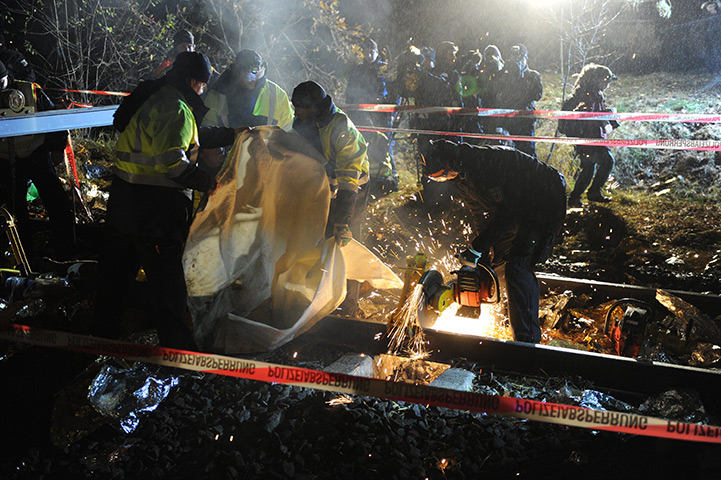
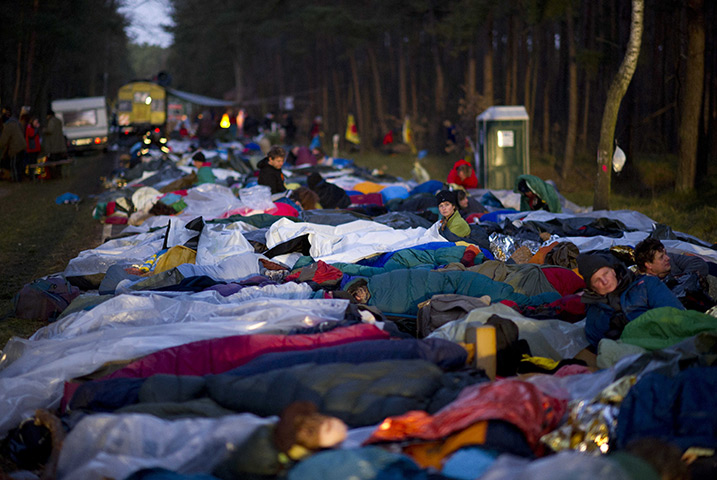
Police cut through railway tracks to free an anti-nuclear protester who tries to block the route in Hitzacker and to disrupt the movement of the so-called Castor-containers on its journey to the storage site of Gorleben. Twelve transports have been conducted since 1995, and protests against them are regular fixtures of the anti-nuclear movement in Germany, which stayed big also after the government's nuclear phase-outPhotograph: Marc Muller/AFP/Getty ImagesA rescuer holds the unchained hand of an anti-nuclear protester being removed from the railway tracks before the arrival of the transport train in Hitzacker. The transport has to stop again and again because of the blockades - it takes longer than any such transport did before. It started on Wednesday, 4pm in Valognes, France and has to make 1,200 kilometres. Now it is on its final 20 kilometres (12 miles)Photograph: Christian Charisius/AFP/Getty ImagesAnti-nuclear protesters in sleeping bags lay on the road to the final destination, Gorleben. The police expect a difficult last stage of the transport of the 11 nuclear waste containers. On the final leg the containers will be carried by trucksPhotograph: Johannes Eisele/AFP/Getty Images
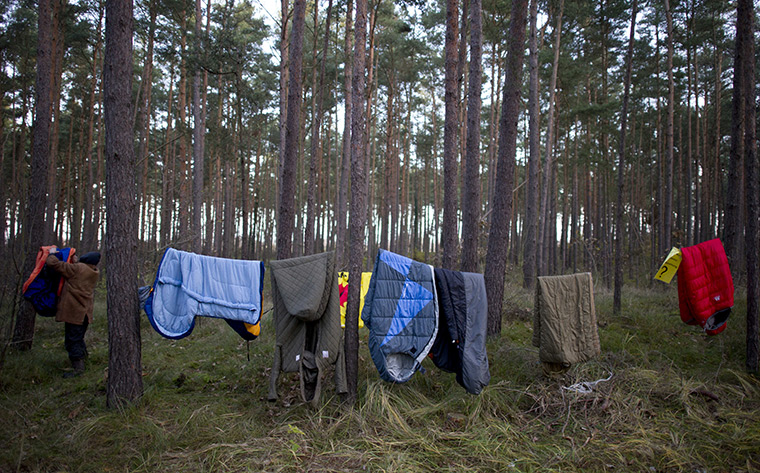
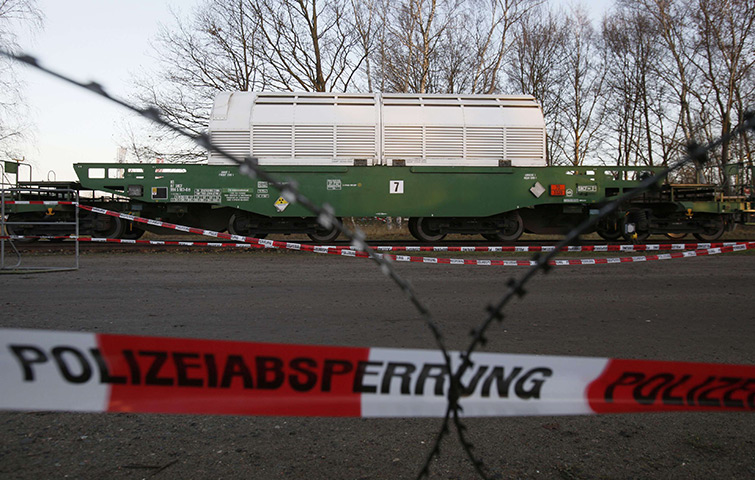
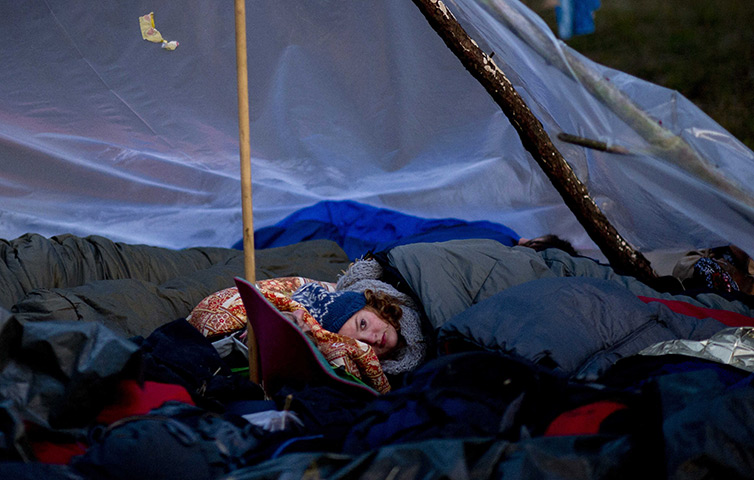
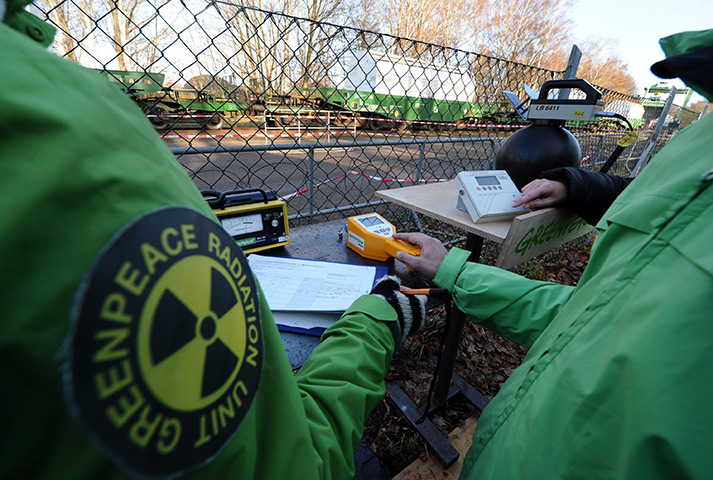
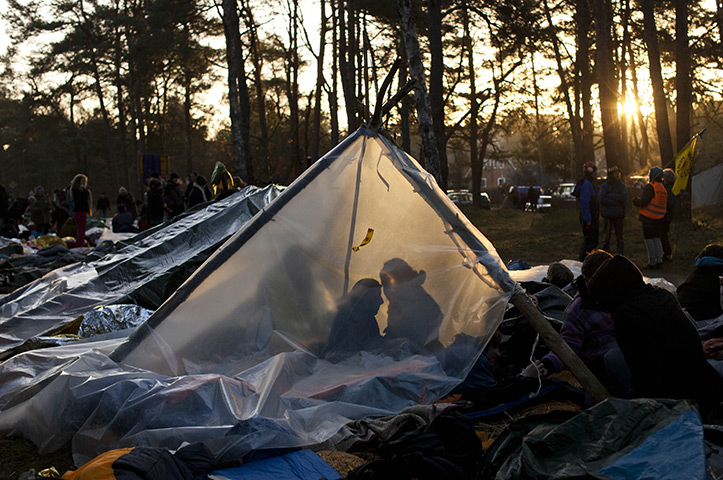
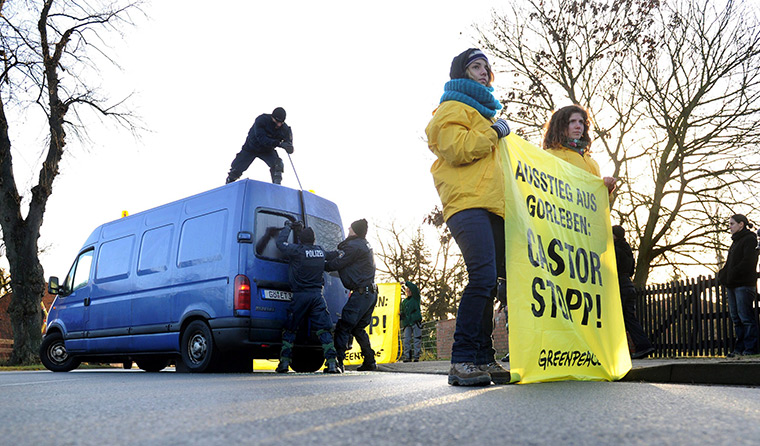
Anti-nuclear protesters hang up their sleeping bags near Gorleben. Tens of thousands of protesters line the route, along with 19,000 police. Securing of the transport, the police presence and overtime, will costs millionsPhotograph: Johannes Eisele/AFP/Getty ImagesOne of the eleven Castor (Cask for Storage and Transport of Radioactive material) nuclear waste containers is seen behind a police ribbon and barbed Nato wire at Dannenberg on the route to Gorleben. A castor is six metres long, the diameter is more than two metres, and it weighs 117 tonnesPhotograph: Wolfgang Rattay/ReutersAnti-nuclear protesters rest in a tent near Gorleben before the next action. Although this is expected to be the last castor transport from France, in 2014, nuclear waste will be transported to Germany from the British processing plant at SellafieldPhotograph: Johannes Eisele/AFP/Getty ImagesAnti-nuclear activists of the environmental group Greenpeace measure the radioactivity of the castor containers while they are moved from the train onto the low-loaders by a crane in Dannenberg. The 11 shipped castor containers contain the radioactivity of 44 Fukushima disasters, Greenpeace saidPhotograph: Christian Charisius/EPAAnti-nuclear activists take part on a sit-in with around thousand other activists on the road to Gorleben. The Anti-Nuclear Power Movement in Germany goes back to 1970, when the construction of a new nuclear power plant was announced in Wyhl, a city in the south-western state of Baden-Württemberg. Winemakers, farmers, students joined the protestPhotograph: Carsten Koall/Getty ImagesPolice officers try to open a van containing Greenpeace activists which is blocking the route. It is unclear when the Castor arrives at its final destination at the Gorleben interim depository, a salt domePhotograph: Julian Stratenschulte/EPA
Sign up to read this article
Read news from 100’s of titles, curated specifically for you.