The era of heavy surgical intervention is gradually giving way to the precision tools of biotechnology and artificial intelligence. We are entering a new phase in the aesthetics industry – one where the goal is no longer to correct visible flaws, but to preserve and support youthful skin at the cellular level before aging becomes pronounced.
In 2026, innovation in aesthetics is no longer limited to new devices or skincare formulas. Today’s specialists increasingly view the skin as a complex, living system. As a result, effective treatment depends not only on advanced technology but also on carefully designed protocols, ongoing monitoring of skin parameters, and a deep understanding of skin physiology. Regenerative aesthetic medicine is moving beyond superficial care and becoming part of a broader philosophy– thoughtful, technologically advanced management of the aging process.
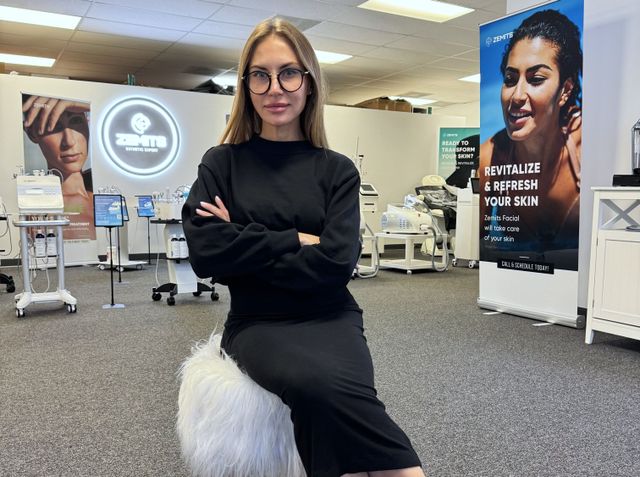
One of the experts contributing to the development of this field is Olena Davydova, an anti-aging expert who was among the first to recognize the potential of non-injection cellular therapy and who consistently advances this direction through both her clinical practice and scientific work.
Olena Davydova represents a unique figure in the American aesthetics industry. A practitioner with international experience, she spent many years working in Ukraine, adhering to European standards of aesthetic industry and a systematic clinical approach. She is a dedicated researcher who develops her own methodological concepts and structured treatment protocols. She is the author of scientific publications and the developer of non-invasive skin regeneration programs.
In an era dominated by influencers and aggressive marketing, she consistently promotes the concept of intelligent rejuvenation – without dependence on injections and without aggressive interventions.
A Licensed Facial Esthetician and member of the Esthetics Association Florida, she combines practical expertise with an evidence-based approach. As a respected authority in the aesthetics industry, Olena shared her perspective on gentle yet high-tech treatment methods that, in certain cases, prove to be not only safer but paradoxically more effective than a surgical scalpel.
Olena, the aesthetics industry seems to be evolving very quickly. What major changes are happening right now, and what trends do you expect to define non-invasive treatments in 2026?
The aesthetics industry is going through a period of profound transformation. Device-based technologies are increasingly being integrated with artificial intelligence, allowing practitioners to assess skin conditions more accurately, personalize treatment protocols, and even predict outcomes.
This isn’t just a marketing concept – it’s a practical analytical tool. Modern systems can evaluate skin micro-texture, vascular patterns, pigmentation, and tissue density while modeling how the skin may respond to treatment over time.
In 2026, we’ll see the expansion of AI-assisted treatment protocols capable of creating individualized “skin aging maps.” These systems can recommend precise combinations of technologies – such as radiofrequency energy, LED photobiomodulation, microcurrent therapy, oxygen treatments, and biostimulating formulas – delivered in a carefully calibrated sequence.
Devices themselves are also becoming more intelligent. New platforms can adjust treatment parameters in real time based on the condition of the skin at different depths.
Another important trend is the growing synergy between non-invasive aesthetics and biohacking. Skincare is no longer treated as an isolated concern. Instead, it is becoming part of a broader wellness strategy that considers inflammatory markers, stress levels, sleep quality, and metabolic health.
At the same time, the industry is shifting toward restoring dermal homeostasis rather than aggressively stimulating the skin. Clients are increasingly rejecting traumatic procedures and long recovery periods.
You mentioned AI and new technologies. What exactly has changed in device-based aesthetics?
Single-purpose devices are becoming a thing of the past. The newest platforms combine multiple synchronized energy technologies– for example, microneedle radiofrequency (RF) and high-intensity focused ultrasound (HIFU).
This allows practitioners to target both superficial and deeper layers of the skin during a single treatment session, producing lifting effects comparable to surgical procedures but without downtime.
However, the most significant innovation of 2026 is the emergence of “smart sensor” systems.
Modern devices are equipped with sensors that monitor the skin in real time – measuring hydration levels, tissue impedance, and temperature. Based on this data, the device automatically adjusts treatment parameters during the procedure.
This dramatically reduces the human factor while maximizing both safety and effectiveness.
Does that mean the device actually makes decisions during the treatment?
In many ways, yes.
In the past, practitioners set parameters such as temperature, power, and treatment duration based on standardized protocols and their professional experience.
But the skin is not uniform. Some areas may be thinner, others denser, and some may be dehydrated. Universal settings can’t fully account for these variations.
Now the device continuously scans the skin. Sensors measure tissue resistance, hydration levels, and temperature at every point. In real time, the system adjusts energy output – adding energy where necessary and reducing it where tissue is more sensitive.
The result is a treatment that is both safer and more effective. The risk of overheating or burns is minimized, and every area of the skin receives the optimal level of stimulation.
How accessible are these technologies? Has aesthetic medicine become an elite service?
That’s an important question.
High-end AI-enabled devices are expensive – often ranging from $80,000 to $300,000. Not every clinic can invest in them.
However, technology evolves quickly. Devices that were available only in premium clinics in Los Angeles just a few years ago are now appearing in high-quality mid-tier practices.
Another factor is multifunctionality. In the past, clinics needed separate devices for RF treatments, HIFU, and microneedling. Today, a single platform can combine all three technologies, reducing overall equipment costs.
As a result, advanced treatments are gradually becoming more accessible.
Most importantly, results have become more predictable and longer-lasting. If earlier it might have taken ten procedures to achieve a visible effect, today three or four sessions with a smart device may be enough. For clients, that often means less time, lower overall cost, and more consistent results.
We often hear about “personalization” in aesthetics. What does that mean in practice today?
Artificial intelligence is already widely used for 3D modeling of treatment outcomesbefore therapy even begins.
Moreover, systems for remote skin monitoring are emerging. Imagine completing a course of treatments while your aesthetic specialist tracks your progress through a secure application, receiving data from “smart” skin patches you wear.
And what about those wearable skin sensors? Are they already a reality, or still experimental?
Wearable skin sensor technology is developing rapidly, but it remains largely at the stage of clinical research and pilot projects.
In scientific laboratories, flexible epidermal sensors have already been developed that can measure parameters such as skin temperature, hydration level, pH, and even certain stress biomarkers in sweat, including cortisol.
However, today these technologies are not yet a mass-market tool in aesthetic practice.
In the future, wearable patches may transmit data directly to a mobile app, allowing your aesthetic specialist to monitor your skin in real time. For example, the patch might detect that hydration levels have been decreasing for the past three nights – perhaps you forgot to drink enough water or slept in a room with very dry air. The specialist could then send recommendations to adjust your skincare routine.
After any procedure, the patch could also track how the skin is recovering day by day. If recovery does not follow the expected pattern, intervention could happen early – adjusting home care or scheduling a supportive procedure.
This direction certainly looks promising.
In such a high-tech field, is there still room for human touch?
Interestingly, the more advanced technology becomes, the more people value the human element.
The broader focus on mental wellness has also influenced aesthetic medicine. We are seeing the rise of neuroscience-based skincare – treatments inspired by research on the skin–brain axis.
Modern treatments increasingly incorporate elements such as spa rituals, aromatherapy, and sound therapy. Clients seek not only visible improvements but also a deeply relaxing experience – often leaving a treatment session feeling as if they’ve just had a form of therapy.
A holistic approach is no longer marketing – it is a necessity in a high-speed modern world.
What exactly is neuroscience-based skincare? Is it a new field?
Neuroscience-based skincare isn’t a completely new field. It is an applied approach based on scientific research into the skin–brain axis – the interaction between the nervous system and skin health.
Stress has a direct physiological impact on the skin. Elevated cortisol levels can weaken the skin barrier, increase inflammation, and accelerate aging.
Conversely, when the body is relaxed, the skin tends to recover more efficiently, absorb nutrients better, and appear healthier.
Treatments may include specialized massage techniques, aromatherapy using essential oils that influence the brain’s limbic system, and sound frequencies designed to promote relaxation.
Some studies evaluating sensory and relaxation-based treatments measure objective physiological markers. For example, researchers track heart rate variability (HRV), a reliable indicator of nervous system balance. If HRV improves after a treatment, it suggests the body has shifted into a recovery state.
Cortisol levels in saliva may also be measured before and after treatments. A decrease in cortisol indicates a measurable reduction in stress.
In other words, this approach is grounded not in mysticism but in physiology, neuroendocrinology, and psychodermatology.
What about the home-device market? It seems to be growing rapidly.
Yes, home devices are no longer just an addition to professional treatments – they have become a full part of preventive skincare strategies.
Microcurrent therapy remains the gold standard for at-home lymphatic drainage and muscle toning.
LED masks have become extremely popular.
Red light for anti-aging, blue light for acne treatment, and yellow light for collagen stimulation.
Now we are also seeing masks with integrated sensors that analyze skin conditions and automatically select the appropriate treatment mode.
Portable radiofrequency lifting devices, however, remain the most controversial category.
On one hand, they do heat tissues and can provide lifting effects with consistent use. On the other hand, there is a crucial limitation that marketers rarely mention.
If you receive injectable treatments such as fillers or biostimulators, at-home RF devices can accelerate the breakdown of those products and negate the work performed by your practitioner.
Additionally, tissue heating should not be performed in cases of tumors, during pregnancy, or in certain other medical conditions.
Finally, where do you see non-invasive aesthetics heading in the coming years?
The industry is moving away from aggressive stimulation and procedures that require lengthy recovery periods.
The focus is shifting away from dramatic, short-term transformations toward restoring the skin’s natural biological processes – microcirculation, barrier function, and cellular renewal.
Increasing attention is being paid to gentle, physiologically supportive treatments that preserve the skin’s resources rather than exhausting them.
The old idea of staying young “at any cost” is gradually disappearing. In its place, the emphasis is moving toward healthy skin, sustainable results, and natural harmony in appearance.