Just four years old, Sydney’s Antenna documentary film festival has found its feet as the country’s premier showcase for local and international non-fiction films.
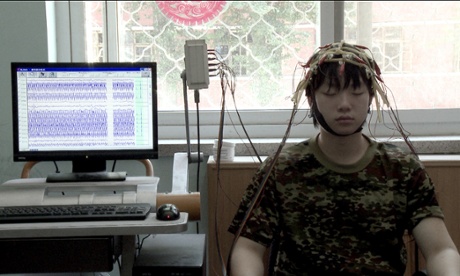
An unprecedented amount of Australian content featured in the 2014 edition, which balanced heavy fare on the conflicts racking Syria and Ukraine with graceful takes on ageing, sex, disability – even the apocalypse. The Israeli-American film-maker Shosh Schlam last did the circuit rounds with Last Journey Into Silence (2003), an unsettling film about the lingering grip of the Holocaust on a band of survivors inside an Israeli asylum. In the stark Web Junkie (2013) she teams up with Hilla Medalia and gains access to another treatment facility, one purporting to treat internet addiction, which the Chinese government has classed as a clinical disorder and likened to “electronic heroin”.
Teenagers are dressed in military garb and live and train in a boot camp-style facility, kept from the outside world – or more specifically, World of Warcraft – by thick prison bars and harsh drillmasters. Many of the kids are tricked or drugged when brought to Beijing’s Daxing internet addiction treatment centre. The minimum stay is three months.
The inmates trade stories about gaming binges like weary addicts. One boy boasts of having once spent 300 hours online, interrupted only by short naps. Most have been expelled from school. “Do you know how I felt when I heard the sound of your keyboard?” a teary mother tells her boy during a counselling session. “Like an abyss was swallowing my son.”
Internet addiction is said to afflict more than 20 million young Chinese. Whether the facility actually succeeds in reforming the teenagers is unclear. One psychiatrist there speculates the problem is wider: parents and children stranded on different sides of a changing China. “We only ask them to study hard,” she says. “Their struggles, their worries, their pain – we can’t see any of it.”
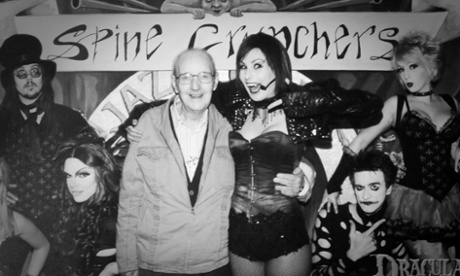
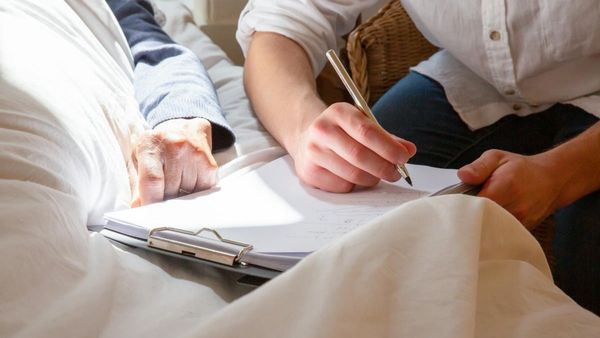
First-time Melbourne film-maker James Fleming and his accomplice Kelly Hucker took out best short for Ghost Train (2014), about 84-year-old Geoffrey, who finds relief from his wife’s dementia when he wanders into the kitschy vampire-themed cabaret restaurant Dracula’s.
He’s enamoured by the lead performer, Gillian, and the two strike up a friendship. The relationship clearly delights Geoffrey, but Gillian is never interviewed, and the film’s murky, showreel style channels a faint disquiet about her motives. Geoffrey has changed his will to leave her everything. “I don’t mind telling you that,” he says.
The Special Need (2013)follows a path well-trodden by the American buddy comedy: three friends – Enea, Alex, and the film’s director, Carlo Zoratti – set out across Europe trying to find the woman who might finally nip 29-year-old Enea’s virginity in the bud. The twist is that Enea has autism and generally finds the seduction process baffling.
Carlo and Alex begin by approaching local sex workers, who balk at the prospect of bedding Enea. They take him to an Austrian bordello where he’s surrounded by a sea of flesh. Though he can’t articulate it, he’s disgusted, and storms out.
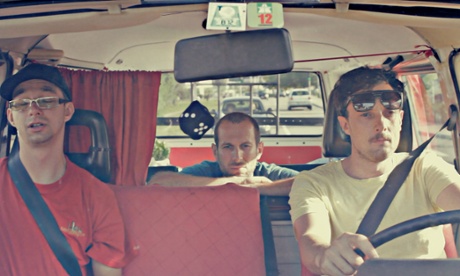
That’s the second twist: Enea doesn’t just want sex, he wants love, something his well-meaning mates are helpless to provide. It’s Carlo and Alex, too, being taken on a journey, realising that Enea is deeper and more complex than they imagined. The most compelling scenes are shot inside a German clinic where a therapist runs Enea through the emotional mechanics of sex. Later that night, in a bedroom, she takes him through the real thing.
The film’s trajectory up to this point is clearly sketched out by the director, but Enea’s sincerity keeps the film vital and alive. When he discovers that his sex therapist is not, in fact, the woman he will spend the rest of his life with, he suddenly goes silent. His expression is pure agony. “OK,” he says, finally.
Other highlights: Bugarach(2013),Return to Homs (2013), and Waiting for August(2014), which took out best international feature at the festival.