A previously unknown ”supercolony” of Adélie penguins has been discovered in the Antarctic, easing fears their numbers had been in decline for decades.
The thriving colony inhabits the Danger Islands, where the effects of both climate change and human activity are less pronounced than in other parts of Antarctica.
Located off the Antarctic Peninsula’s northern tip, these islands are both incredibly remote and surrounded by thick sea ice.
This has allowed the penguins to remain hidden from the world, until a team of researchers mounted an expedition there to investigate signs of nesting birds.
“Until recently, the Danger Islands weren’t known to be an important penguin habitat,” said Professor Heather Lynch, an ecologist at Stony Brook University who co-led the work.
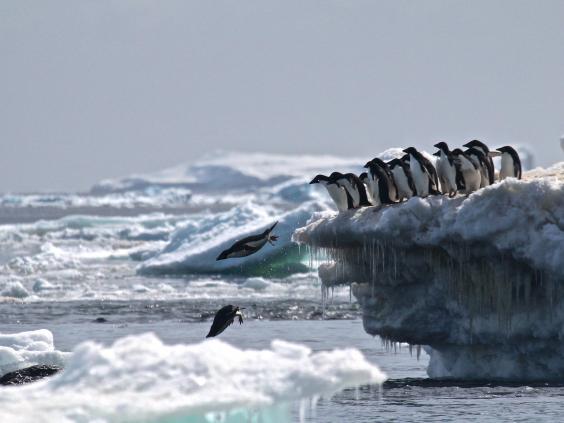
However, this changed when scientists noted guano stains on Nasa satellite imagery of the islands – a tell-tale sign of a massive penguin colony.
To investigate, Professor Lynch led a team to the islands with the intention of counting the birds first hand.
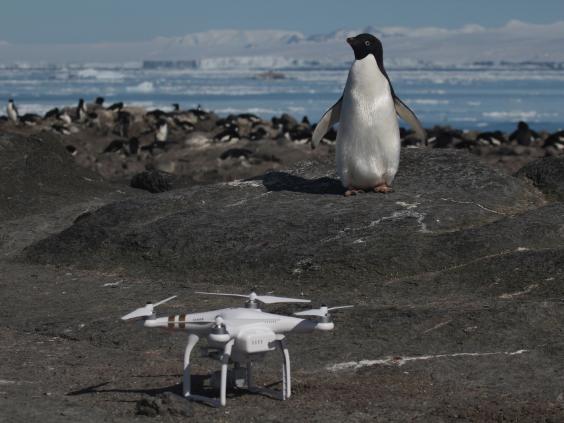
As well as assessing the birds from the ground, the scientists made use of drones to take pictures of the island from above and count the hundreds of thousands of breeding pairs.
“The drone lets you fly in a grid over the island, taking pictures once per second. You can then stitch them together into a huge collage that shows the entire landmass in 2D and 3D,” said Professor Hanumant Singh, an engineer at Northeastern University who developed the drone’s imaging and navigation system.
One they had created these massive images, the scientists used neural network software to analyse them and search for penguin nests autonomously.
In total there were 751,527 pairs of penguins living on the islands – more than the rest of the Antarctic Peninsula combined.
Professor Michael Polito, an ecologist at the Louisiana State University who participated in the research, said he was “amazed by the sheer number of Adélie penguins” he saw.
“The water around the island boiled with penguins,” he said.
For decades, scientists thought the total number of Adélie penguins had been in steady decline, but the new colony has been protected by its remote location.
“Not only do the Danger Islands hold the largest population of Adélie penguins on the Antarctic Peninsula, they also appear to have not suffered the population declines found along the western side of Antarctic Peninsula that are associated with recent climate change,” said Professor Michael Polito, an ecologist at the Louisiana State University who participated in the research.
“It puts the East Antarctic Peninsula in stark contrast to the Adélie and chinstrap penguin declines that we are seeing on the West Antarctic Peninsula,” said Dr Tom Hart, a penguin researcher at the University of Oxford.
“It’s not clear what the driver of those declines is yet; the candidates are climate change, fishing and direct human disturbance, but it does show the size of the problem.”
This stark comparison suggests penguins fare much better when their environments are completely undisturbed, a finding that reinforces calls from environmentalists for a protected area in the Weddell Sea, where the Danger Islands are located.
The study documenting the discovery was published in the journal Scientific Reports.
“This exciting discovery shows us just how much more there still is to learn about this amazing and iconic species of the ice,” said Rod Downie, head of polar programmes at WWF.
“But it also reinforces the urgency to protect the waters off the coast of Antarctica to safeguard Adélie penguins from the dual threats of overfishing and climate change.”