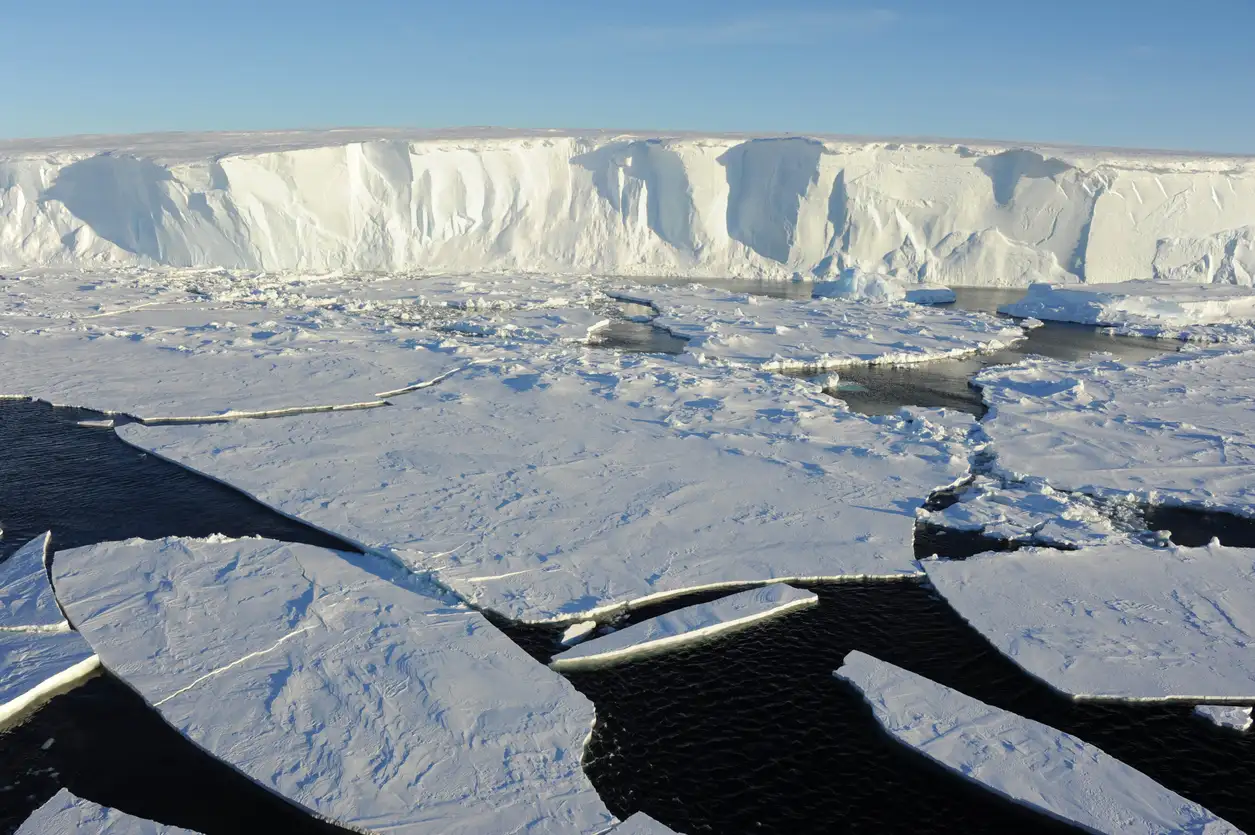
A new study presented by the European Geosciences Union (EGU) suggests Antarctica could play a greater role in global warming than previously understood, reports TOI. According to the researchers, Antarctic sea ice, cloud cover and the way the oceans absorb heat are more closely connected than many climate models have assumed, raising concerns that global warming could progress faster than current projections indicate.
Antarctica shows signs of rapid change
According to the study, Antarctica continues to undergo significant changes. The researchers noted that Antarctic sea ice reached its third-lowest maximum extent on record in September 2025, behind only 2024 and 2023.
The study further stated that temperatures in the region remained more than 25°C above normal for nearly a month. According to a report by Future Science, Antarctica was missing around 2 million square kilometres of sea ice compared with the recent historical average for that time of year, highlighting a substantial decline in sea ice coverage.
Why Antarctic sea ice is important
The researchers said sea ice plays a key role in regulating Earth's climate by influencing how much sunlight is reflected, how ocean water circulates and how heat is exchanged between the ocean and the atmosphere.
According to the study, shrinking sea ice allows the ocean to absorb more energy, increasing the pace of warming. The researchers noted that the oceans absorb more than 90 per cent of the excess heat trapped by greenhouse gases. They added that warmer oceans contribute to sea level rise through thermal expansion and can also intensify storms, disrupt marine ecosystems and increase the frequency of marine heatwaves.
Study identifies stronger cloud connection
According to the EGU study, Antarctic sea ice and cloud cover are more closely linked than previously recognised. The researchers said cloud patterns and ocean heat uptake are more strongly influenced by Antarctic conditions than many climate models currently suggest.
The study explained that clouds can either trap heat or reflect sunlight depending on their type, altitude and location. Researchers said changes in Antarctic conditions could therefore influence cloud cover far beyond the continent, affecting warming on a broader scale.
According to the study, some climate models may rely on observation periods that are too short, causing them to overlook long-term natural variability. As a result, the researchers suggested some models could underestimate both ocean heat absorption and the response of clouds to changes in sea ice.
Findings point to greater climate sensitivity
The study indicated that ocean heat absorption and the resulting sea level rise by 2100 could be higher than commonly projected.
Researchers also suggested that cloud feedback may be stronger and climate sensitivity could be greater than earlier estimates. According to the study, if the Southern Ocean was colder and covered by more sea ice during the pre-industrial period than current models assume, the deep ocean would also have been colder, affecting cloud formation and the distribution of heat throughout the climate system.
The researchers said these long-term differences could amplify the effects of greenhouse gas emissions, making the planet more responsive to human-driven warming than previously believed.
Researchers call for urgent action
According to the researchers, Antarctica should not be viewed as an isolated region because changes in its sea ice can influence ocean circulation, atmospheric patterns and global sea levels.
The study stated that if its conclusions are confirmed, future warming could occur faster and with greater intensity than many climate projections currently indicate, increasing the risks of heatwaves, flooding, ecosystem disruption and other climate-related impacts.
The researchers said reducing greenhouse gas emissions remains the most effective way to slow these changes and improve the chances of limiting the most severe consequences.
(With inputs from TOI)