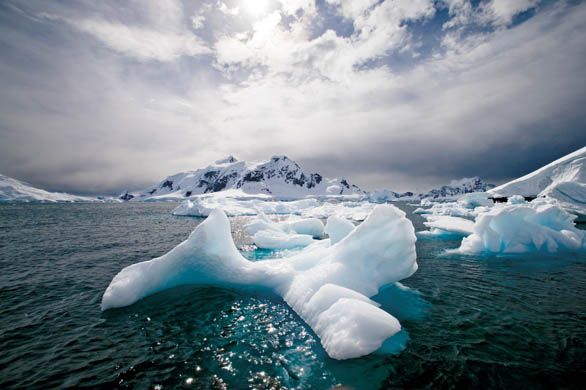
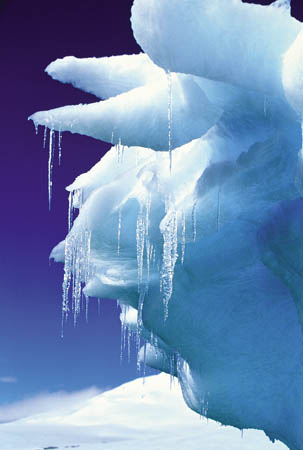
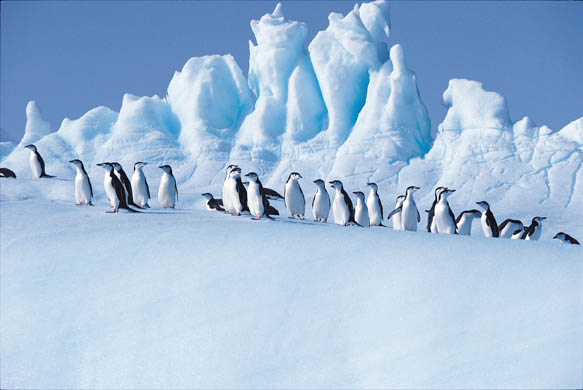
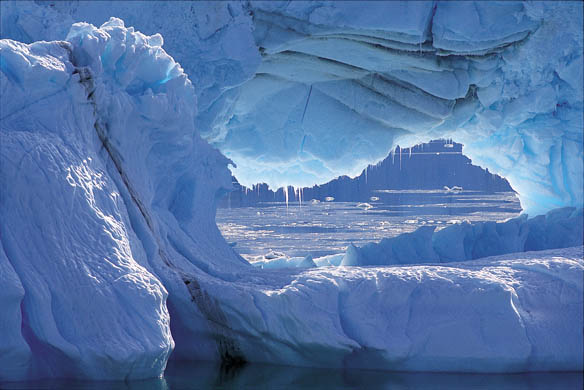
Icebergs at Paradise bay. The Scotts have made many journeys to Antarctica in the last 15 years, photographing and observing a huge range of wildlife and landscapes in this frozen, isolated environmentPhotograph: CollinsIcicles on an iceberg, Paradise bay. Antarctica produces more than six times the number of icebergs than the Arctic, and the average size of the bergs is much larger too. Each Antarctic iceberg averages 1m tonnes of pure fresh waterPhotograph: CollinsChinstrap penguins on an ice floe. Chinstraps spend the winter at sea, beyond the edge of the pack ice. They are usually the last of the three brush-tailed species of penguin to return to their breeding colonies in late October/early NovemberPhotograph: Collins
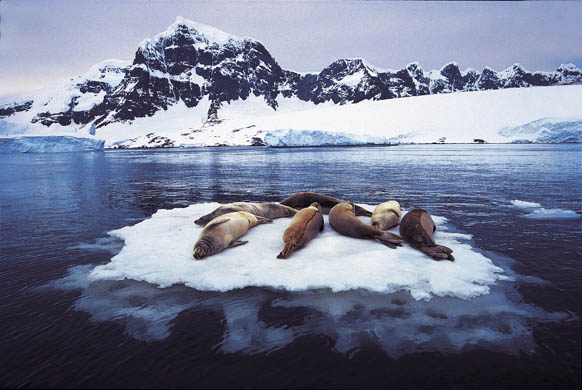
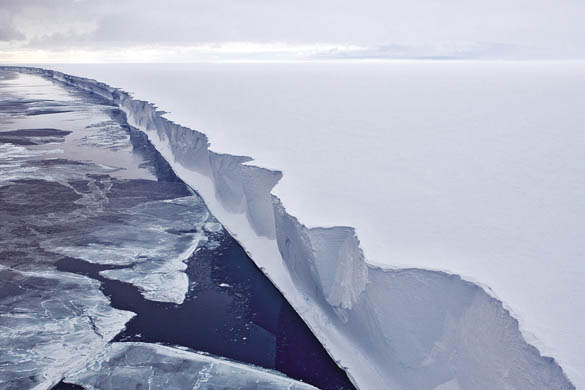
Crabeater seals live on pack ice all around the Antarctic circle, some as far north as South Georgia. They are great wanderers and are rarely seen ashore. Despite their name, 90% of their diet consists of shrimp-like krill, supplemented by small amounts of fish and squidPhotograph: CollinsAn ice cave. About four-fifths of icebergs come from the ice shelves of continental Antarctica. Icebergs often take years to melt but are riven by internal fractures as they age, breaking into smaller ice formsPhotograph: CollinsRoss ice shelf is the largest ice shelf in the world. The size of Texas and larger than France, it occupies the entire Southern Ross Sea. Up to 1,000m thick and almost entirely afloat, it is fed by five ice streams and seven major glaciers, and is a major source of icebergsPhotograph: Collins
Sign up to read this article
Read news from 100’s of titles, curated specifically for you.