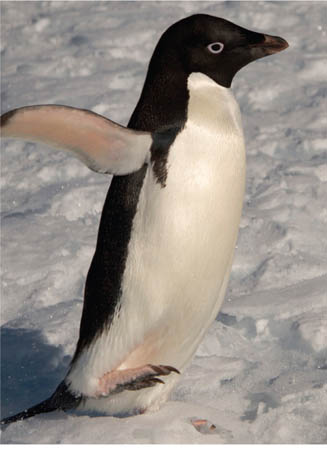
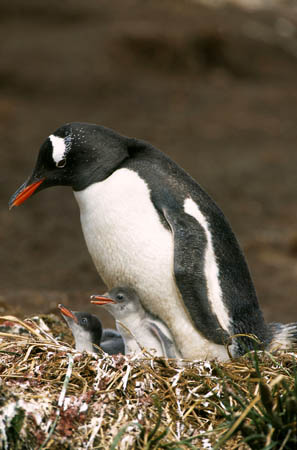
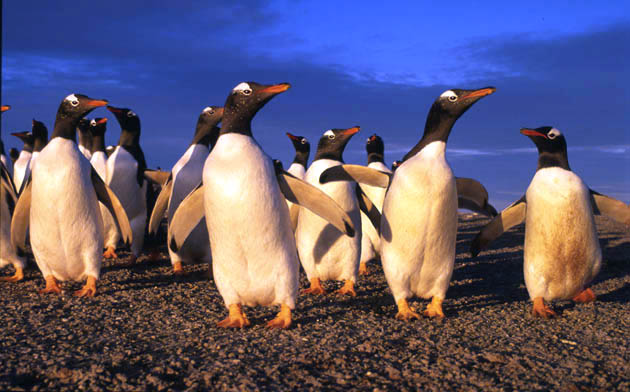
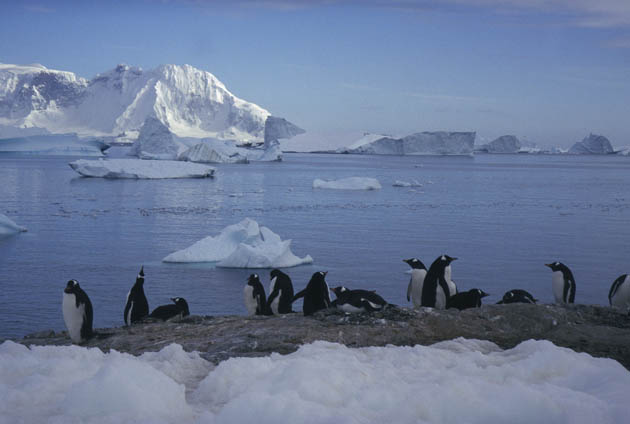
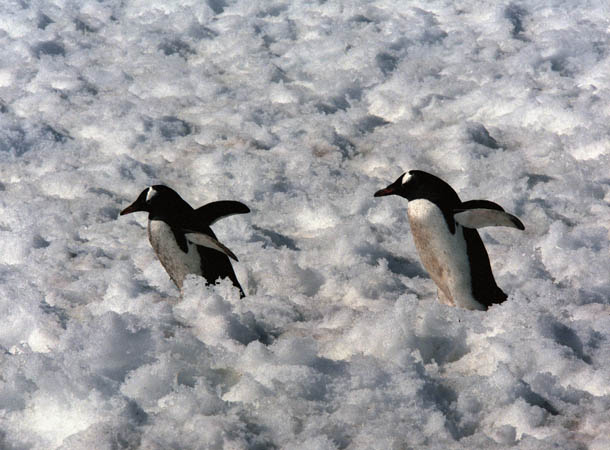
The Adélie penguin lives on sea ice but needs the ice-free land to breed. With a reduction in sea ice and a scarcity of food, populations of the Adélie penguin have dropped by 65% over the past 25 yearsPhotograph: Sylvia Rubli/WWFA gentoo penguin on the nest with chicks in South Georgia. Gentoos have also seen numbers shrinking because they are increasingly dependent on krill as their usual food sources are depleted by overfishingPhotograph: Fritz Pölking/WWFA gentoo penguin colony at sunset on the Falkland Islands. “As the ice melts, these icons of the Antarctic will have to face an extremely tough battle to survive,” the WWF saysPhotograph: Kevin Schafer/WWF
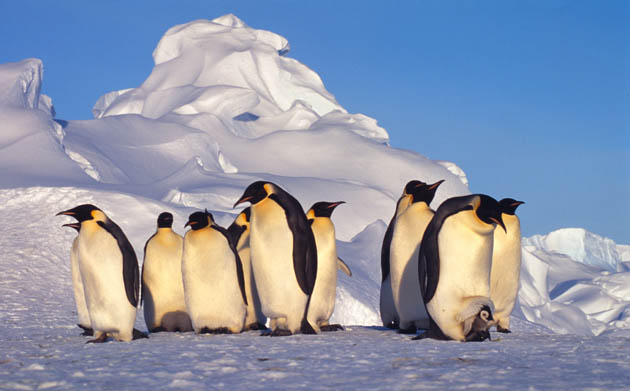
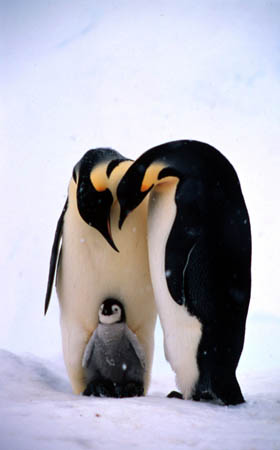
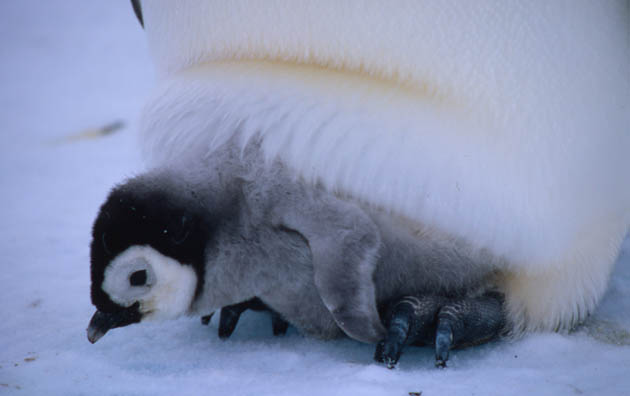
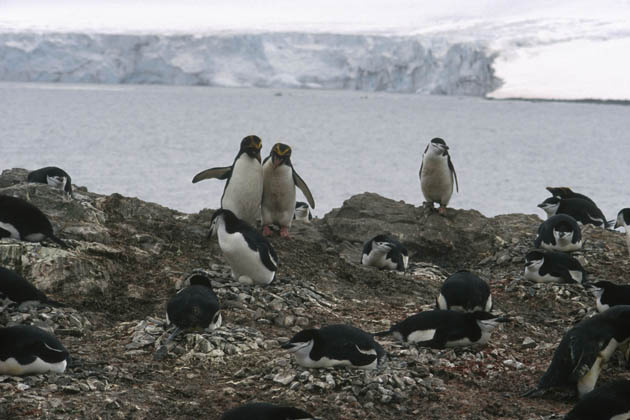
Emperor penguins with chicks on Dawson-Lambton glacier. The WWF has warned that the emperor penguin is the most vulnerable of the Antarctic bird and mammal species in the face of climate change, as it needs stable, land-locked sea ice on which to breedPhotograph: Fritz Pölking/WWFThe emperor penguin, the largest in the world, has seen some of its colonies halved in the past century as warmer temperatures and stronger winds force them to rear their young on increasingly thin ice Photograph: Fritz Pölking/WWFThe WWF says that in recent years sea ice has broken off early and many eggs and chicks have been blown away when they were too young to survive on their own Photograph: Fritz Pölking/WWFMacaroni and Chinstrap penguins. Some colonies of chinstraps have seen reductions in numbers of up to two-thirds because reduced food has made it more difficult for youngsters to survivePhotograph: Sylvia Rubli/WWFGentoo penguins. The report found that global warming is occurring five times faster in the Antarctic peninsula than the rest of the world, and threatening the survival of four penguin species Photograph: Sylvia Rubli/WWFGentoo penguins. “One of the coldest environments in the world is actually seeing some of the fastest rates of global warming, and unless action is taken to reduce global CO2 emissions, the future of many Antarctic species looks bleak," the WWF warnsPhotograph: Wim Van Passel/WWF
Sign up to read this article
Read news from 100’s of titles, curated specifically for you.