The top leaders of the United States and France have openly showed their mutual distrust and repeatedly exchanged accusations. The situation is serious, as it could lead to a split in their nations' alliance.
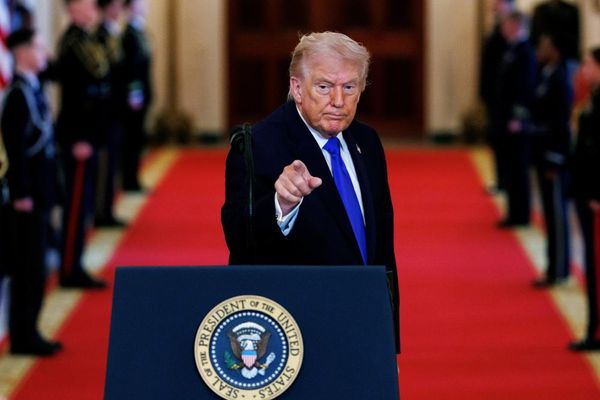
At a ceremony in Paris marking the passage of 100 years since the end of World War I, French President Emmanuel Macron leveled criticism at the United States. Macron turned his back on U.S. President Donald Trump's America-first policy, criticizing Trump for saying, "Our interests first and who cares about the others."
Although Trump's way of doing things is certainly creating great turmoil, did Macron have to openly point a finger at him at a meeting of top leaders from various countries? There is no dispelling the concern that Macron exposed a schism between France and the United States at a ceremony calling for international cooperation, based on the lessons learned from the disastrous Great War.
In early November, Macron proposed the creation of a "European army" that does not rely on the United States. He emphasized that Europe must be able to "defend itself on its own without relying only on the United States."
Macron was prompted to make that remark by the Trump administration's declaration of its intention to abolish the Intermediate-Range Nuclear Force Treaty.
During the Cold War era, U.S. intermediate-range nuclear missiles were deployed in West Germany or elsewhere, so they could confront Soviet nuclear missiles. The treaty on the INF abolition, concluded in 1987, lessened the dangers of nuclear war in Europe.
Army incompatible with NATO
There are concerns that if the treaty is scrapped, it could return Europe to the forefront of a nuclear arms race. It is understandable for Macron to become more and more irritated, saying "the main victim" of Trump's decision to leave the INF would be "Europe and its security."
The problem is that the European army proposal is incompatible with the U.S.-led North Atlantic Treaty Organization.
The stability in Europe following the end of World War II has been supported by the NATO collective defense system, which relies on the overwhelming U.S. military strength. Expecting a European army that does not include the United States to confront the Russian threat by itself is a less than realistic idea.
While siding with the European army proposal, German Chancellor Angela Merkel expressed her view that the army would serve as "a good complement to NATO." France and Germany must not neglect dialogue and cooperation with the United States regarding Europe's medium- and long-term security system.
Another cause for concern is Trump's words and deeds, a source of distrust felt by European nations for the United States.
Trump expressed his intention to abolish the INF treaty without prior consultations with NATO. In a high-handed manner, he demands U.S. allies increase their defense expenditures, based on his opinion that they are getting a free ride on U.S. military power. Via his Twitter account, Trump continued persistent attacks on Macron's remarks.
Trump should realize that making remarks that disregard his nation's alliances and arouse antagonism with Europe will only benefit Russia and China.
(From The Yomiuri Shimbun, Nov. 19, 2018)
Read more from The Japan News at https://japannews.yomiuri.co.jp/