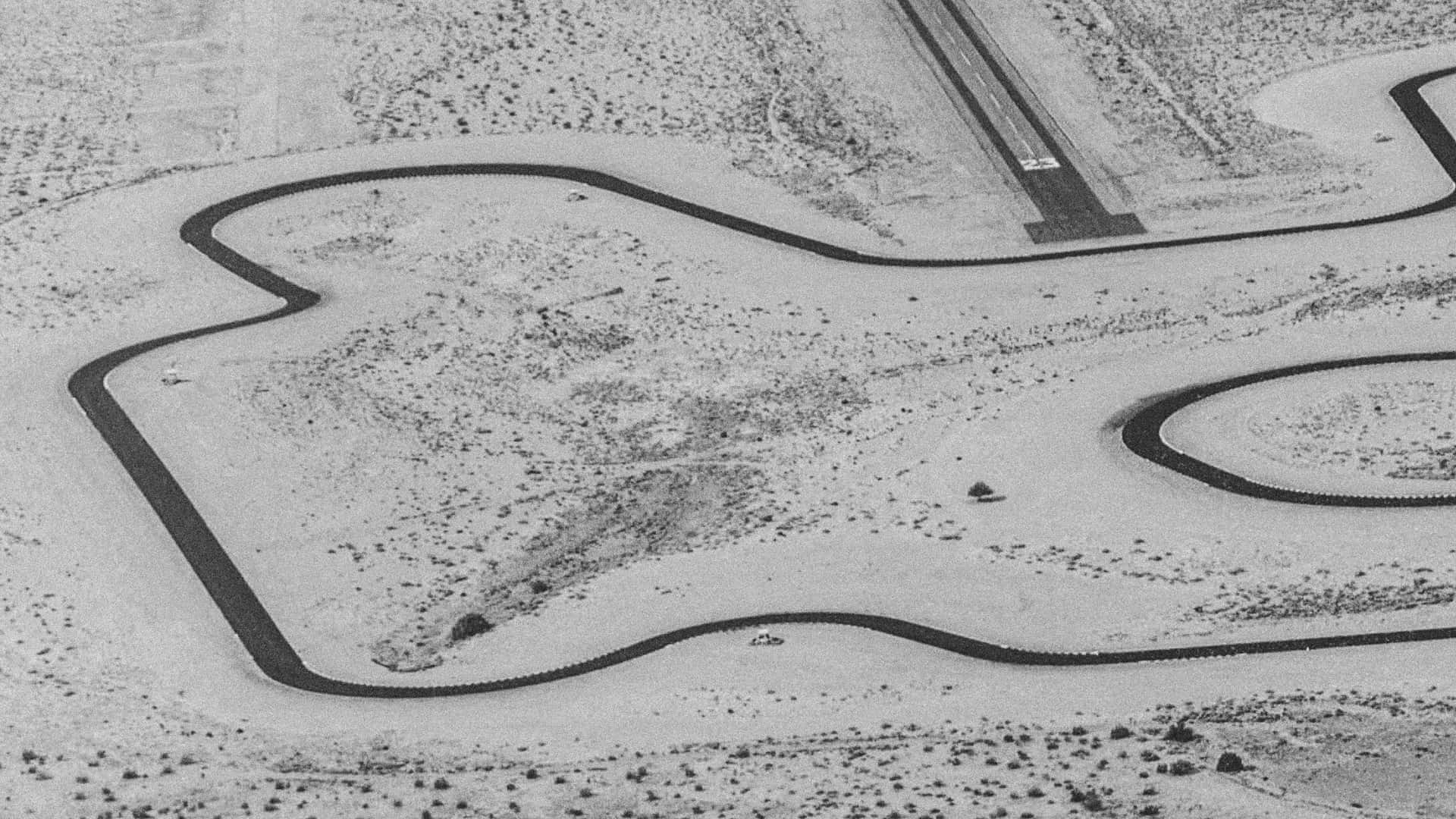
Red alert, Los Angeles-based track rats: Chuckwalla Valley Raceway is for sale. And it ain’t cheap. The price for the 2.68-mile, beautifully maintained race track, covering over 1,000 acres of land, comes in at a whopping $26 million.
Chuckwalla is a genuinely nice racing facility. It’s another rare opportunity to own an established track just outside of Los Angeles, but it’s also part of a more concerning trend—a trend that could fundamentally reshape track culture across the United States.
The New Blueprint?

With the sale of Willow Springs to private equity, Circuit of the Americas switching to a private, members-only subscription model, and track days getting generally more expensive, it’s never been a more awkward time to be a track enthusiast. For years, the hobby exploded; cheap track days with easy access were everywhere. But recently, costs have steadily increased.
In my native Los Angeles, it feels like things have changed faster than I can process. And all of it pivots around the sale and changes at Willow Springs International Raceway—changes that could find their way to Chuckwalla if sold.
But first, I need to lay out a map of LA track culture. For the densely populated Los Angeles area, there are effectively three tracks within a day-trip radius. The closest is the aforementioned Willow Springs in Rosamond, about an hour outside of the city proper. Then, there’s Buttonwillow Raceway Park outside of Bakersfield, which is two hours outside of the city. Finally, Chuckwalla is in the literal middle of the desert, at least three hours outside of LA.
There are popular Northern California tracks that are at least five hours from Los Angeles—Sonoma Raceway, WeatherTech Raceway Laguna Seca, and Thunderhill. Realistically, though, all of those tracks require an overnight stay, and most SoCal track rats will do Laguna Seca at most.
Fundamentally, SoCal track culture has long centered around those three main tracks. Willow Springs, Buttonwillow, and Chuckwalla have shared the burden of thousands of eager driving enthusiasts. And within the broader track-driving diaspora, there are a dozen smaller groups centered around specific track-day organizers.
You get the guys and girls who will only go to Speed Ventures, Touge2Track, Socal Drivers Club, SCCA, or NASA. Plenty of crossover, but it’s often a matter of small cultural differences between groups.
Drivers who go to T2T are usually canyon kids who want a place to rip without worrying about the cops. SDC is for wealthier people with 911 GT3s and modern M cars. Speed Ventures straddles a middle ground. Then there are the club racing folks in the SCCA and sub-groups like the Cobra Club or the Porsche Owners Club.
Point being: there are dozens of different groups, and each of those tracks allows them to come together around the same hobby. Yet, these recent changes should be concerning for track enthusiasts in SoCal.
What It Means
After the sale of Willow Springs to CrossHarbor Capital last year and the subsequent renovations, track day costs have tripled. What was once a $180 day at Willow Springs has ballooned to $340. Rental rates have nearly tripled, with the track signaling further increases.
For example, Motor1 paid about $8,000 to rent Streets of Willow for our Cool Car Cup performance car shootout in 2024. Reliable sources who wish to remain anonymous have quoted current rental rates above $17,000, with most saying the cost has easily tripled.
Just a few months into CrossHarbor’s stewardship of the historic track, several longtime organizers have dropped off the schedule entirely due to costs. Even the SCCA CalClub and NASA, the two largest club-racing organizations in SoCal, have declined to return due to rising costs. The public-facing mission of CrossHarbor was to preserve the track, maintain public access, and form a significant member-only and automaker client base.
Privately, it seems the track is leaning heavily into the subscription model, which is driving up costs for the average track day enthusiast. A "founders" membership costs $400,000 to start, and prices have now risen above $600,000. Seven-figure memberships are well within the realm of possibility. I’ve personally heard track staff say that $500 track days are expected, and that if you can’t afford it, then you should consider a different hobby.
The thing is, you do have to pay to play. I’ve driven at the renovated Willow Springs, and it is genuinely wonderful. The remodeled facilities are among the nicest buildings I’ve been in this side of a Ritz-Carlton, and the new runoff, curbing, and safety equipment is top-notch.
There are some growing pains, like inappropriately placed tire barriers. But overall, the experience is much improved. You get a safer, better track experience for your money. But I fear that we won’t get to experience it for much longer if people are paying close to a million for the privilege.
The Business Model
There is no doubt, however, that running a race track is a tough business. It’s clearly splitting the industry down the middle—do you go for maximum usage and rented days, or club-style with guaranteed revenue?
I spoke with the President and CEO of Thunderhill Raceway, Matt Busby, who provided valuable insight into the inner workings of track management.
"There have been a lot of pressures on the race track operators and owners lately. You know, our insurance costs have been going up pretty significantly." Busby continued, "I've noticed that there are more and more of these facilities doing memberships to capture revenue… Weekends are traditionally when most consumption happens, but Monday through Thursday is the magic. That’s where profitability happens."
'There have been a lot of pressures on the race track operators and owners lately.'
Thunderhill operates as a more traditional race track. Which is to say, Thunderhill rents its tracks for a daily fee to various people and businesses. You can rent Thunderhill and just have a fun day with friends, or rent it and try to turn a profit by running a track day or a race weekend. Thunderhill’s involvement is maintaining the track and its facilities, and providing a service to renters.
Busby says that utilization, the number of days rented out of the year, is key to profitability with this model. That can be tough to predict, even with several months of built-out rental dates. It’s easy to schedule weekends, but making money the rest of the time is critical.
The subscription model that several tracks now use, like COTA or The Thermal Club, is completely different. Instead, it offers usage in exchange for an initiation fee and yearly dues.
For example, Thermal requires a $250,000 initiation fee, plus tens of thousands in annual dues. It is exceptional in that it requires you to also build a $5 million home within 5 years of becoming a member. The public isn’t normally allowed into Thermal, and only members can drive the track. But a membership guarantees revenue for the track, regardless of usage.
Some tracks have adopted a hybrid model, where members pay fees and dues, but there are also public days. Atlanta Motorsport Park, Spring Mountain, and Autobahn Country Club all do this, with initiation fees in the $20,000 range and yearly dues of a few thousand. Willow Springs is also technically of this model, but in a Thermal Club price bracket.
Busby also illustrated a significant point—where old-school track operators saw revenue and utilization as key performance metrics, the modern private equity-driven style of business also hinges itself on asset value. Private equity will only invest heavily in something to drive its value upward, with the goal of selling it down the line.
"As more people who are not from this industry come in, if you're just a private equity person who's looking at a balance sheet in the PNL (profits and losses), and you see utilization numbers and revenue numbers and you say, hey, well, why aren't we just charging more for this stuff?"
The Implications
Chuckwalla operated like a traditional race track, allowing anyone to rent it out for a day. Even with its significant distance from Los Angeles, track enthusiasts regularly make the journey because of the quality and care of the facility. It’s absolutely accurate to say it has become a staple of SoCal track culture.
The chances of it selling to someone willing to continue operating it as a traditional track are extremely slim.
We had a golden decade of track driving in SoCal, where track days were cheap and plentiful. It was before the hobby became mainstream. I personally remember a time when being a track rat was a little odd, and these days it’s universally accepted as a viable hobby. All of that hinged around being spoiled for choice.
Busby offered me his parting thoughts. "It could just be growing pains, but it's this really weird thing where the acceptability of this being a hobby has never been higher. Like, hey, do you have money? Yeah, you can do race track things. It's that easy. But the foundation on which this industry has been built is changing."
'It could just be growing pains, but it's this really weird thing where the acceptability of this being a hobby has never been higher.'
If Willow Springs is any indication, Chuckwalla could very well be another ultra-premium track that makes the track hobby even harder to get into. It could also see a public renaissance, with someone continuing to operate the track as a community resource—not something to make a fortune from. The unfortunate truth is that the latter is highly unlikely.
All we can do is wait and see what becomes of one of SoCal’s track day strongholds.