Less than two years after her six-year-old son was killed at Sandy Hook Elementary School in 2012, Nicole Hockley found herself in an Ohio church basement, teaching the inaugural class of a program she hoped would prevent future school shootings.
Born from the profound grief of one of the nation’s worst mass shootings, the initiative, known as "Say Something," teaches students to identify warning signs among their peers and urges them to report any red flags to an anonymous tip system or a trusted adult, aiming to avert violence.
Since that first class in a Columbus church, the program has been presented to thousands of students nationwide. It has generated nearly 395,000 tips, covering concerns from threats of school shootings and suicides to drug use and bullying. Its effectiveness was starkly demonstrated last year when a tip led to the arrest of an Indiana student who had threatened a shooting at her school.
Hockley, whose son Dylan was among the 20 first graders and six educators who died at Sandy Hook in Newtown, Connecticut, in December 2012, articulated her profound motivation.
"It’s been very successful," she said. "Having had direct experience of both of my children being in a school shooting and my youngest one dying, I feel very compelled to honor that legacy by doing all that I can to prevent future acts of violence and school shootings."
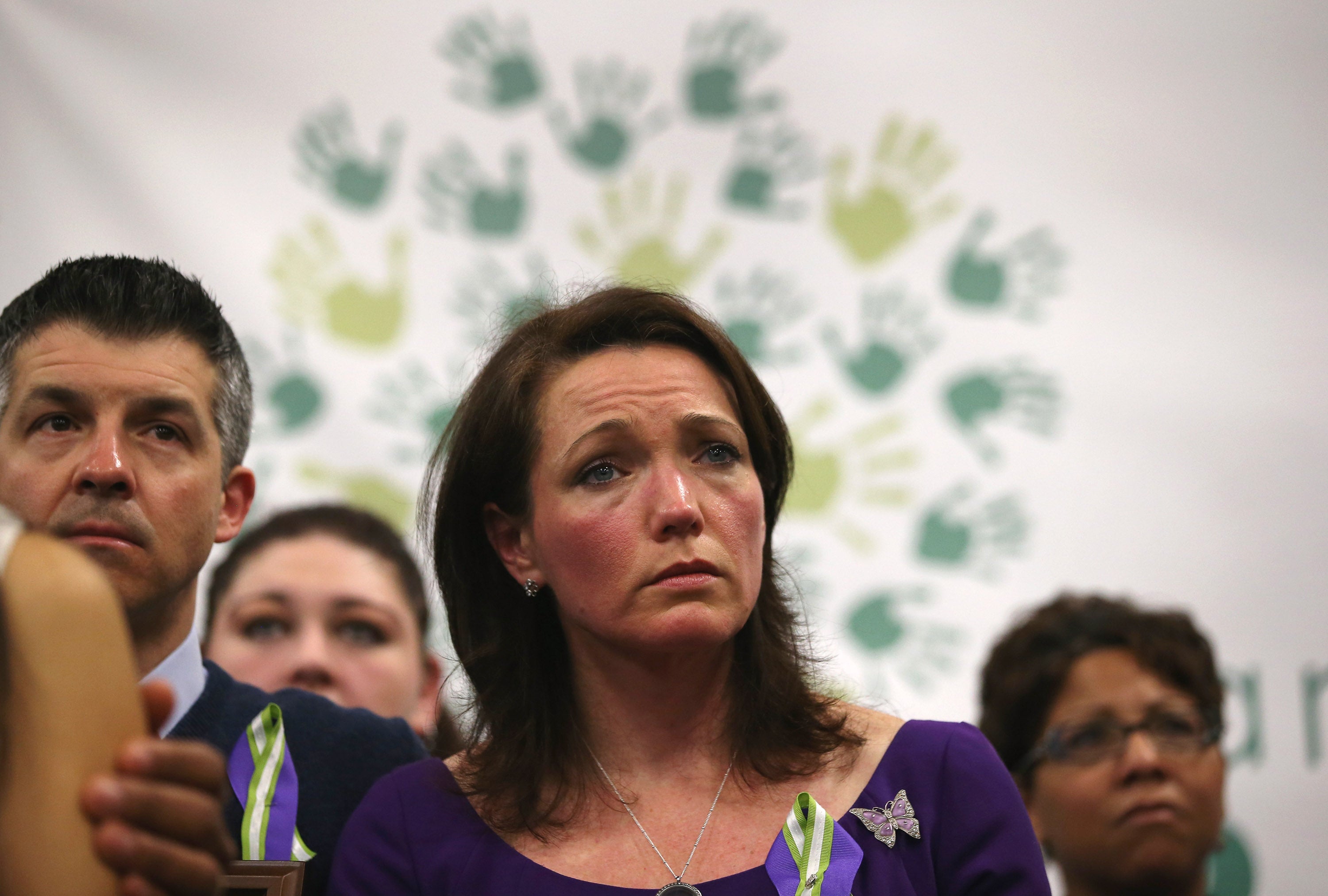
Trainers with Sandy Hook Promise, a non-profit founded in early 2013 by Hockley and other relatives of the Newtown victims, have travelled to all 50 states. They show students how to spot signs of potential violence or self-harm – which can include threats on social media, an obsession with weapons, or behavioral changes – as well as the importance of speaking up before something bad happens.
For a generation of students accustomed to news of mass killings and regular lockdown drills, the "Say Something" program offers a tangible way to take action.
Addison Hunt, a 17-year-old junior at Hanover High School in Massachusetts, reflected on this sentiment: "School shootings are definitely very scary, and they do run through your head as a high school student. But I think being able to have these outlets where you can report things definitely makes me feel a lot safer."
During a recent session at Hanover High, instructor Keely Rogers, a 28-year-old former high school music educator, highlighted the critical role students play. Research indicates that nearly all school attackers exhibit warning signs beforehand, most commonly on social media.
"You are going to become the eyes and ears of your school through social media, right?" she told the students. "Your teachers and staff don’t follow the same people as you. They can’t keep an eye out. They can’t keep everyone safe."
She cited an Instagram post, pulled from a real tip, that read: "Don’t come 2 school tomorrow if you wanna live." Rogers noted someone reported the post within three minutes, leading to swift action.
Ava Khouri, Hanover’s senior class president, noted a key takeaway: overcoming the fear of being perceived as a "tattletale."
"I think that definitely students are wary to bring these issues up to adults and administration in the school, because they’re worried they’re either going to be made fun of for tattling or getting someone else in trouble," she said. "So I think that this program definitely gave light to the fact that you’re not a tattletale if you’re helping someone and you’re helping others."
Both Hunt and Khouri confirmed they had reported troubling behavior to parents and educators prior to learning about the program.
The "Say Something" anonymous reporting system is staffed 24 hours a day, 365 days a year, by trained crisis counsellors, who refer serious situations to police and school officials. While common tips include concerns about bullying, drug use, harassment, and self-harm, the system also receives alarming reports that are immediately escalated to law enforcement.
One such instance occurred last year in Indiana, where a tip reported a student planning a shooting at Mooresville High School, near Indianapolis, on 14 February – the anniversary of the 2018 Marjory Stoneman Douglas High School massacre in Parkland, Florida.
Trinity Shockley, 18, was arrested on February 12. According to a police report, the tipster, a friend, revealed Shockley’s obsession with the Parkland shooter and access to an AR-15 rifle.
Shockley’s social media postings included a chilling message: "Parkland part two. Of course. I’ve been planning this for a YEAR."
She later pleaded guilty to conspiracy to commit murder and received a 12-year prison sentence, despite her lawyer’s assertion that she would not have carried out the plan.
Sandy Hook Promise asserts that its program and reporting system have prevented shootings in communities like Mooresville, and have also intervened in potential suicides.
Hockley concluded with a poignant reflection on the program’s necessity: "So it’s bittersweet, because I wish this had existed before Sandy Hook."
If you are experiencing feelings of distress, or are struggling to cope, you can speak to the Samaritans, in confidence, on 116 123 (UK and ROI), email jo@samaritans.org, or visit the Samaritans website to find details of your nearest branch
If you are based in the USA, and you or someone you know needs mental health assistance right now, call or text 988, or visit 988lifeline.org to access online chat from the 988 Suicide and Crisis Lifeline. This is a free, confidential crisis hotline that is available to everyone 24 hours a day, seven days a week. If you are in another country, you can go to www.befrienders.org to find a helpline near you