Annual growth in the average UK house price accelerated to reach 2.2% in June, up from 1.7% in May, Nationwide Building Society has reported.
The average UK house price in June was £277,484.
Robert Gardner, Nationwide’s chief economist, said: “Annual house price growth picked up to 2.2% in June, from 1.7% in May, although prices were broadly flat (with a 0.0% change) in month-on-month terms, after taking account of seasonal effects.
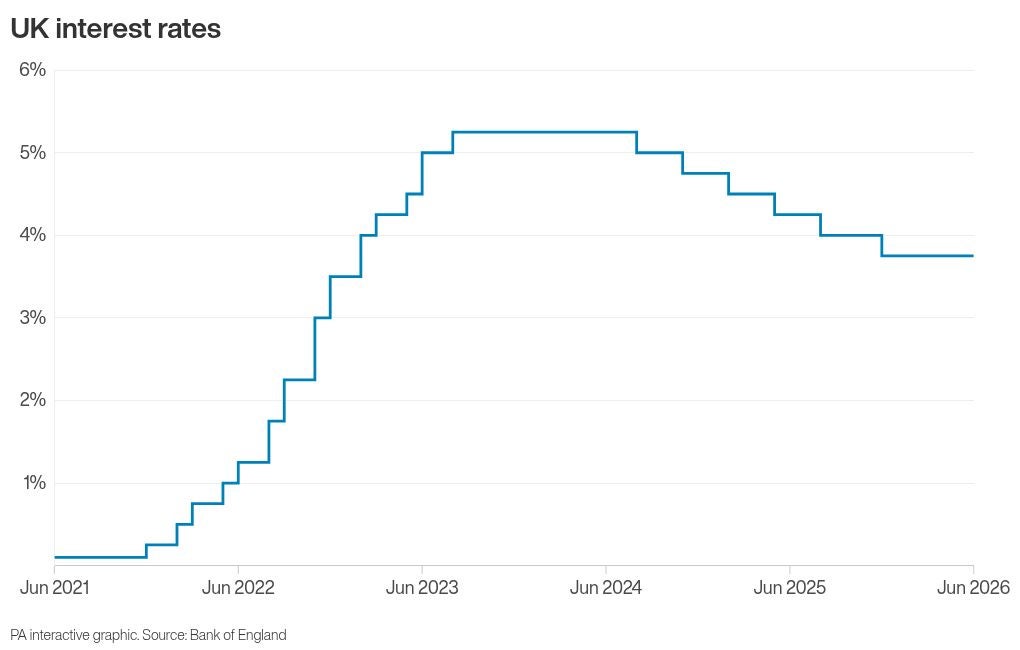
“It is not surprising that the market has softened a little in recent months, given the uncertainty caused by developments in the Middle East and the subsequent rise in energy prices and market interest rates.
“Indeed, consumer confidence and measures of housing sentiment have weakened, and mortgage approvals fell noticeably in May.
“While geopolitical tensions remain high, the signing of a memorandum of understanding between Iran and the US helped push oil prices back towards the levels prevailing before the conflict began.
“If the energy shock continues to subside, the Bank of England may not need to raise interest rates, or at least by less than had previously been anticipated – a view reinforced by the fact that UK inflation has also been lower than expected in recent months.
“In recent weeks a shift in market expectations for the future path of (the Bank of England base rate) has helped to bring down the market interest rates which underpin fixed-rate mortgage pricing.
“If maintained, these trends will help to restore household confidence and ease affordability constraints, paving the way for a recovery in housing market activity in the coming quarters, providing that domestic political uncertainty does not adversely impact sentiment.”
Amy Reynolds, head of sales at London-based estate agency Antony Roberts, said: “There is the familiar pre-summer push from families wanting to be settled before the new school year, but the mood is steady and selective rather than booming or stalling.”
Ian Futcher, financial planner at wealth manager Quilter said: “Many prospective buyers are continuing to delay making any major financial commitments.
“Confidence remains fragile and, after a lengthy period of fluctuating mortgage rates, households are understandably reluctant to make a move until there is greater certainty over borrowing costs and the wider economic outlook.”
Aneisha Beveridge, research director at Connells Group, said: “In more expensive markets, households are often weighing up not just higher mortgage costs but also the wider costs of moving, including substantial stamp duty bills, which means many are only choosing to move when they need to.
“Meanwhile, across much of northern Britain, affordability is less stretched, making it easier for existing homeowners to trade up.
“The result is a market that remains more fluid, supporting both higher levels of activity and stronger house price growth.
“It’s a pattern we’ve seen for much of the last decade, and one that continues to shape the housing market today.”
Here are average house prices in the second quarter of this year and the annual increase, according to Nationwide Building Society:
Northern Ireland, £226,699, 8.6%
North West, £231,415, 3.9%
North East £173,756, 3.9%
Scotland, £195,928, 3.5%
Wales, £220,337, 3.5%
West Midlands, £256,592, 3.2%
Yorkshire and the Humber, £217,518, 2.9%
East Midlands, £240,482, 1.8%
London, £540,903, 1.6%
South West, £310,429, 0.7%
East Anglia, £274,375, 0.3%
Outer Metropolitan (includes St Albans, Stevenage, Watford, Luton, Maidstone, Reading, Rochford, Rushmoor, Sevenoaks, Slough, Southend-on-Sea, Elmbridge, Epsom and Ewell, Guildford, Mole Valley, Reigate & Banstead, Runnymede, Spelthorne, Waverley, Woking, Tunbridge Wells, Windsor and Maidenhead, Wokingham), £432,173, 0.3%
Outer South East (includes Ashford, Basingstoke and Deane, Bedford, Braintree, Brighton and Hove, Canterbury, Colchester, Dover, Hastings, Lewes, Fareham, Isle of Wight, Maldon, Milton Keynes, New Forest, Oxford, Portsmouth, Southampton, Swale, Tendring, Thanet, Uttlesford, Winchester, Worthing), £341,175, 0.1%