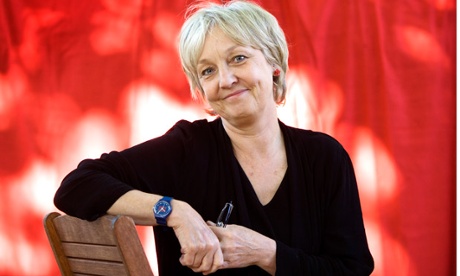
Anne Fine is one of the most celebrated children’s authors of our time with over 50 books published in 45 different languages; she has won countless awards, received an OBE in 2003 and even been Children’s Laureate. Basically, she’s seen it all. So going to meet her was a pretty daunting prospect; it was as if a fiery dragon was waiting for me on the other side of the door!
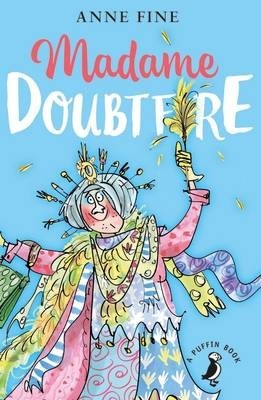
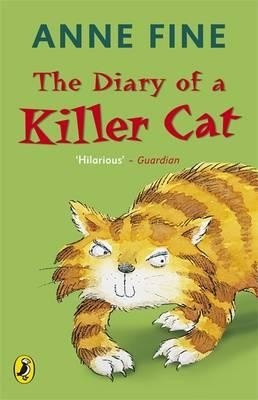
I’d grown up alongside her books: Goggle Eyes, Madame Doubtfire and The Diary of a Killer Cat were my childhood. I was terrified she’d shatter the awe-inspiring image I held of her. Upon seeing her my brain flashed through the options: a) freeze there gawking; b) run; or, c) start the interview. Then she drew back her lips, revealing a brief flash of teeth. This left me with only one sane option and so our conversation began…
During your career you have written more than 50 books for all different ages. Where do you draw your inspiration from and how do you keep coming up with new ideas?
It’s always been the same: a little nudge. A subject comes along – you overhear something curious or something happens to a friend of yours – and it’s as if you have an antennae. Once I get the itch I can’t help myself: I start reading around it, thinking about it, working out how I feel about it. But it has to be something that intrigues you, so often it’s something halfway to personal.
So have you ever incorporated experiences from your own life into your work?
All the time! But I do it in a way that is thoroughly disguised. For example, a lot of the bossy mothers in the books are me – you wouldn’t want to be my daughter! But Jan Mark very wisely said, “You don’t write about people you know, you write what you know about people”. Now we all break this rule sometimes and write about one aspect of a person we know, but people are so multifaceted (a bit like mirror balls) that if you just pick one facet of a person’s personality, they’ll never recognise themselves. And if you do write about your family and friends, you have to be very careful to disguise them or they will not stay your friends and family very long.
Is there an age group you particularly love writing for?
No. The target audience depends on whatever the story is, so if someone tells me a ridiculously funny story about a cat, then I’ll think Killer Cat, which goes for 7-9s. But of course when you’re writing for adults you tend to pick things that are only interesting to adults, such as in my book All Bones and Lies, which is about caring for an old person – the irritations and the responsibility.
But is there a genre you particularly enjoy writing?
I’m interested in domestic; families, to me, are fascinating! I find it quite remarkable that you can have so many people with such different characters and interests living all together under the same roof. They’re always bouncing off each other; everybody going through periods of being more stressed and strange, and yet families usually make it, and it’s these endless refractions of who sets what off that fascinates me. I’ve always loved arguments in books, so I do tend to write ones in which people are having good long ding-dongs!
When did you first want to become a writer and what originally sparked your interest?
I didn’t ever want to become a writer! As children we never thought about ourselves as becoming adults; all I ever wanted was to be left alone to read! The only reason I ever started writing a book was because I was stuck in the house with absolutely nothing to read. It was when we were living in Edinburgh; there was a terrible storm and strikes meant the pavements weren’t gritted, hence with a baby in a pram, no money and the city’s neverending hills it was impossible to get to the library. So I sat down and started to write. That was the first book and since then I’ve never stopped.
Your first book, On the Summer House Steps, was published in 1978; has your writing changed since then?
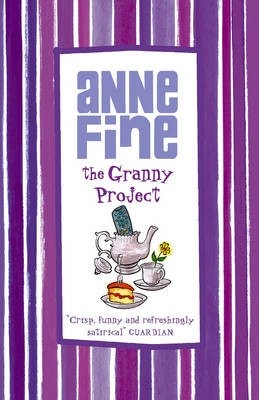
Yes absolutely, although I can’t believe it was that long ago. My first three or four books were very introspective, especially with Round Behind the Ice House which in a bizarre way is a very autobiographical novel. In those first four books I was writing out my own neurosis and childhood unhappiness. The plots are always completely out of the air, but the psychology of the characters in the books are drawn from my own life. I identify with the boys in those novels. But The Granny Project was a watershed book because it was nothing really to do with me, instead it was more political. From being a very introspective author I turned into an extrospective author, writing about things in the outside world.
Have you ever suffered from writer’s block?
No, never. If I ever beached up and couldn’t write anything, I’d be thrilled just to get the garage cleared!
Have you ever encountered criticism in your career?
Not incredibly, but I suspect that is because as a writer I wear three hats: the author’s hat, the parental hat and the citizen hat, and I always swap them around when writing. Plus I’m very picky and I have never ever signed a contract until I’ve finished a book. Now this means that I never have to rush to a deadline, I’m never being nagged by publishers, I take my time to get it right! I set a high standard of what I hand in and I put that down to never having to work against the clock.
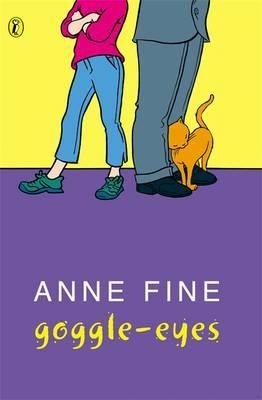
Throughout your career you’ve had many achievements, including twice winning the Carnegie medal and winning the Guardian Children’s Fiction Prize for Goggle Eyes. Madame Doubtfire was even made into a Hollywood film. What would you count as the highlight of your career and why?
I’m very proud of the two Carnegie medals, especially the first, because it’s awarded by the library organisation and I was practically raised in the library.
As a child what were your favourite books and which authors inspired you?
When I was young Anthony Buckeridge with his Jennings books and Richmal Crompton with her William books were my favourites. Then I adored Jules Verne when I got a tiny bit older; I also loved Geoffrey Trease and Henry Treece. In fact, I’ve just been reading a book by Geoffrey Trease called Cue for Treason – it is spectacularly good and he was the first author I ever met! When introduced to him I gasped: “Oh my god, I thought you were dead!”. Obviously when I was a child I thought that books were born on the library shelves; it never occurred to me that anyone actually sat and wrote them. There was not the cult of celebrity that surrounds authors nowadays.
What about now?
I’m an immense fan of Geraldine McCaughrean, she can write the socks off any of us. Everything she does is different and she’s so productive, I often accuse her of having the fairies in to help. Then there’s Hilary Mckay; if her books were a tapestry it would be as neat on the back as it is on the front – she’s a super duper writer! At a personal level I’m not fond of fantasy – show me a sword of thorg and I just clap the book shut! – but I do have a lot of time for Philip Pullman, he’s a very good man in the old fashioned sense of the word. I also love his Sally Lockhart Quartet, the Victorian detective series.
Having been children’s laureate yourself from 2001-3, what do you think of the new laureate Chris Riddell?
I think he’s extraordinarily talented, I really do. It’s an illustrator’s turn and I personally like him a lot. He’s immensely talented, I think he’s a very good choice. Essentially every laureate brings something different to the role, as we all have different interests. For instance, I have a huge interest in things for the blind, as shown by many of my projects; later obviously Julia Donaldson was very interested in deaf children. During my time as laureate I wanted to get children to buy second-hand books and start their own home libraries, because at the time a huge number of families owned only 3 books! Then if you looked closely enough you’d notice one of them was How to Pass your Driving Test, another The Highway Code, and the other the Qur’an or the Bible. So that’s not much reading for your average 14 year old child. So that was the plan and it worked well! But Chris Riddell is a very clever man, very talented, and I think he’ll make an excellent laureate and I look forward to seeing what he’ll bring to the role.
What can we expect to see from you in the future?
If I’m very very honest I’ve really been coasting this year, spending a lot of time with my grandchildren. Grandparenting has come as a massive surprise, lovely and such a gift. Of course there are a couple of things I’ve written for reluctant readers, but essentially nothing that has taken my concentration. Yet, come September I’ll be ready to start – I’ll see something or hear something and think here we go again!
Finally, what advice would you give to aspiring writers?
The best advice, as given by Robert Louis Stevenson: ‘Read, read, read, read everything’. Every book you read turns you into a better writer. But in the words of Allan Ahlberg, ‘the hardest thing about writing is getting your bum on your seat!’ Whereas Philip Larkin, a great poet, said ‘write the book that you yourself would most like to read, but that nobody else has bothered to write for you’. On a level of practical advice, make charts! Though honestly it’s not natural to write a novel when you’re young. It’s far more likely to have a knicker draw full of beginnings, a few middles and no ends. If one of my children had said they were writing a novel when they were your age, I would have told them ‘Go back and do your history homework’.
In the end Anne Fine was all I expected and more, impressive and brilliant, with a wicked laugh. I can’t wait to see her future works and just to mention Anne’s book, Madame Doubtfire, is one of the 20 book recently added to the A Puffin Book Collection. It’s an incredible read for both children and adults, and definitely wasn’t made into a hollywood film for nothing!