My friend Anne Charlton, who has died aged 84 after contracting Covid-19, was a pioneer of cancer education research and smoking prevention in schools. She was a passionate advocate of the importance of public knowledge about cancer for its prevention and early diagnosis.
Her work attracted considerable interest and had a significant impact both in the UK and abroad. The Cancer Research Campaign (now Cancer Research UK) made her a life fellow in 1980 and in 1996 she was appointed professor of cancer health education at Manchester University. It is a testament to her energy and enthusiasm that Anne began her career in cancer research at the age of 39.
She was born in Barrow-in-Furness, Cumbria, the eldest of three daughters of Roy Turner, who worked for the Midland Bank, and his wife, Isobel (nee Sharp), who ran a clothes shop before the second world war. Anne was a naturally investigative child and knew the names of many plants and rocks. A family joke was that she must have been reincarnated; how else could she have acquired such prodigious knowledge? Educated at Barrow Girls’ grammar school and with a first degree from Keele in biology and geology, she qualified as a teacher in Cambridge. She returned to Barrow and taught biology at her old school for many years.
In the years after the 1957 fire at Windscale (now Sellafield), Anne’s pupils sometimes brought in strange bluebells for her scrutiny. Ever curious, Anne applied for a PhD in the botany department at Manchester University. While completing her studies on bluebell development and its sensitivity to radiation, Anne met a young lecturer, Alan Charlton, and they married in 1965. Alan went on to build a distinguished research career in botany, while Anne returned to teaching, this time at Whalley Range High school in Manchester. The couple shared many interests throughout their lives, including a passion for steam locomotion and the restoration of Number 71000 Duke of Gloucester.
In 1974, Anne applied for a job with the Manchester Regional Committee for Cancer Education and began to survey children’s and teachers’ opinions about cancer. The work led to a master’s degree and a lectureship at Manchester University and set Anne’s course for the next few decades.
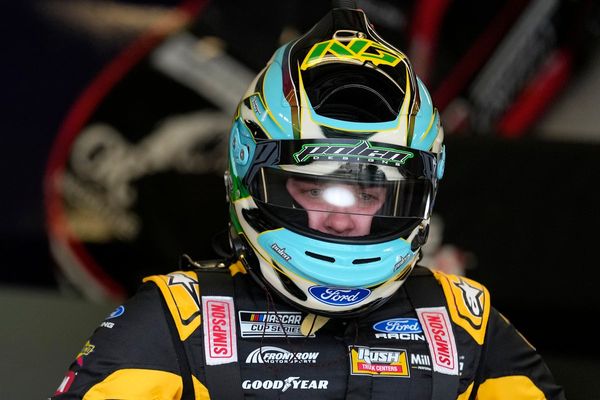
Anne’s work helped to overcome the taboo of cancer and her research on the factors that encourage young people to take up or stop smoking fed into teaching and resources for schools. Her studies also highlighted external influences that reinforced children’s smoking, including tobacco industry sponsorship of Formula One racing and snooker, and contributed to the big push to transform UK government policy to denormalise smoking.
Her zest for living was irrepressible; she continued to travel, to publish and present her research, and to enjoy Shakespeare plays and flower shows to the end of her life. A good friend and colleague to many, Anne was always ready to offer encouragement and support.
Alan died in 2013. Anne is survived by her sisters, Kay and Valerie.