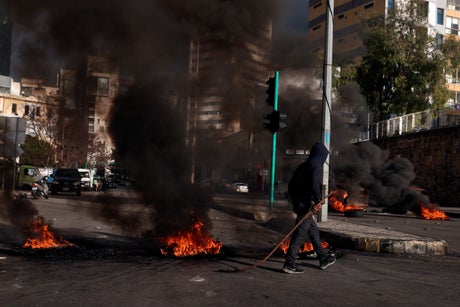
Protesters in Lebanon burned tires and closed several major roads on Thursday as the severe economic crisis gripping the country continued to spiral out of control with no progress on the formation of a new Cabinet
The new wave of protests began on Tuesday after the Lebanese pound plunged to record lows on the black market, raising fears that the deterioration will only get worse. Prices have skyrocketed in recent months.
In a new low, a fistfight broke out inside a supermarket in Beirut, apparently over the purchase of subsidized powdered milk. Some supermarkets and groceries have started setting restrictions on how much people can purchase amid limited supplies and as panicked residents stock up on food at home.
The Beirut supermarket issued a statement later saying the fistfight broke out when a shopper attacked a branch manager who told him he cannot buy large amounts of subsidized milk and oil without considering the restrictions.
“They are humiliating people with a bag of milk,” shouted one protester at a rally on a main highway north of Beirut. “The ruling class must go.”
While officially the U.S. dollar costs only 1,520 Lebanese pounds, the black market price was around 9,950 pounds on Thursday — a day after briefly hitting a record high of 10,000. Just a few months earlier, dollars could be bought at a rate of about 7,000 pounds for $1.
Lebanon’s economic crisis has thrown more people into poverty as tens of thousands have lost their jobs since anti-government protests first erupted in late 2019. The country's economy contracted 19% in 2020 and is expected to shrink again this year, according to the World Bank.
Scores of protesters closed the main Martyrs Square in central Beirut while others blocked the main highway linking the capital with the north and south. Sporadic gatherings in other areas also closed roads. Lebanese troops moved in and opened them briefly before protesters closed them again.
Lebanon has been hit by one crisis after another, with widespread protests against the country’s corrupt political class starting in October 2019. That has been compounded by the coronavirus pandemic and a massive explosion in Beirut’s port last August that killed hundreds and injured thousands, decimated the facility and disfigured much of the city.
Bickering between Lebanon’s political rivals has left the country in a stalemate for months, only worsening the economic disaster sparked by a debt crisis and sovereign default last year.
The government resigned days after the Beirut blast and Prime Minister-designate Saad Hariri was chosen to form a new Cabinet in October but disagreements between him and President Michel Aoun have delayed the formation of the new Cabinet.
On Thursday, Hariri who is in the United Arab Emirates, blamed his rivals for delays while former Foreign Minister Gebran Bassil, a son-in-law of the president, responded by saying that Hariri “is not ready to form a Cabinet.”
The country desperately needs foreign currency but international donors want major anti-corruption reforms first — lest the funds disappear into a notorious state sector sinkhole that has brought the nation to the brink of bankruptcy.
The crisis has driven nearly half the population of the small country of 6 million into poverty. Over 1 million refugees from Syria live in Lebanon.