

Afternoon summary
-
Chris Bryant, the shadow culture secretary, has condemned Rupert Murdoch’s decision to put Rebekah Brooks in charge of News UK, his British newspaper business. Bryant said:
Rupert Murdoch has just stuck two fingers up to the British public and the thousands of people whose phones were hacked by News International.
Hundreds of ordinary journalists lost their jobs when Mr Murdoch closed the News Of The World, but it seems Rebekah Brooks is to get very special treatment.
This decision is ludicrously premature when the Crown Prosecution Service is still considering corporate charges against News Corp, when the House of Commons Privileges Committee has still to rule on whether three News Corp executives lied to Parliament, as claimed by the Culture Media and Sport Select Committee when it was chaired by John Whittingdale, and when the Leveson Inquiry has to still to complete the second part of its work into the events at the News Of The World.
- The Green party has elected Sian Berry as its candidate for London mayor. The Morning Star’s Luke James says this could be bad news for Labour.
Could be bad news for Labour. Will campaign from the left and has said Green voters should not necessarily give second preference to Labour
— Luke James (@LEJ88) September 2, 2015
Fun fact: Sian Berry is technically local councillor for Karl Marx who is buried in her Highgate ward in Camden
— Luke James (@LEJ88) September 2, 2015
That’s all from me for today.
Thanks for the comments.
Here is a Labour leadership reading list.
- Owen Jones set out what Jeremy Corbyn should do if he becomes Labour leader. It is a very long post, but well worth reading. Here are two of his many proposals.
- The Parliamentary Labour Party must be tied in with more party democracy. If Jeremy wins, he will be helped by the fact he has the biggest democratic mandate in the history of the Labour Party. By having more democratic structures for policy-making, the argument can be made that backbench rebellions are rebellions against the democratic decisions of the Labour Party as a whole, rather than an arbitrary leader. Introducing more democratic consultations in the Parliamentary Labour Party will help, too. It will still be extremely difficult. Jeremy has to be extremely conciliatory, as he has indicated — emphasising a broad church, involving people from all wings of the party in the Shadow Cabinet, so that if he is attacked by those determined to undermine his democratically decided leadership, they are exposed as the aggressors.
- Democracy should not mean chaos, though. In our world of rolling news and rampant social media, having public conferences with huge bust-ups over every other issue would not look good at all, and would project an image of unfitness to government, as well as leaving the public unsure what Labour stands for on each given issue. So, there needs to be a balanced approach to democratic involvement.
In a Guardian hustings featuring the four contenders last week, I heard constant complaints about failure to “challenge myths” about the economy, benefits, immigration and other areas where Labour is deemed unfit to govern by the people who choose governments. The voters are wrong, and what is required is a louder exposition of their wrongness. It is like watching a relegated football team argue over the causes of defeat and concluding they spent too much time on their opponents’ half of the pitch.
Most MPs from the Anyone But Corbyn (ABC) camp recognise that they have lost the party and the argument. From the outset Liz Kendall’s supporters misjudged the mood and allowed their champion to be caricatured as a soulless Blairite nostalgist scolding members for their attachment to socialism. As the Corbyn bandwagon gathered momentum, the ABCs deployed rebuttals based on electoral logic: steering left was undesirable because it was impractical. In so doing they ceded idealism to the Corbynites.
They were complicit in the division of Labour into two spheres: principle, which belongs to the left, and cynical calculation, which is the stock in trade of the right. Even the old argument that principle without power is impotent contains a tacit recognition that Corbynism is pure in essence. The more blood-curdling the warning of ballot box catastrophe, the sharper the divide. Corbyn became the light of hope against Blairism’s dark heart of fear.
However, Corbyn has widened the political debate, one that – in England, at least – was stuck in a narrow, outdated place. With the rise of Corbyn, even BBC outlets feel compelled to invite on to their programmes individuals who are a few millimetres to the left of that dreary consensus – the consensus that insists public spending is a “waste”, “reform” can deliver better services on its own without adequate investment, that the only acceptable reform is an anarchic fracturing of services, that the private sector can flourish only if a smaller state keeps out the way ...
In response to the volcanic explosion of Corbyn’s candidacy, the other candidates and the party’s titans have raised their game. Cooper delivered her best speech of the contest when she framed her views against Corbyn’s, dissecting forensically some of his superficially argued economic policies. Tony Blair, who joined the early waffle festival with an empty speech about “comfort zones”, wrote a more thoughtful article in The Observer on Sunday, scathing about Corbyn as a leader but subtly curious about those who follow him with such fervour, and openly unsure how internal opponents should respond to them. In its nuanced dismissal it was a model for his followers who treat Corbyn and his followers only with patronising disdain.
Corbyn has stormed ahead of his leadership rivals by being an “anti-politician”, despite his 32 years in parliament. He’s a straight-talker, a man seemingly unafraid to say the unsayable. But as the contest has dragged on this summer, it’s clear that actually – whisper it – he quite likes to play it safe.
His team was stung last week by the media’s response to a press release pledging a consultation on women-only train carriages to tackle a rise in sexual assaults. In the blunt language of newspaper headline writers, the idea became a “plan” – as nearly all consultations inevitably do. Corbyn was baffled by the widespread criticism that followed and went on television to insist it was not policy.
Figures inside Labour HQ said the incident revealed Corbyn’s “lack of confidence” in his own ideas. They are convinced that a party ruled by Corbyn will not be one ruled with an iron fist. When it comes to foreign policy, he is likely to remain firmly on the fence. In the past he has argued that Britain should withdraw from NATO altogether. But in recent weeks he has rowed back, telling one hustings that there “wasn’t an appetite as a whole for people to leave” and that he would argue for the military alliance to “restrict its role” instead.
Blair’s ability to win elections was not accompanied by a coherent philosophy. The seminars he held with Schroeder’s German SPD and Clinton Democrats on the “Third Way”, the ultimate attempt at government by triangulation, collapsed in ridicule. And the question neither Labour’s candidates nor their socialist colleagues abroad can now answer is – in a century in which markets dominate, more power passes to consumers, technology gives more choice by the day to individuals, working lives are more flexible than ever, and class-based voting is dying out, what is the role and purpose of the moderate Left?
You can scan in vain the speeches of Yvette Cooper, Liz Kendall and Andy Burnham for a clear answer to this question, although I do not necessarily recommend it unless you find it hard to sleep. You might think there is a modern social democratic case to be made that some people – the less educated, unskilled, and immobile – could miss out on the benefits of the information revolution and that changing that is a new purpose of the centre-Left. Instead, in Britain and across Europe, it is left to fringe parties to prey on those dissatisfied with the vast and rapid changes in modern society.
The Green party has announced its candidate for London mayor next year. It’s Sian Berry. She was the party’s mayoral candidate in 2008.
And the @TheGreenParty 's candidate for the 2016 mayoral race is @sianberry pic.twitter.com/KP2ipbedfC
— Pippa Crerar (@PippaCrerar) September 2, 2015
She is also at the top of their list for seats in the London assembly.
First the assembly list top three: @sianberry @highburyonfoot @jon_bartley #VoteGreen2016
— Green Party (@TheGreenParty) September 2, 2015
Tim Montgomerie, the ConservativeHome founder and Times columnist, is not impressed by David Cameron’s statement about refugees. (See 1.37pm.)
David Cameron has said we should not take any more refugees. We could hardly take any fewer. pic.twitter.com/CsAeKR1oHr
— Tim Montgomerie ن (@montie) September 2, 2015
Blair says Labour made 'mistake' after devolution by not promoting Britishness
Andy Burnham said this morning Labour had been “too weak in standing up to nationalism”. This sentence, which was in an extract released in advance (see 9.22am), was not in the speech he actually delivered, but aides say that that is because he tinkers with speeches until the last moment and that he stands by the words in his preview press notice.
Interestingly, Tony Blair has said something similar recently, in an interview with the Labour former home secretary Charles Clarke for a book that Clarke has co-edited, British Labour Leaders. In the interview Blair says that Labour made “a mistake” after giving Scotland devolution because it did not do enough to promote Britishness. In effect, he is admitting that his government was partly responsible for the rise of the SNP.

It is well known that Blair had some reservations about devolution - he wrote about them in his memoirs, A Journey - but I can’t recall him ever being this blunt about failing to foster a British sense of national identity.
Here is the key quote.
I did feel that we made a mistake on devolution. We should have understood that, when you change the system of government so that more power is devolved, you need to have ways of culturally keeping England, Scotland and Wales very much in sync with each other. We needed to work even stronger for a sense of UK national identity.
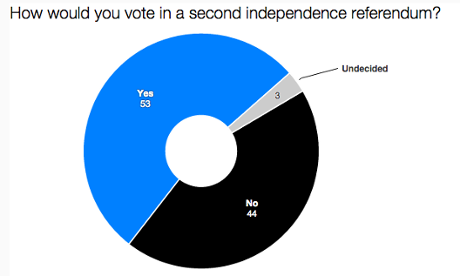
That might explain why Blair appears to be gloomy about the prospect of Scotland staying in the UK. In his Observer article about Jeremy Corbyn at the weekend, Blair acknowledged that Scotland could vote yes to independence in the future. His pessimism (he’s a unionist) seems well founded. Today STV has a poll suggesting that, if Scots were to vote on independence now, the yes camp would win with a 9 point lead.
Ruth Davidson, the Scottish Conservative leader, told me that Blair was right to blame himself in this regard. Asked for a response, she said:
It’s no surprise to see these critical remarks of Labour’s handling of devolution from Tony Blair. His party’s approach to the issue at the time was ill-thought-through. Not only are we having to revise the settlement now to make it more balanced, but their cavalier attitude to the constitution put Britain in jeopardy – as we saw in last year’s vote – and has left the Labour party in crisis.

Cameron signals he is opposed to Merkel's call for Britain to take more refugees
David Cameron has signalled that he is opposed to calls from Angela Merkel, the German chancellor, for Britain to take more refugees. This is what he said in a comment to the BBC this morning.
We’re taking action right across the board we’re helping the countries from which these people are coming, stabilising and trying to make sure there are worthwhile jobs and stronger economies there, we’re obviously taking action at Calais in terms of the Channel, which I’ve described on previous occasions. There’s more that we need to do and we’re working together with our European partners as well. These are big challenges but we will meet them.
We have taken a number of genuine asylum seekers from Syrian refugee camps, we keep that under review but we think the most important thing is to try to bring peace and stability to that part of the world. I don’t think there is an answer that can be achieved simply by taking more and more refugees.
Updated
Lunchtime summary
- The Office for National Statistics has published figures showing that the number of workers saying they are on a zero-hours contract has gone up by almost 20% in the last year. Some 744,000 people now say their main job involves a ZHC. But they only account for 2.4% of people in employment.
-
Andy Burnham, the Labour leadership candidate, has said David Cameron will show a lack of respect to Britain’s armed forces if he tries to “bounce” parliament into supporting an extension of British airstrikes against Islamic State targets from Iraq to Syria. In a speech on defence and security, he repeatedly criticised positions taken by Jeremy Corbyn, the favourite in the leadership contest, saying that he (Burnham) was committed to the renewal of the nuclear deterrent, that suggesting Labour could campaign to leave the EU (as Corbyn has done) would be “a danger to our future prosperity” and that it would be a “profound mistake” for the opposition leader to opt out of the privy council, as Corbyn has hinted he might. (A privy counsellorship is one method used to facilitate access to confidential security briefings.) He also floated the idea of banning countries a poor human rights record, like Russia or Iran perhaps, from the world cup.
Let me be clear, we will always need military capability, but other levers can and should be pulled as part of a complementary strategy.
For example, should countries that are not part of a binding emissions-reduction agreement be allowed to be members of the World Trade Organisation?
And in other areas, where club membership on the global stage is a badge of status, should countries with poor human rights records be allowed to take part in the Olympics or the football World Cup?
- Burnham has said that Labour was “too weak in standing up to nationalism”. (See 9.22am.)
- Cameron is backing down on his refusal to impose a period of “purdah” in the runup to the EU referendum in a concession to his Eurosceptic backbenchers. As Rowena Mason reports, the government is planning to table changes to the rules on Wednesday after an outcry from some anti-EU MPs when the bill was unveiled after the election.
-
Nicola Sturgeon, Scotland’s first minister, has said the Scottish government could block plans to hand more powers to Holyrood if a “fair deal” over funding cannot be agreed with Westminster. As the Press Association reports, Sturgeon said that while she said she hoped the Scottish parliament would be able to give its consent to the Scotland bill, extending devolution to Scotland, by March next year, she stated: “Let me make clear that we will only recommend consent if the accompanying fiscal framework is also fair to Scotland.” The Scotland bill proposes giving Holyrood the power to set thresholds and rates of income tax as well as to retain the cash raised in Scotland. But, as a result of this, the block grant the Scottish government receives from Westminster each year is to be reduced. Sturgeon claimed the UK Treasury could attempt to “penalise” Scotland by cutting the grant by a greater amount than Scottish ministers could hope to raise, effectively cutting the country’s budget. Talks between the two governments over the funding arrangements are taking place at the moment, she said. Speaking on BBC Radio Scotland’s Good Morning Scotland programme she said:
I want to see many more powers than are proposed right now come to the Scottish parliament, but it would not be in the interests of the Scottish Parliament for more powers to come and at the same time have a fiscal framework that effectively cuts our budget. We’re in a discussion, a negotiation just now. I’m simply making the point - and I can’t believe anybody in Scotland would have expected me to say anything different - that I would not sign up to or support something that was an inherently unfair deal for Scotland. As we get responsibility over tax, then our block grant is reduced by a commensurate amount. But the devil is in the detail of that discussion.

Updated
Dave Prentis, the Unison general secretary, says the use of zero-hours contracts is a particular problem in the social care sector. He has put out this statement.
Zero-hours contracts are well and truly here to stay, and despite the economic recovery, casualised work continues to grow. This way of working may suit some people, but for many the irregular hours mean unpredictable wages, and that uncertainty can play havoc with household finances.
The growth of zero hours in social care is being driven by government cuts to council spending, a trend which is having a detrimental impact on the quality of care. Zero hours make minimum wage abuses more likely, as employers fail to pay home care workers for the time they spend travelling between the homes of the people they care for.
And this is from Chuka Umunna, the shadow business secretary, on the ZHCs figures.
These stark figures show that the Tories are the party of insecurity at work.
Zero-hours work is on the rise with the total number of contracts rising to 1.5m and the number of people reporting their main source of employment as a zero-hours contract having risen by almost 20% since last year. At the same time, there are now over 1.2m people working part time because they could not find full time work - 200,000 more than when the Tories took office in 2010.
Ministers are watering down vital protections at work and have refused to act to protect workers on zero-hours contracts. As long as ministers are happy to sit aside and encourage the proliferation of insecure work, more and more people won’t have the security of knowing where their next pay cheque is coming from or being able to plan ahead.
The Institute of Directors has defended the use of zero-hours contracts. This is from James Sproule, its director of policy.
Zero hours contracts offer businesses and employees an important degree of flexibility. For skilled professionals, a degree of flexibility can boost their earning power, while flexibility also suits students and older people – the main users of zero hours contracts – who cannot commit to a set number of hours each and every week.
Flexible working arrangements helped preserve jobs during the downturn and protected the UK from double-digit rates of unemployment. As businesses began to create jobs at a record pace, attention on the quality of those jobs and concerns around zero hours contracts boomed. This helped make sure practices like exclusivity clauses – something which run contrary to the very flexibility zero hours contracts were designed for – were stamped out.
The Press Association has compiled a useful table of zero-hour contracts facts. Here it is.
- The number of people on zero-hours contracts is up 19%, from 624,000 in April to June 2014 to 744,000 in April to June 2015.
- 2.4% of workers in the UK were on zero-hours contracts between April and June 2015 - up from 2.3% on the same period 12 months earlier.
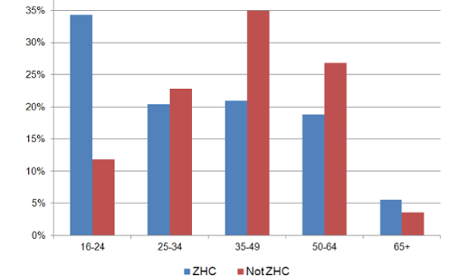
- Around one in 15 16 to 24-year-olds in employment are estimated to be on a zero-hours contract. This is up from one in 16 in 2014, and is the biggest rise for any age group.
- 3.6% of people aged 65 and over in employment are estimated to be on a zero-hours contract - the second highest percentage after 16 to 24-year-olds.
- More women than men are estimated to be on zero-hours contracts: roughly three in 100 workers compared with two in 100.
- The West Midlands is the region in England with the highest estimated percentage of workers on zero-hours contracts, at 3.1%. Yorkshire and Humber has the lowest with 2.1%.
- Scotland is estimated to have 1.9% of its workforce on zero-hours contracts, while Wales has 2.8%. There is no reliable estimate for Northern Ireland. The overall figure for England is 2.5%.
- Roughly one in 10 people working in the accommodation and food industries are on zero-hours contracts - the highest for any sector. The next largest percentage is estimated to be for admin and support services, where one in every 24 are on zero-hours contracts.
- People on zero-hours contracts usually work around 25 hours a week - down from 26 on last year. This compares with an average of 37 hours for everyone in employment.
- One fifth (20.3%) of people on a zero-hours contract are in full-time education. This is up from 18.9% on the year.
- Slightly more people born outside the UK (3%) than in the UK (2.3%) are employed in this country on a zero-hours contract.
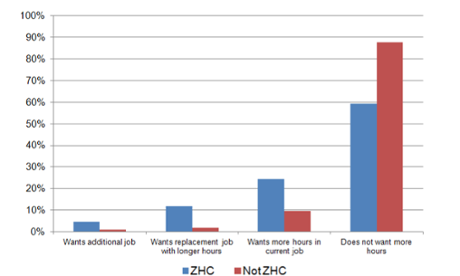
- Over half of people (59%) on zero-hours contracts do not want more hours. Just under a quarter (24%) say they want more hours in their current job.
Here’s a comment from BTL about the experience of being on a zero-hours contract which is worth reading.
Here’s Steve Turner, the Unite assistant general secretary, on the growing use of zero-hours contracts.
The continued rise of zero hours contracts underlines how government claims to be on the side of working people are nothing more than lip service. These figures are the tip of an insecure iceberg – they do not include short hours contracts and the wider rise in insecure, precarious work across the economy.
Companies like Mike Ashley’s Sports Direct are basing their whole business model on the use of low paid zero hours contracts with people not knowing from one week to the next whether they will have work.
This shameful business model and rise of insecure work across the economy is taking us back to the Victorian era and should have no place in 21st century Britain.
John Philpott, an employment trends analyst, says that although only a relatively small number of workers are on zero-hours contracts - only 2.4% of workers say their main job is a ZHC one - the existence of these contracts affects conditions for other workers.
Although the share of zero hours contracts in total employment remains relatively small and some employees like the flexibility these contracts offer them, the ability of employers to hire people in this way undermines the bargaining power of other workers thereby dampening pressure for improved pay and conditions, particularly at the bottom end of the labour market. The effect of zero hours contracts on market behavior and outcomes is thus likely to be greater than their incidence might suggest.
Wider use of zero hours contracts also undermines the spirit of statutory minimum wage regulations because people employed on zero hours contracts are only entitled to the minimum wage for the hours they actually work and receive nothing when ‘on call’, which serves to intensify income insecurity. Moreover, in an otherwise very lightly regulated UK labour market the forthcoming large hike in the minimum wage when the national living wage (NVL) is introduced next year might act as a further incentive to employers to increase their use of zero-hours contracts – which are already very prevalent in sectors where the NVL will bite hardest - in order to minimize the impact on total labour costs.
Zero-hours contracts explained in three charts
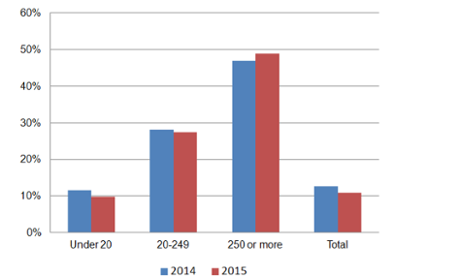
Here are three charts from the ONS report that set out key figures about the zero-hours contract workforce.
1 - Proportion of firms using ZHCS, by size of firm. Large firms, with more than 250 employees, are using them more, and now almost half of them use ZHCs. But smaller firms are using them less in 2015 than in 2014, and only around 10% of firms with fewer than 20 staff use them.
2 - Age profile of people on ZHCs. This shows the age profile of the ZHC workforce, and the non-ZHC workforce. Some 34% of people on ZHCs are aged 16 to 24. But only 12% of non-ZHC workers are that age.
3 - Proportion of workers looking for more hours. This is a rough proxy for job satisfaction. Almost 60% of ZHC workers do not want to work extra hours, compared to almost 90% of other workers. And 12% of ZHC workers want a different job with extra hours, compared to 2% of other workers.
Updated
The Resolution Foundation, a thinktank focusing on low pay, says today’s ONS figures show that zero-hours contracts are becoming a permanent feature of the economy. This is from Laura Gardiner, a senior policy analyst at the foundation.
Capturing the true scale of ZHC working has proven challenging in recent years but it is clear that this form of working is not fading away as our employment recovery gains ground.
While it’s true that some people value the flexibility offered by ZHCs, for many they bring deep insecurity. Alongside reduced employment rights, the potentially irregular nature of earnings they provide makes it hard to budget and plan ahead.
We should remember that only a small minority of workers are on ZHCs and overall job security has tended to rise slightly in recent decades. But for those affected – particularly in low-paying sectors such as hospitality, where two in five businesses use ZHCs – the danger is that job insecurity is becoming deeper.
Policy makers must act to ensure that the benefits of labour market flexibility are balanced appropriately with protecting workers’ rights.
Frances O’Grady, the TUC general secretary, says the rise in the number of workers on zero-hours contracts shows that Britain has a “two-tier workforce”. In a statement she said:
Zero-hours contracts are a stark reminder of Britain’s two-tier workforce.
People employed on these contracts earn £300 a week less, on average, than workers in secure jobs.
I challenge any minister or business leader to survive on a low-paid zero-hours contract job, not knowing from one day to the next how much work they will have.
Try telling zero-hours workers who have been turned down by mortgage lenders and landlords that they are getting a good deal.
We need a stronger and fairer recovery that works for everyone, not one that forces people to survive off scraps of work.
According to TUC research, the average weekly earnings for people on ZHCs are £188, compared to £479 for permanent workers. The TUC also says that 39% of ZHC workers earn less than £111 a week – the qualifying threshold for statutory sick pay – compared to 8% of permanent employees.
The headline “19% increase” figure for zero-hour contracts comes from the Labour Force Survey, which asks employees about their work.
The ONS report also contains figures from a second survey which asks employers about their use of ZHCs. These figures also show an increase in their use over the last year, although it is not as high as the LFS increase and the same caveat - that the rise may partly be due to more accurate reporting as a consequence of better awareness (see 9.57am) - also applies. The ONS says:
The estimate from the third ONS survey of businesses indicates that there are around 1.5 million contracts that do not guarantee a minimum number of hours (NGHCs), measured on work carried out in the fortnight beginning 19 January 2015.
These latest results from the business survey can be compared with those for January 2014, published in April last year. Such comparisons provide, for the first time, an indication of the change in the number of NGHCs over a one year period. This latest estimate of total NGHCs where work was done in the reference period is some 91,000 higher than the 1.4 million estimate for January 2014, an increase of 6%, though the increase is not statistically significant. As with the LFS figures, responses to the survey could be affected by changes in employers’ reporting behaviour.
The 1.5m figure is obviously a lot higher than the 744,000 figure. That is because 1.5m applies to the number ZHCs in operation, and the 744,000 figure relates to the number of individuals whose main job involves a ZHC. Some workers will have more than one ZHC job. Or they might have a second job with a ZHC, but not show up in the 744,000 figure because their main job involves a normal contract.
This is what the ONS says about the people who tend to be on zero-hours contracts.
People on “zero-hours contracts” are more likely to be women, in full-time education or in young or older age groups when compared with other people in employment. On average, someone on a “zero-hours contract” usually works 25 hours a week. Around 40% of people on a “zero-hours contract” wanted more hours, with most wanting them in their current job, rather than in a different or additional job.
In its news summary the Office for National Statistics says the 19% increase is in the number of people saying their main job involves a zero-hours contract. This does not definitely mean that there has been a 19% increase, because some of the rise might be explained by people being more likely to know that they are on a ZHC and to report it because of the attention the issue is getting in the media, they say.
Here’s an extract from the news release.
The latest estimate of the number of people who are employed on “zero-hours contracts” in their main employment, from the LFS, which is a survey of individuals in households, is 744,000 for April to June 2015, representing 2.4% of people in employment. It should be noted that responses to the LFS can be affected by respondents recognising the term “zero-hours contract”. This latest figure is higher than that for April to June 2014 (624,000 or 2.0% of people in employment), but it is not possible to say how much of this increase is due to greater recognition of the term “zero-hours contracts” rather than new contracts.
Number of workers on zero-hours contracts up 19%
The Press Association has snapped this about zero-hours contracts.
The number of workers on zero hours contracts has increased by 19% to 744,000 over the past year, new figures from the Office for National Statistics showed.
Here is the ONS summary. And here is the statistical bulletin, with the full details (pdf).
In his speech Andy Burnham says that nationalism is “on the rise” and that looking at politics through a left/right frame isn’t always so helpful any more. (See 9.22am.) Last year’s Scottish independence referendum would seem a good example of this.
But there is an interesting counter view from Paul Mason in his new book PostCapitalism which is worth quoting in the context of Burnham’s speech. Mason writes:
I covered first-hand the Scottish independence referendum of 2014. Contrary to media myths, this was not a nationalist surge but a left-inclined plebian movement. Handed the opportunity to break away from a neoliberal state committed to austerity for the next decade, the Scottish people came very close to doing so and breaking up the world’s oldest capitalist economy in the process.
Here’s more from the Burnham speech, from Twitter.
Andy Burnham accuses Government of "dangerous lack of leadership" on #migrantcrisis pic.twitter.com/1Vh5KLCLU5
— Andrew Woodcock (@AndyWoodcock) September 2, 2015
Andy Burnham says he wd consider military action against Isil in Syria but Govt must show it is legal & there is credible post-conflict plan
— Andrew Woodcock (@AndyWoodcock) September 2, 2015
Burnham on refugees: "This is a humanitarian crisis, not just a tedious inconvenience for UK holiday-makers, as Govt might have us believe."
— Kevin Schofield (@PolhomeEditor) September 2, 2015
I am committed to the renewal of Trident but we should set target that this will be last time we renew nuclear deterrent - @andyburnhammp
— Nicholas Watt (@nicholaswatt) September 2, 2015
Burnham says Labour has been 'too weak in standing up to nationalism'
Here’s an extract from the Andy Burnham speech released in advance.
-
Burnham says Labour has been “too weak in standing up to nationalism”.
Analysis of the Labour leadership election has viewed it through a traditional left-right frame. But arguably that’s not where the real energy in politics is anymore.
Around the world, nationalism is on the rise - in a way not seen since the end of the Second World War. The politics of identity and nationality is where the real action is to be found.
Across Europe, we have seen the rise of nationalist parties that lean to the left and to the right. And established parties have begun to follow suit. Here in this country, the governing party spent an election playing to English nationalism and openly stoked resentment of Scottish nationalism.
So as nationalist parties take up positions of power, membership of international alliances and institutions will be questioned, as isolationist and protectionist policies are pursued. This risks leaving the world more fragmented, more divided and less secure than at any point since the end of the World War II.
As Labour leader, I will fight nationalism wherever I find it. It is a dead-end towards division, separation and conflict. I consider myself British, before I’m English, and an internationalist at heart.
Labour has been too weak in standing up to nationalism. Those who believe in Britain, and believe in Britain in Europe, need to stand up and be counted now. That’s what I will do. I will defend the UK at all costs, its place in Europe and its membership of international organisations.
I’ll post more from the speech when I’ve seen the full text.
Yesterday Number 10 agreed to change the wording of the planned referendum on EU membership. Today we’re getting another EU referendum climbdown, of sorts. As the BBC reports, the government is going to accept (with some exceptions) rules that will ensure that “purdah” applies in the run-up to the contest - meaning that ministers cannot use the machinery of government to do or say anything shortly before the vote that would affect the outcome.
Sir Bill Cash, the Conservative Eurosceptic and chair of the Commons European scrutiny committee, told the Today programme that he did not see why there should be any exemptions for ministers from the normal “purdah” rules that apply during referendums under the terms of the Political Parties, Elections and Referendums Act 2000. “I think there is a strong case for not having any exemptions,” he said.
The EU referendum bill gets its report stage in the Commons on Monday and the government concession will come in the form of amendments to the bill being tabled today. Ministers faced a rebellion from 27 Tory MPs on this issue when during it was debated during the bill’s committee stage and the government has shifted its stance partly to avoid the danger of losing.
I’ll cover any more reaction to this as it comes in. Otherwise, here is the agenda for the day.
8.45am: Andy Burnham, the Labour leadership candidate, gives a speech on defence and security at RUSI in London.
9.30am: The Office for National Statistics publishes figures on zero-hours contracts.
12pm: Jeremy Hunt, the health secretary, gives a speech at the Health and Care Innovation Expo.
2.45pm: The Green party announces the results of its elections to decide its London mayoral and assembly candidates.
As usual, I will also be covering breaking political news as it happens, as well as bringing you the best reaction, comment and analysis from the web. I will post a summary at lunchtime and another in the afternoon.
If you want to follow me or contact me on Twitter, I’m on @AndrewSparrow.












My husband just accepted a ZHC with the NHS and we are very happy he did so. This means he can take shifts as and when he wants and we won't have to pay for childcare. When working for the NHS staff bank there is almost never a shortage of shifts and the pay is reasonable. It isn't perfect. The staff bank staff do not get all of the same benefits as contracted staff (for example, it does not count towards accrual of service time with the NHS, which is significant for annual leave, maternity leave, etc) but the pay is the same. But it is far, far better than a ZHC with most commercial businesses.
I am saying this because I cringe when I read proposals to ban all ZHCs. This would kill the NHS. It would force them to use even more agency staff, and it would hurt nurses and other staff that rely on the flexibility of taking extra shifts when they are able. I would prefer strict regulations on ZHCs to a blanket ban.
On the other hand, he also just accepted a 24 - 30 hour place in a small business. He was asked whether he would 'need payroll' and when he said yes he was told they could only put 16 hours on it. They are also unable to pay holidays for the time being. He has no choice but to take this job right now as the NHS one doesn't start for quite a while and we need the money badly, but it is very common in this business's industry. There will be many people on 16 hours or fewer contracts with such dodgy terms. This affects tax, tax credits and benefits heavily. Imagine someone that needs LHA or some other type of benefit or tax credit trying to claim honestly, but only being able to show a 16 hour payslip.