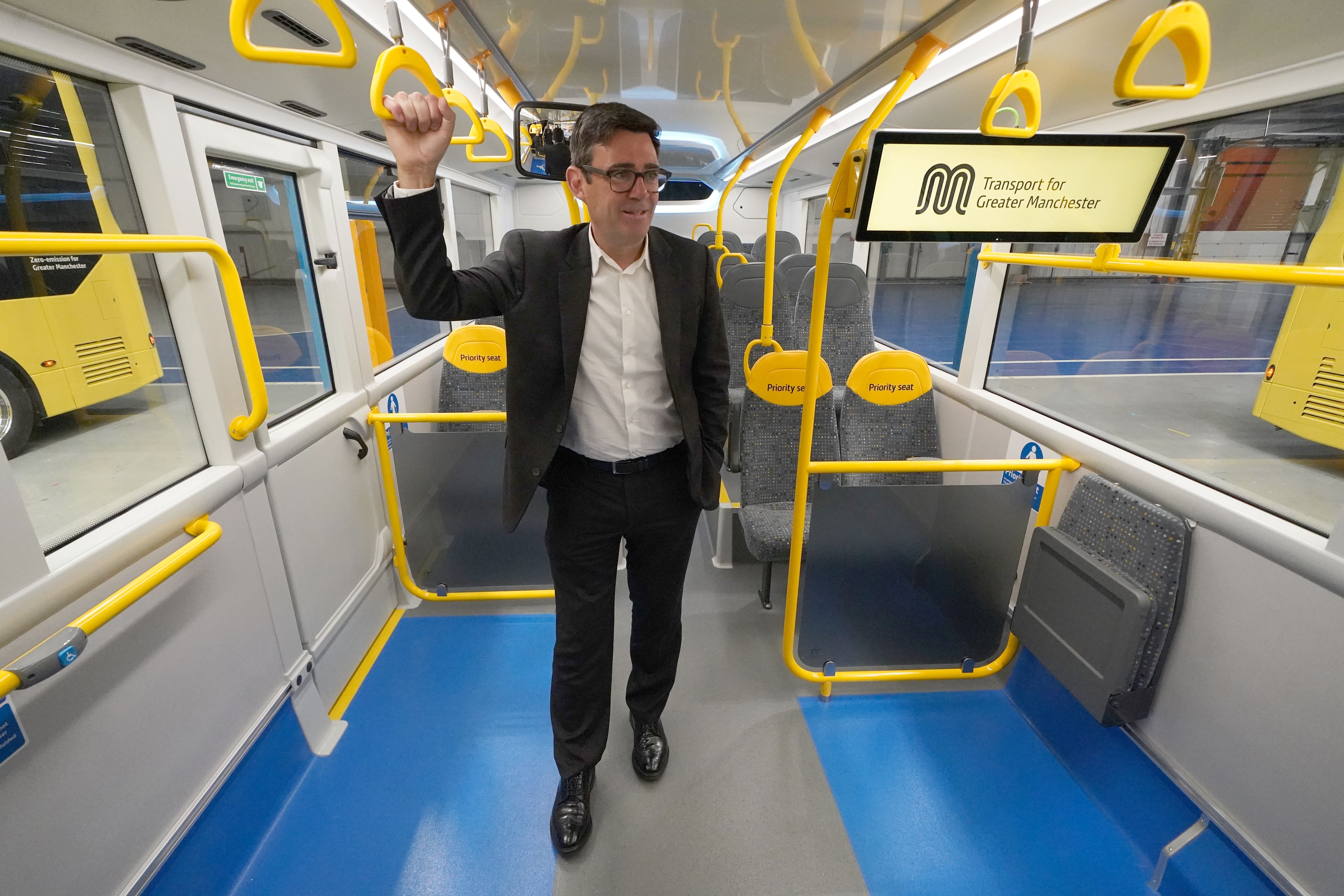
Andy Burnham has announced that most bus fares in England will be capped at £2 from January, as part of a wider blitz of policies aimed at tackling the cost of living.
The new prime minister announced on Wednesday that he will slash the price of a single bus ticket from January 1 until the end of 2027 by a third.
Currently, the nationwide cap on single bus fares is set at £3 until the end of March 2027, although some areas – including London and Greater Manchester – have lower top rates for single tickets.
The England-wide fare was previously capped at £2 by the Conservative government in 2023, but Sir Keir Starmer’s government increased it to £3 shortly after coming into office, arguing it was not affordable.
But some metro mayors, including Mr Burnham, decided to fund an extension of the lower limit in their areas.
“Good, affordable transport links are an essential. No one should be priced out of those and left behind,” Mr Burnham said.
“But for too long people have said that cheaper transport isn’t an option. I don’t accept that. I’ve done it before and I will do it again now: a £2 cap on bus fares for millions across the country.
“Lower fares will help people get to where they need to – giving them breathing space to help with the cost of living.”
Some £400 million of the £454 million of funding put aside for the measure will come from switching investment in international climate finance to loans, while the rest of the savings will come from the Department for Energy Security and Net Zero budget.
The total cost of the scheme is expected to be more than £500 million, with the rest coming from Department for Transport funding already allocated to buses.
However Conservative shadow chancellor Sir Mel Stride accused the government of “not actually specifying where the money is going to come from”.
Agreeing cost-of-living measures are necessary, he told BBC Breakfast: “But there’s a broader point here that’s really important, which is that under Labour we’ve ended up with a huge debt, massive servicing costs on that debt, and that means that we’ve really got, as a government, the government’s got to be explaining exactly where all these spending commitments are going to be funded from, and we saw yesterday a commitment on fuel bills, but when it came to the detail, there was no money allocated for it.
“And from what I can tell from this particular move on bus fares, we’re in a similar kind of situation whereby they’re saying they’re going to make some kind of savings within the energy department’s budget, but they’re not actually specifying where the money is going to come from.
It comes after the new prime minister vowed that his government would give people a “sense that help is coming” in his first Cabinet meeting on Tuesday.
Chancellor John Healey said “millions of people” would benefit from fares being slashed by a third and insisted the measure could be paid for.
“This action to ease the cost of living is funded by savings made elsewhere, so there’s no burden to British taxpayers, just pounds going back into their pockets,” he said.
Transport secretary Heidi Alexander said the move would make “everyday journeys easier and cheaper”.
It comes just one day after the new prime minister announced an £850 million tax cut on electricity bills, telling ministers he will lead a “cost of living government”.
From October 1, electricity bills will be VAT-free, saving households about £45 a year as part of the new prime minister’s promise to help ease cost-of-living pressures.
But a row broke out over the policy after Darren Jones, a key ally of former prime minister Sir Keir Starmer who lost his Cabinet post on Monday when Mr Burnham took office, claimed the policy was unfunded.
The government said the move will be funded in part by scrapping Sir Keir’s digital ID project, which had been estimated to cost around £600 million a year over three years.
But that falls short of the estimated £850 million hit to tax revenues from the VAT cut and funding for digital ID was meant to have come from unidentified Whitehall savings.
Mr Jones, who was the minister in charge of the digital ID scheme, said in a post on X: “Good news that VAT will be cut on electricity bills. It’s a simple way for families to save a few quid, and to mechanically help to keep inflation that little bit lower.
“But the DigitalID program was unfunded. The government will have to set out how it will pay for its new policies at the budget.”
Hitting back, the prime minister’s official spokesperson said: “The measure announced today is fully funded… this immediate action applies and is funded for this financial year and the cost of this action for this financial year is being funded through the cancellation of the digital ID programme.”
The spokesperson added: "The savings will come from within existing budgets through reprioritisation which will be redirected towards this measure and we will set out further details at the budget this year."