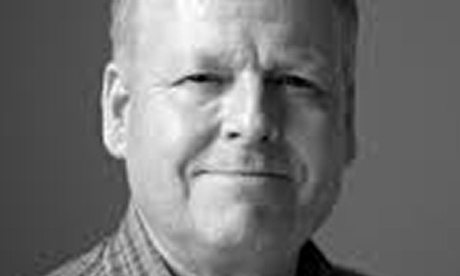
My friend and colleague Andrew Townsend, who has died of cancer aged 54, was a construction professional who switched career to become an archaeologist. He thus bridged a gap between the two fields and benefited both. In addition to distinguished academic achievement, he initiated the world’s only published form of contract for archaeological investigations, for the Institution of Civil Engineers.
Andrew had a peripatetic childhood. Born in Germany to Nova and John, who were there with the armed forces, he spent his early childhood spare time “excavating” prehistoric and Roman settlements in Cyprus with his sister, Helen.
Returning to Britain he completed his secondary education at Gordon’s school, in Woking, Surrey, and went to work at the construction company Beards, in Swindon, Wiltshire, in 1979 as a trainee quantity surveyor, qualifying with an HNC. But his childhood fascination with archaeology would not leave him and in 1990 he turned his back on material security and enrolled as a mature student at Bristol University, where he gained a double first with honours in archaeology and art history and then a doctorate on the prehistoric cultures of the Mediterranean and Near East.
He worked on and directed excavations in Libya, Cyprus, Jordan, Israel, Spain, the Maltese islands and the West Indies. In 1997-98 he was Jerusalem scholar at the British School of Archaeology in Jerusalem. He was also an authority on 18th-century English and continental ceramics, particularly Worcester porcelain, and had been a member of the English Ceramic Circle since 1984. He spoke Arabic, played the French horn and taught himself rock guitar.
Andrew spent several years working on excavations in Britain and abroad before settling back in Bristol, where he worked for the Avon Archaeological unit, Bristol and Region Archaeological Services and Bath Archaeological Trust. I first met him in 1998, while he was working as a digger for BAT on the Bath Spa project, where his knowledge of the construction industry became manifest.
Presented with a 300-page Institution of Civil Engineers minor works contract, incomprehensible to BAT’s management, he was the only person on site who understood it. The financial success of that project was largely due to Andrew’s involvement. Following his suggestion, the ICE published a bespoke archaeological contract, which remains the preferred form of contract for all civil engineering projects with an archaeological component.
In the meantime Andrew had rekindled contacts with the construction industry. He became a member of the Chartered Institute of Building’s low carbon construction working group. He sat on many boards and committees with the aim of promoting closer liaison between building and archaeology. He had persuaded the Health and Safety Executive to set up a working party on the needs of archaeology and was also working on the implications for archaeologists of new building requirements for major construction projects.
A marriage ended in divorce. He is survived by Nova and Helen.