Photograph: Francisco Seco/AP
Afternoon summary
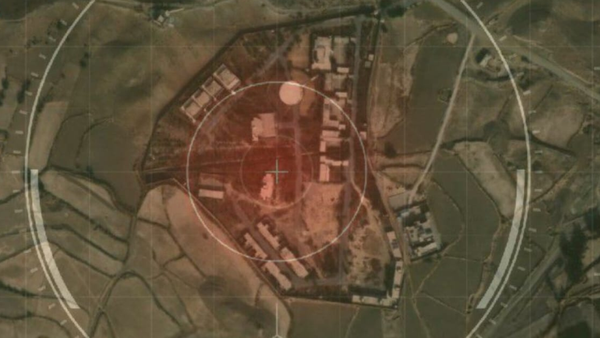
- David Cameron has revealed that the government authorised an unprecedented airstrike in Syria that killed two Britons fighting with Islamic State. The target of the RAF drone attack was Reyaad Khan, a 21-year-old from Cardiff who had featured in a prominent Isis recruiting video last year. Two other Isis fighters were killed in the attack on the Syrian city of Raqqa on 21 August. One of them, Ruhul Amin, 26, was also British. As Ewen MacAskill explains in an analysis, this is unprecedented (although it does have some parallels with the “Death on the Rock” killing of three IRA terrorists by the SAS in Gibraltar in 1988). It marks a step further towards routine air strikes against Isis targets in Syria although, as Michael Clarke writes on his RUSI blog, a backlash amongst MPs could stop Cameron winning parliamentary approval for this. More interestingly, it raises questions about the legality and morality of using drones to effectively execute terrorists in territory where Britain is not engaged in conflict. Cameron made the revelation in a statement that covered the refugee crisis, and for more than two hours he took questions from more than 100 MPs. But, surprisingly, most MPs chose to ask him about refugees and not about this. It is as if the announcement caught them by surprise, and they were uncertain what line to pursue. Jeremy Corbyn, the favourite to win the Labour leadership contest, did not raise the killings in the chamber although the Stop the War Coalition, which he chairs, later issued a critical statement. (See 5.47am.)
- Cameron has announced that Britain will take in 20,000 Syrian refugees - but only over five years. Opposition MPs have criticised him for not offering to take in more, and Justin Welby, the archbishop of Canterbury, has described this as a “very slim response”.
-
Yvette Cooper, the shadow home secretary and Labour leadership contender, has been granted an emergency debate on the refugee crisis tomorrow. This will offer her a high-profile platform two days before voting ends in the contest. In a further boost to her standing with Labour MPs, the move has infuriated the SNP because it pre-empts the debate they have arranged for Wednesday, when they get to choose the Commons business.
That’s all from me for today.
Thanks for the comments.
Updated
Professor Michael Clarke, director general of RUSI, the defence and foreign policy thinktank, has written a very useful commentary on the government’s decision to authorise a drone strike against a British Isis fighter in Syria. The whole thing is on the RUSI website here, and here’s an extract.
This drone strike is the first to have been conducted, apparently, as a targeted assassination. The prime minister’s statement spoke of the ‘meticulous planning’ for a ‘precision airstrike’. Presumably, Reyaad Khan, who had been operating in Syria since November 2013, was the intended target.
The point is not so much that this man was British but that he was targeted in an area that the UK does not currently regard, legally, as an operational theatre of war for UK forces. Drones were used for lethal strikes in Afghanistan but only where UK or ISAF forces were threatened by fighters on the ground.
The government insisted that, unlike CIA drones, they were never used for targeted assassinations in territories where we were not militarily engaged. This would have been in contradiction to the UK’s criminal justice approach to counter terrorism. The prime minister made it clear that the legal justification in this case was explicitly one of ‘self-defence’. He may have to say more about that to justify the sceptics. A generic self-defence case would be a bit of a stretch in these circumstances. He may have to show that there was some specific reason why Reyaad Khan posed an imminent threat to the UK, its people or its military personnel; not just that he was a Daesh supporter who wished us harm.
A Foreign Office spokesman said: “It has been normal for states to inform the [UN] security council when they have acted in collective or individual self-defence.” The last time Britain informed the security council of armed action was in November 2014, when it announced it was joining the US-led operations against Isil in Iraq. In July, Turkey sent a letter to the council informing it, that it was launching operations against Isil in Syria.
Archbishop of Canterbury criticises government's Syrian refugee announcement as a 'very slim response'
In the Lords Justin Welby, the archbishop of Canterbury, has described David Cameron’s announcement about Britain taking 20,000 Syrian refugees as a “very slim response”.
UK's pledge to accept 20,000 Syrian refugees by 2020 is "very slim response" - Archbishop of Canterbury @JustinWelby http://t.co/gAbi4kTscf
— BBC Breaking News (@BBCBreaking) September 7, 2015
Leanne Wood, the Plaid Cymru leader, has expressed concern about the RAF drone attack that killed two British Isis recruits. In a statement she said:
There is a real danger now that the refugee crisis will be exploited as an excuse for launching a bombing campaign in Syria.
Resorting to kneejerk military action, especially with no clear exit strategy is tantamount to pouring fuel on the fire. The US has been launching airstrikes for many months to little effect. Do they have any idea how many civilians have been killed by these actions?
Stepping up this assault will only serve to intensify the violence, destroy what little infrastructure Syria has left, and more than likely displace far more people.
Plaid Cymru has also been disturbed by the news that the UK government authorised the killing of a British citizen among possibly others on Syrian soil, despite parliament voting down any military action in the region.
The UK government must bring to bear its full influence on countries in the region with which it has strong trade ties who are still permitting the flow of arms, fuel, and money into the hands of IS.
Paddy Ashdown, the former Lib Dem leader, says a minister in the Lords said that the child Syrian asylum seekers admitted to the UK under David Cameron’s new programme would be deported at the age of 18.
Minister in the Lords just confirmed refugee orphans and children brought in under Cameron's scheme will be deported at age 18.
— Paddy Ashdown (@paddyashdown) September 7, 2015
If I can get more on exactly what was said, I will post the details.
Newsnight has just released the findings of a ComRes poll about attitudes to the refugee crisis.
The headline on the Newsnight press release (“40% of public in favour of taking more refugees”) is rather different from the headline on the YouGov story at the weekend about their polling on the same subject (“No increase in Syrian refugee numbers - public”).
But the actual numbers tell a similar story. YouGov found that the proportion of people saying Britain should take more refugees (36%) is higher than the proportion saying it should take fewer (27%), but that if you add those if favour of the status quo (24%) with those in favour of fewer refugees, they outnumber those wanting more. Newnight found the same. This is from their press notice.
Four in ten members of the public say that Britain should allow more refugees from countries such as Syria or Libya to come and live here, according to a new ComRes survey for BBC Newsnight. Although taking more refugees is the most popular single option (40%), there is a combined majority against increasing numbers Britain: 31% say Britain should take fewer and an additional 26% say it should take about the same amount as it currently does.
People who have seen the photos of drowned Syrian boy Aylan Kurdi are considerably more likely than those who have not to say that Britain should take more refugees (44% to 24%).
There has also been a large shift in attitudes towards allowing migrants coming to Britain via an EU quota system. In June, the majority of the public (59%) said that Britain should not accept migrants brought here by an EU quota system, but there has now been a fourteen point swing in opinion, with more saying that Britain should than should not accept them (55% to 45%).
Bercow grants Labour request for emergency debate on refugee crisis tomorrow
John Bercow grants permission for an emergency debate.
That means the debate will take place tomorrow.
-
John Bercow grants request from Yvette Cooper for an emergency debate on the refugee crisis tomorrow.
Cooper says Cameron’s offer on refugees does not go far enough.
Cameron said he did not want to encourage people to take the dangerous journey to Europe, she says. But they are travelling already, she says.
David Cameron has just finished his statement. It lasted from two hours and 27 minutes, and Cameron took questions from 102 MPs.
Yvette Cooper is now making a short speech demanding an emergency debate tomorrow on the refugee crisis.
In his Commons intervention Jeremy Corbyn did not ask about the drone attack on the British Isis recruits in Syria. But he is chair of the Stop the War Coalition which has just issued this statement condemning this attack.
David Cameron’s admission that British forces have been involved in drone operations in Syria, killing two British citizens, reveals the extent of covert operations and duplicity on the part of the British government. Despite losing the parliamentary vote when he wanted to bomb the other side in Syria two years ago, he now wants to extend the bombing of Isis. This will result in more deaths and more refugees.
David Cameron is determined to go to war, and he refuses to let democratic formalities stand in his way. His government is even exploiting the refugee crisis, which is the product of US and UK military intervention, in order to force Britain into yet another savage bombing campaign. UK bombing of Syria would only increase the refugee crisis.
Reprieve, the human rights organisation, says David Cameron’s decision to authorise the drone strike that killed two British Isis recruits in Syria is “deeply worrying”. This is from Kat Craig, its legal director.
Make no mistake – what we are seeing is the failed US model of secret strikes being copied wholesale by the British government. Ministers repeatedly promised parliament and the public that there would be no military operations in Syria without parliamentary approval. The fact that David Cameron has bypassed Parliament to commit these covert strikes is deeply worrying – as is his refusal to share what legal advice he was given.
This also comes at a time when numerous American officials have said their own global drone killing policy has failed. As US strikes in Yemen and Pakistan have shown, this level of secrecy around drone killing is impractical and untenable – not least because mistakes are easily made, and can have devastating human consequences. On a decision of this importance, it’s not enough for the prime minister just to assert he was advised it was legal – parliament and the public need to see that advice.
In his statement David Cameron said that Junaid Hussain and Reyaad Khan, the two British Isis fighters killed in attacks by the US and the RAF respectively, were involved in plots, such as plans “to attack high profile public commemorations, including those taking place this summer”.
The Sun says one of these plots was a planned attack on the armed forces day parade that was thwarted because the person conspiring with Hussain online was actually an undercover Sun reporter who alerted the authorities.
Why the PM acted: Hussain and Khan tried to bomb Armed Forces Day - the plot was exposed by @TheSun; http://t.co/tpUHyg5bTJ
— Tom Newton Dunn (@tnewtondunn) September 7, 2015
David Cameron is still responding to questions in the Commons. He has just said that many MPs told him they could not support air strikes against Syria when MPs voted on this in the last parliament because of what happened with Iraq. But it is time to get over that, he says. He says it is vital to degrade Isis (or Isil as he calls it - our house style is to use the term Isis).
The SNP’s Angus Robertson tabled a Commons written question last year to try to get details of the rules of engagement governing drone attacks on British citizens.
As you can see from the Hansard, he did not get much of an answer.
Here are two legal bloggers on David Cameron’s statement, and the legal issues it raises.
From David Allen Green
Not sentimental about terrorists; but one suspects the legal basis for killing Briton with a drone not as clear as PM makes out.
— Jack of Kent (@JackofKent) September 7, 2015
From Carl Gardner
Cameron breached the usual convention on non-disclosure of Law Officer’s advice to say the Attorney General advised the strike was legal.
— Carl Gardner (@carlgardner) September 7, 2015
The Attorney’s advice must have covered not just international law, but the domestic criminal law of murder: http://t.co/jl2afWmJAb
— Carl Gardner (@carlgardner) September 7, 2015
Here’s is some video footage featuring Reyaad Khan, the Briton fighting with Isis who was targeted in the RAF drone attack. It was filmed in 2010, before he went to Syria.
And here is a Guardian story explaining how the footage was obtained, and what Khan is saying in the video.
Here is more from Number 10 about the background to the drone attack on aimed at a British Isis fighter in Syria. (One Briton, described as an Isis “fighter”, was the target of the attack. Another Briton, described as an Isis “associate”, was also killed. See 4.03pm.)
Downing Street says Britain is prepared for further air strikes in Syria AND Libya to take out Isil fighters where there is 'no alternative'
— Steven Swinford (@Steven_Swinford) September 7, 2015
David Cameron was on a visit to talk about apprenticeships on the day the air strike against British Isil fighters in Syria took place
— Steven Swinford (@Steven_Swinford) September 7, 2015
Yvette Cooper, the shadow home secretary and a Labour leadership candidate, says Cameron’s announcement on refugees “isn’t enough”. She put out this statement.
Britain must not turn its back on the refugee crisis in Europe. It is important that the Government has changed its mind and agreed to take refugees from the camps near Syria as a result of public pressure - however it isn’t enough to take refugees over five years when the crisis is now.
In the 1930s Britain took 10,000 children in just 9 months - if counties and cities each took ten refugee families we could help 10,000 people in the next few months.
I am urging the prime minister to look again at this - and to talk to local authorities about how many more people they can swiftly help. I am holding a summit this week with councils, faith groups and charities to see how much more Britain can swiftly do.
And Britain also needs to help take refugees from Europe as well as directly from Syria - especially from Greece which is struggling to respond to the number of people who have arrived on their shores, many of whom are in makeshift and overcrowded camps.
ActionAid says Cameron’s announcement about taking 20,000 Syrian refugees does not go far enough. This is from Mike Noyes, its head of humanitarian response.
David Cameron’s announcement that the UK will resettle 20,000 Syrian refugees is an improvement on previous commitments. However the weakness is timing. Spreading this over five years will not match the scale of the current crisis. Instead, the government needs to make major progress before the end of the year, not least because the situation is likely to be made worse by the onset of winter.
CND condemns killing of two Britons in RAF drone attack on Isis fighters
CND has condemned the RAF drone attack on the two British Isis fighters in Syria. This is from Kate Hudson, its general secretary.
That a British citizen was targeted and killed by these strikes – and another killed by mistake - is particularly alarming and sets a dangerous new precedent. This is extrajudicial killing: a British prime minister now claims the right to kill British citizens when they travel abroad.
We must also remember that parliament voted against strikes in Syria in August 2013. This latest round of strikes is a further violation of the will of parliament.
The Children’s Society says Cameron’s statement on refugees was “long overdue”. This is from Matthew Reed, its chief executive.
The prime minister’s decision to bring more children and families fleeing Syria to the UK over the next five years is welcome — but long overdue.
Providing them with a five year visa means many more incredibly vulnerable children will have the immediate sanctuary they need. But the government must give serious thought to what happens when these visas expire, as it is crucial their long-term needs are addressed. Many of these children will be here on their own or orphaned with no links to family in Syria.
Jeremy Corbyn, the favourite in the Labour leadership contest, asks Cameron if Britain will participate in the EU-wide resettlement programme. And does Cameron back Corbyn’s call for an international summit to find a political solution to the Syrian crisis.
(Corbyn does not ask about the killing of the British Isil fighter by the RAF. Famously, in the “tragedy” comment that attracted ferocious criticism when it emerged last month, he criticised the US for effectively executing Osama bin Laden rather than putting him on trial.)
Cameron says Britain will not join the EU-wide resettlement programme. It is better to take refugees direct from the refugee camps, he says.
And, on Syria and Iran, he says that Corbyn may describe Hamas and Hezbollah as “friends”, but he does not describe them in those terms.
The future? Big (Tory) cheers as Jeremy Corbyn stands to question the prime minister in the Commons over his statement on refugees.
— Sam Macrory (@sammacrory) September 7, 2015
Suspect Labour MPs relieved that Corbyn went on refugees rather than the drone strike
— James Forsyth (@JGForsyth) September 7, 2015
Updated
LGA says Cameron's refugee announcement 'a short-term solution to a long-term problem'
The Local Government Association, which represents councils in England and Wales, says that Cameron’s announcement about refugees is just “a short-term solution to a long-term problem”. This is from David Simmonds, chair of the LGA’s asylum, migratoin and refugee task group.
It is extremely heart-warming to see so many people wanting to help vulnerable people in crisis by opening their homes and offering care and safety, but this is only a short-term solution to a long-term problem. Councils have an excellent track record in supporting refugee children and their families, standing ready to help in every way they can, but need to ensure that when the moment of crisis passes and families and individuals settle into a new life in the UK that they have the support and resources they need.
UK councils helped accommodate over 25,000 refugees and nearly 2,000 unaccompanied refugee children in the last year, most of whom will remain in the UK long term. We are supporting around 10,000 households whose asylum application was eventually turned down and who are now dependent on their local council for somewhere to live.
Councils need a commitment from government to provide full funding to support individuals and families until they are granted asylum or they are safely returned to their own country. Local communities that open their doors at a moment of crisis should not be left to pick up the pieces when funding runs out and the world’s attention has moved on.
Caroline Lucas, the Green MP, says that Cameron’s offer to take 20,000 Syrian refugees over the next five years amounts to just 12 per day.
Cameron's statement - How the threat to the UK from Isis is growing
And here is a further extract from Cameron’s statement, on how the threat to the UK from Isis (which he calls Isil) is growing.
Mr Speaker, with the rise of ISIL, we know the terrorist threats to our country are growing.
In 2014 there were 15 ISIL-related attacks around the world.
This year there have already been 150 such attacks, including the appalling tragedies in Tunisia in which 31 Britons lost their lives.
And I can tell the House that our police and security services have stopped at least six different attempts to attack the UK in the last 12 months alone.
Mr Speaker, the threat picture facing Britain in terms of Islamist extremist violence is more acute today than ever before.
In stepping up our response to meet this threat, we have developed a comprehensive Counter-Terrorism strategy that seeks to prevent and disrupt plots against this country at every stage ...
Since 2010 over 800 people have been arrested and over 140 successfully prosecuted.
And our approach includes acting overseas to tackle the threat at source with British aircraft delivering nearly 300 airstrikes over Iraq and our airborne intelligence and surveillance assets have assisted our coalition partners with their operations over Syria.
Labour’s Sir Gerald Kaufman told MPs that Britain should be taking far more refugees than the 20,000 over five years announced by Cameron.
Father of House Sir Gerald Kaufman says Germany took in 10,000 refugees in one day - PM pledging "up to" twice that number in 5 years.
— John Ashmore (@smashmorePH) September 7, 2015
In refugees statement, Gerald Kaufman, whose family took in kindertransport girl, makes a very powerful attack, gets angry response from PM
— Patrick Kidd (@patrick_kidd) September 7, 2015
Gerald Kaufman: "He says he's going to take 20k refugees over 5 yrs. The Germans took in 10k in one day. What kind of comparison is that?"
— Jennifer Williams (@JenWilliamsMEN) September 7, 2015
Labour’s Kevin Brennan says he was the constituency MP for Reyaad Khan, the Briton killed in the RAF drone strike. Will Cameron be as forthcoming as he can about the threat that Khan posed?
Cameron says he will be, although he is constrained by what he can say.
But the “tempo” of attacks is rising. When we are dealing with that problem, we cannot ignore it, he says.
Cameron's statement - How he justified the RAF drone attack on a British Isis fighter in Syria
And this is what Cameron said in his statement about the justification for the killing of a British Isis fighter in Syria by an RAF drone.
First, I am clear that the action we took was entirely lawful. The Attorney General was consulted and was clear there would be a clear legal basis for action in international law.
We were exercising the UK’s inherent right to self-defence. There was clear evidence of the individuals in question planning and directing armed attacks against the UK. These were part of a series of actual and foiled attempts to attack the UK and our allies. And in the prevailing circumstances in Syria, the airstrike was the only feasible means of effectively disrupting the attacks planned and directed by this individual.
So it was necessary and proportionate for the individual self-defence of the UK.
The United Nations Charter requires members to inform the President of the Security Council of activity conducted in self-defence. And Today the UK Permanent Representative to the United Nations is writing to the President of the Security Council to do just that.
Turning to the process, as I said to the House in September last year: “it is important to reserve the right that if there were a critical British national interest at stake or there were the need to act to prevent a humanitarian catastrophe, you could act immediately and explain to the House of Commons afterwards.”
Mr Speaker, our intelligence agencies identified the direct threat to the UK from this individual. They informed me and other senior Ministers of this threat.
At a meeting of the most senior members of the National Security Council, we agreed that should the right opportunity arise, then the military action should take action.
The Attorney General attended the meeting and confirmed there was a legal basis for action. And on that basis, the Defence Secretary authorised the operation.
The strike was conducted according to specific military rules of engagement which always comply with international law and the principles of proportionality and military necessity.
The military assessed the target location and chose the optimum time to minimise the risk of civilian casualties.
This was a sensitive operation to prevent a very real threat to our country. And I have come to the House today to explain in detail what has happened and to answer questions about it.
Cameron's statement - How an RAF drone killed two British Isis fighters in Syria
Here is an extract from Cameron’s statement describing how an RAF drone killed a British Isis fighter in Syria.
Mr Speaker, in recent weeks it has been reported that two ISIL fighters of British nationality who had been plotting attacks against the UK and other countries have been killed in airstrikes.
Both Junaid Hussain and Reyaad Khan, were British nationals based in Syria who were involved in actively recruiting ISIL sympathisers and seeking to orchestrate specific and barbaric attacks against the West including directing a number of planned terrorist attacks right here in Britain, such as plots to attack high profile public commemorations, including those taking place this Summer.
We should be under no illusion. Their intention was the murder of British citizens.So on this occasion we ourselves took action.
Today I can inform the House that in an act of self-defence and after meticulous planning Reyaad Khan was killed in a precision air strike carried out on 21st August by an RAF remotely piloted aircraft while he was travelling in a vehicle in the area of Raqqah in Syria.
In addition to Reyaad Khan who was the target of the strike, two ISIL associates were also killed, one of whom – Ruhul Amin, has been identified as a UK national. They were ISIL fighters and I can confirm there were no civilian casualties.
Mr Speaker, we took this action because there was no alternative.
In this area, there is no government we can work with.We have no military on the ground to detain those preparing plots.And there was nothing to suggest that Reyaad Khan would ever leave Syria or desist from his desire to murder us at home. So we had no way of preventing his planned attacks on our country without taking direct action.
The US administration has also confirmed that Junaid Hussain was killed in an American airstrike on 24th August in Raqqah.
Updated
Cameron confirms this was the first time in modern times that a British asset was used to attack someone in a country with whom we are not at war.
The attorney general’s advice will not be published, he says. But it was largely about self-defence.
He says a proper process was followed. That is the best way to proceed. The attorney general said there was a legal basis, and then the defence secretary approved the attack.
He says he would repeat this if it were necessary to protect the UK.
Cameron is replying to Harman.
He says he has just got off the phone to Angela Merkel. She welcomed his announcement.
On taking refugees from southern Europe, he says he thinks it is better to take people directly from the refugee camps. He does not want to encourage people to make the dangerous journey across the Mediterranean in the first place, he says.
He says Britain, Germany and France called for an emergency summit of home affairs minister. That is taking place.
Harman is turning to Isil.
She thanks Cameron for briefing her and the shadow foreign secretary on the RAF drone strike on 21 August. That was the first she heard of it.
Is this the first time in modern times that a civilian like this has been targeted?
Cameron said this was justifiable under the doctrine of self-defence. He was planning an attack, there was no other means of stopping him and the action was proportionate?
Why did the attorney general not authorise the specific operation, instead of just saying there was a legal basis?
Will the legal advice be published?
Why did the defence secretary authorise it, not the prime minister?
Was this an isolated action? Or will there be more?
Harman says the intelligence and security committee should investigate.
She says Isil murder people. Labour will consider any proposals for military action in Syria. But we need to be clear what difference action might take.
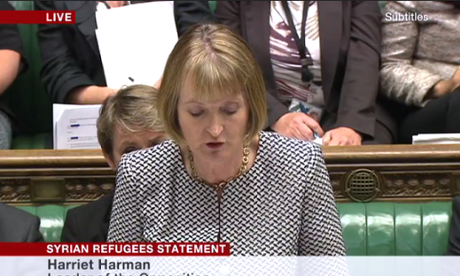
Harriet Harman, the acting Labour leader, is responding to Cameron. She is asking a series of questions.
Cameron says he will take 20,000 Syrian refugees over the course of this parliament. Does that mean just 4,000 this year?
Will councils get extra funding?
Will using the aid budget by compliant with spending 0.7% of national income on aid?
And why is the government not using its reserves?
Harman says Cameron should reconsider his refusal not to take refugees from the southern European countries?
Europe does not have a plan. Will Cameron call for an emergency EU summit?
Cameron says his first duty is to defend Britain.
He was not prepared to ignore the threat, he says.
Cameron says he will return to the Commons for a separate vote if the government plans to join air strikes against Isil in Syria.
RAF drone strike has killed a British Isil fighter in Syria, Cameron says
Cameron says it has been reported within recent weeks that two Isil fighters from the UK have been killed.
He says an RAF drone attack was used to kill one of the fighters.
- RAF drone strike has killed a British Isil fighter in Syria, he says.
The other fighter was killed by an American air strike, he says.
He says he wants to set out the legal basis for the decision he took.
He says the attack was legal. The fighter was planning an attack, and the air strike was proportionate.
He says Britain will be writing to the UN with details.
The government received legal advice. The attorney general approved the strike. The attack took place at a time when the risk to civilians was minimal.
He says this was not part of the coalition attacks against Isil. This was a British response to a threat to Britain.
Security services have foiled six different Isil-related plots in UK in last year, Cameron says
Cameron turns to counter-terrorism.
He says there were 15 Isil-related plots around the world in 2015. (He is using his preferred term for Islamic State, or Isis.)
This year there have been 150, he says.
- Security services have foiled six different Isil-related plots in the UK in the last year, he says.
Updated
Cameron says, because Britain is not part of the EU resettlement scheme, it can make its own decisions about who it resettles.
Vulnerable children, including orphans, will be a priority.
Councils have offered to take refugees, he says. This has illustrated the generosity of Britain. He thanks the archbishop of Canterbury in particular for the Church of England’s offer.
Aid money will fund this for the first 12 months, he says.
Britain will resettle up to 20,000 Syrian refugees over the next five years, Cameron says
Cameron turns to refugees.
We will accept thousands more under existing resettlement schemes. Some 5,000 Syrians in Britain have received asylum.
-
Britain will resettle up to 20,000 Syrian refugees over the next five years, he says.
Cameron says it is vital to distinguish between refugees and economic migrants.
Most of those coming to the EU from the east are from Syria, he says.
The whole country has been moved by the heart-breaking images we have seen, he says.
Britain will fulfil its moral responsibility.
But it must use its head as well as its heart, he says. That means pushing for a comprehensive solution.
It is using its aid budget to help refugees. Britain is the only major country in the world that has kept its promise to spend 0.7% of its wealth on aid.
He says he has announced an extra £100m to help support Syrian refugees. Over half the money will go to children, with a particular priority on orphans.
No other EU country has come close to this, he says.
David Cameron's statement
David Cameron is making his statement now.
The main focus will be counter-terrorism, he says.
But he will start with refugees first.
The Commons chamber is “absolutely rammed”, according to the Telegraph’s Steven Swinford.
Chamber of the House of Commons is absolutely rammed ahead of David Cameron's counter-terrorism announcement. Watch this space...
— Steven Swinford (@Steven_Swinford) September 7, 2015
Here are four graphics that illuminate the refugee crisis.
ITV’s Chris Ship says David Cameron will announce that Britain will take almost 20,000 Syrian refugees.
NEW: Cameron to announce number of refugees resettling in Britain will be closer to 20,000 - nearly double what @YvetteCooperMP called for
— Chris Ship (@chrisshipitv) September 7, 2015
David Cameron is making his Commons statement in 40 minutes.
In it, he is likely to respond to what Francois Hollande, the French president, said at his press conference this morning about Britain having to agree to take more refugees if it wants other EU countries to cooperate on its renegotiation.
Here is an extract from Kim Willsher’s story about it.
Hollande added that while France wished Britain to remain in Europe, solidarity with David Cameron’s call for EU reform would depend on the UK agreeing to take its share of asylum seekers, particularly those from Calais.
“On the issue of refugee, it’s true that Britain is not in the Schengen area … but that doesn’t absolve it from making an effort in terms of solidarity and David Cameron has said this himself,” Hollande said.
“In Calais, there are people who are not seeking asylum in France but to go to the UK. People must understand that you cannot demand solidarity when there’s a problem, and shirk your duties when there are solutions.”
He said he was happy to negotiate on certain issues of concern but added: “if the discussions are about the fundamentals of the EU…we stand for no treaty change.”

Lunchtime summary
- David Cameron is preparing to use a statement to the Commons at 3.30pm to announce how many Syrian refugees Britain will take. As my colleague Matthew Weaver reports here, in the latest summary on his global refugee crisis live blog, the French president Francois Hollande has said that France will take 24,000 refugees. Hollande also said in a news conference this morning that France was considering air strikes against Islamic State (Isis) in Syria. Cameron is minded to authorise air strikes against Isis in Syria too, but he is committed to giving the Commons a say and he is reluctant to put it to a vote unless he can be confident of attracting widespread support. He is expected to say more about this in his statement.
- Downing Street has refused to deny reports saying Cameron’s aides have asked business leaders not to speak out in favour of Britain’s membership of the EU during the renegotiation. (See 12.42pm.)
Jeremy Corbyn, the favourite in the Labour leadership contest, has been giving interviews ahead of this afternoon’s Commons statement on the refugee crisis. Here are the main points he made.
-
Corbyn said that Britain should take in more refugees. He applauded Germany for its stance, and said he felt the public mood in Britain towards refugees had changed.
I think it is unfortunate firstly that he [David Cameron] as prime minister and Britain as a whole did not join in the European union refugee programme in 2012 and insisted on doing it, at they called it, ‘the British way’. And it turns out the British way is to avoid taking refugees if possible from anywhere.
The idea [Cameron] is going to pluck refugees out of camps in the Middle East and bring them here whilst ignoring the people living in refugee camps in Calais and other paces - surely we should be all taking responsibility which we have under the Geneva convention ...
What we have to do is obviously do everything possible to assist refugees not just from Syria but from all the other countries in the region - many of those in Libya also come from Eritrea and other countries - and change the mood music in Britain about refugees, which at last has happened actually over the past week or so, and also applaud Germany for their open-heartedness and their openness towards desperate people.
-
He said launching air strikes against Islamic State (Isis) in Syria would be counter-productive.
Bombing Syria will create many casualties, will kill many people, may not defeat Isil, will probably then lead to ground forces being encouraged to go in, and I think we’re back into a war ... My view is that it [military action] would actually create more problems than it would solve and would lead to an intensification of a ground war.
-
He said an international ummit should be convened in the Middle East so that a political solution to the Syrian civil war could be found.
What we need now, and the foreign secretary intimated this in his visit to Tehran, we need a conference of all countries in the region, obviously adding to that the EU, USA, Russia and Iran, in order to try and bring about some kind of political process. That has to happen and happen quickly.
I’ve taken the quotes from PoliticsHome.

Number 10 lobby briefing - Summary
Here are the main points from the Number 10 lobby briefing.
- David Cameron will be making a counter-terrorism announcement when he make his statement in the Commons this afternoon. We knew he would be making a statement about refugees, but his spokeswoman said the announcement would also cover counter-terrorism. She would not give any more details of what he would be saying, but the government is due to flesh out details of what will be in the extremism bill due later this year. An investigatory powers bill (the latest reincarnation of the so-called “snoopers’ charter” is also due. The Sun’s Tom Newton-Dunn says he thinks the statement will be “quite substantial”.
It appears PM's counter-terrorism statement on Syria this afternoon, made alongside his refugees plan, will be quite substantial.
— Tom Newton Dunn (@tnewtondunn) September 7, 2015
-
Number 10 refused to deny reports saying Cameron’s aides have asked business leaders not to speak out in favour of Britain’s membership of the EU during the renegotiation. This claim is set out in the Financial Times splash (subscription), which starts like this.
David Cameron and his advisers are urging the UK’s business leaders not to speak out in favour of the country remaining in the EU, for fear they will jeopardise the prime minister’s sensitive renegotiation of Britain’s terms of membership ahead of a referendum.
One ally of Mr Cameron’s said that the government had been clear in its message to business to “shut up [on a British exit] until a deal is done with the EU”.
Business organisations and UK companies based both in and outside the country have been warned by Mr Cameron and advisers including Ed Llewellyn, Daniel Korski and Sheridan Westlake to remain silent during the renegotiations, which stepped up a pace last week when Mr Cameron visited Spain and Portugal.
Asked about the story, Cameron’s spokeswoman dismissed it as “more noise”. Asked whether it was noise that was true or untrue, the spokeswoman said the prime minister was “focused on the renegotiation and getting the reforms that are needed t address the concerns of the British people”.
-
Downing Street dismissed Andrew Mitchell’s call for the establishment of safe havens in Syria under the auspices of the UN. Asked about this, the spokeswoman suggested it was impractical.
That is a proposal that has been around previously. The challenge with that is how do you make it work and ensure it truly is a safe haven for people.
Instead the government was focusing on other measures, she said, such as providing help for refugees, and dismantling human trafficking networks.
-
The spokeswoman signalled that Cameron would not be following the example of people like Bob Geldof and offering to put up Syrian refugees in his own home. Asked if he was minded to follow the Geldof example, the spokeswoman said:
What the British public expect is for the prime minister to look at what is the country’s overall response to this. That is what he has been focusing on. He has been looking at what is the right response so that the UK can take thousands of refugees, not just numbers to individual households.
-
Downing Street rejected claims that Britain was not playing its part in helping to address the EU refugee crisis. The spokeswoman said:
Britain will play its part; indeed, we have been. If you look across the broad, we are the largest contributor of aid to the Syrian humanitarian crisis. We were also the first to send naval ships to help the Italians deal with the crisis in May.

Cameron to make counter-terrorism announcement
The Number 10 lobby briefing is over. We knew that David Cameron would be making a statement about refugees in the Commons this afternoon, but his spokeswoman said the announcement to MPs would also cover counter-terrorism.
I will post a full summary of the briefing shortly.
Updated
Given Rupert Murdoch’s views on Syrian refugees (see 10.29am), I’m glad I’m not the Sun executive who commissioned the YouGov polling showing that, er, most members of the public don’t agree with Murdoch on this one.
Here is an extract from the YouGov write up.
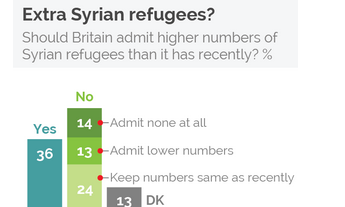
New YouGov research for the Sun reveals that most British people do not want more Syrian refugees in Britain. Slightly more than a third (36%) say Britain should admit higher numbers than it has recently, but 51% say it should not.
These divide between the 24% of people who want the numbers to remain as now – Britain has accepted nearly 5,000 over the last four years – and those who want there to be a reduction in numbers (13%) or a complete hold. (14%).
Syrians account for the largest proportion of refugees in the current crisis, but there are also hundreds of thousands from Afghanistan, Kosovo, Eritrea, Serbia and other countries. 28% say Britain should accept more of these refugees, while 60% say we should not.
I’m off to the Number 10 lobby briefing now. I’ll post again after 11.30am.
Alex Salmond, Scotland’s former first minister and the SNP’s foreign affairs spokesman, has been setting out SNP’s stance on Syria on Twitter.
When we allow ourselves to forget our humanity then it is usually because we allow a crisis to... @pressjournal @thecourieruk
— Alex Salmond (@AlexSalmond) September 7, 2015
…be depersonalised, for people to be depicted as a “threat” or a “tide" or “swarm”. @pressjournal @thecourieruk
— Alex Salmond (@AlexSalmond) September 7, 2015
We allow refugees who are people fleeing death and terror to be described loosely as “migrants”. They are not. @pressjournal @thecourieruk
— Alex Salmond (@AlexSalmond) September 7, 2015
Not possible to create a coherent European response to this crisis unless the UK is prepared to do its bit. @pressjournal @thecourieruk
— Alex Salmond (@AlexSalmond) September 7, 2015
.@theSNP will force this matter on the agenda of the Westminster parliament. We will argue three points... @pressjournal @thecourieruk
— Alex Salmond (@AlexSalmond) September 7, 2015
Firstly, the UK should be part of the refugee solution and accept our fair share. @pressjournal @thecourieruk
— Alex Salmond (@AlexSalmond) September 7, 2015
Secondly, the crisis should not be used as a cover for military intervention by the UK in Syria. @pressjournal @thecourieruk
— Alex Salmond (@AlexSalmond) September 7, 2015
Third, we should sponsor a renewed @UN initiative to secure safe corridors & camps throughout the Middle East. @pressjournal @thecourieruk
— Alex Salmond (@AlexSalmond) September 7, 2015
My colleague Sam Jones wrote this Q&A yesterday explaining how the government is allowed to use the aid budget to help fund for the resettlement of Syrian refugees in the UK. (See 10.13am and 10.29am.)
How will the government pay for the “thousands more” Syrian refugees the UK has pledged to take?
On Sunday, the chancellor, George Osborne, announced that the government would use funds from the UK’s £12bn annual overseas aid budget to help local authorities cover the costs of housing refugees.
“The foreign aid budget that we have can provide the support for the first year for these refugees, to help the local councils with things like housing costs,” he told BBC1’s Andrew Marr Show.
“We will deploy the foreign aid budget to help with the costs of these refugees. We have got a £12bn aid budget, we spend £250m on countries like Syria, Jordan and Turkey. We have got to have a fundamental re-think of how we are using this budget.”
Can the government spend overseas aid money at home?
Although the rules governing the use of overseas aid – known as official development assistance (ODA) – are strict, there is provision for domestic expenditure under some circumstances.
According to the Organisation for Economic Co-operation and Development (OECD): “Assistance to refugees in developing countries is reportable as ODA. Temporary assistance to refugees from developing countries arriving in donor countries is reportable as ODA during the first 12 months of stay, and all costs associated with eventual repatriation to the developing country of origin are also reportable.”
Does the UK’s overseas aid money go on anything else at home?
Yes. A Guardian analysis in February revealed that some UK aid money is actually spent here: in 2012, almost £12m went on projects such as global citizenship lessons in Scottish schools; military and security training for African officials; and a “study visit” to the UK for North Korean officials.
Why does the UK have such a large overseas aid budget?
In April last year, the UK became one of only a handful of European countries (the others being Luxembourg, Sweden and Denmark) to achieve the 45-year-old UN target of spending 0.7% of its gross national income as aid to poorer nations.
How is the chancellor’s announcement likely to play out?
The political push to get the 0.7% commitment enshrined in law at a time of financial crisis and austerity was not easy. A handful of Tory backbenchers attempted to derail the bill, with one memorably describing it as “a handout to make a few middle class, Guardian-reading, sandal-wearing, lentil-eating do-gooders with a misguided guilt complex feel better about themselves”. Ukip also opposed the move. In their 2015 election manifesto, the party pledged to slash Britain’s overseas aid spending by more than two-thirds and abolish the “wasteful” DfID. Given the government’s controversial decision to ringfence DfID’s budget at a time of austerity and swingeing cuts across Whitehall, Osborne’s announcement may go some way to placating opponents who question the need to spend so much abroad and congregate around the maxim that “charity begins at home”.
What does DfID say?
The international development secretary, Justine Greening, said she welcomed the news and pointed out that Britain has already spent more than £1bn on trying to alleviate the humanitarian crisis in Syria and the surrounding region.
“Migration is one of the biggest issues facing our country, and I welcome the chancellor’s announcement to increase our foreign aid commitment to address its root causes,” she said.
Greening added that DfID and the Treasury were going to “fundamentally review” spending to make sure that “every additional pound goes towards addressing the global challenges that impact on Britain, like the crisis we’ve seen unfold on Europe’s borders”.
Rupert Murdoch suggests UK should take more Syrian refugees
In his story this morning my colleague Nicholas Watt explains how the government is using the aid budget to help fund bringing more Syrian refugees to the UK (the issue Yvette Cooper said Labour had concerns about - see 10.13am.) Here’s an extract.
George Osborne said the international aid budget would be used to help with refugees’ housing and living costs in the first year of their stay in Britain. Ministers said this had been done before and counted as overseas development assistance, the OECD’s measure of aid spending.
He told the Andrew Marr Show: “The foreign aid budget can provide the support in the first year for these refugees, could help the local councils with things like housing costs. We will deploy the foreign aid budget to help with the costs of these refugees.”
The review of the aid budget will also include a big expansion of its reserve, known as the conflict, stability and security fund. This will allow for a more flexible response to a crisis, though aid groups will seek to ensure that the reserve, which is administered by the Foreign Office, is not used to subsidise defence spending on targeting Islamic State forces in Iraq.
The government said the change in aid spending would not undermine traditional projects in tackling poverty in areas such as sub-Saharan Africa. They are protected under the existing £12bn annual budget.
Rupert Murdoch is backing Osborne over this. But he also suggests that Britain should be taking more Syrian refugees. This is what he posted on Twitter a few minutes ago. (That “all numbers” seems to include the 15,000 figure in the Sunday Times splash yesterday.)
UK right to divert foreign aid money to refugee relief, although all numbers probably far too low.
— Rupert Murdoch (@rupertmurdoch) September 7, 2015
And here’s a tweet from him from yesterday.
Most of Syrian refugees to Europe are educated and skilled. EU can, but won't, show it is real and welcome this first group.
— Rupert Murdoch (@rupertmurdoch) September 6, 2015
On the Today programme Yvette Cooper, the Labour leadership contender and shadow home secretary, said she “really hoped” the Sunday Times story (paywall) saying Britain would take 15,000 Syrian refugees from refugee camps was accurate.
David Cameron is expected to give a figure in the Commons this afternoon. On Friday, when he first announced that more refugees would be accepted, he just talked about “thousands”.
Cooper said:
We obviously need to see the detail because remember last time we pressed the government to take refugees from those Syrian camps they only ended up taking a couple of hundred. So we need to see the detail, but this is a big change of mind from the government and does reflect I think the very strong support that there has been across the country.
But she also said Labour would be demanding assurances that the money to fund the resettlement of the extra refugees would not result in cuts to aid spending in the region.
And she sidestepped questions about whether she would support extending military strikes against Islamic State to Syria, saying she had to see what the government was actually proposing first.

Here is the full quote from Andrew Mitchell, the Conservative former international development secretary, on the Today programme saying that there should be UN-run safe havens in Syria and that Britain should consider contributing troops to guard them.
Ideally Britain would not be involved in putting troops on the ground, but we should be willing to consider that. Bear in mind, this is not the offensive action by troops that people in Britain sometimes recoil from. It is a defensive action. It would need to be done under the United Nations charter, probably with a chapter 7 mandate, which enables them to defend themselves. And we would be talking about an international body, hopefully composed of troops from Jordan and Egypt and other countries in the region willing to shoulder the burden. But it would need to have massive capacity to defend itself and those in the enclave, were they to be attacked.

On Twitter Justin Forsyth, Save the Children’s chief executive, has backed Andrew Mitchell’s proposal.
The world should seriously look at Andrew Mitchell's idea for UN humanitarian enclaves in Syria. The suffering there is so appalling
— Justin Forsyth (@justinforsyth) September 7, 2015
Politicians like to be in control of events, but every so often they get blown off their feet by a powerful gust of something-must-be-done-ism. It happened to David Cameron on Thursday last week, when the heart-breaking photographs of the corpse of little Aylan Kurdi gripped attention nationally (and internationally) and forced Cameron to re-evaluate his rather guarded and minimalist approach to the EU refugee crisis.
Something-must-be-done-ism is generally a poor platform for sound, long-term policy making, but in the short term it can provide a lightening bolt force for good and Aylan’s death has already prompted David Cameron to announce that more Syrian refugees will be admitted to the UK, as well as an extra £100m in aid spending. Rarely has the death of a toddler achieved so much so quickly.
Today Cameron will unveil more details for his revised refugee policy in a statement to the Commons at 3.30pm. MPs will also be particularly interested in what he says about the prospect of the government trying to get the Commons to vote to extend air strikes against Islamic State (Isis) in Syria.
On the Today programme this morning Andrew Mitchell, the former Conservative international development secretary, said Britain and other countries should get the UN to establish safe havens in Syria. This could involve British troops being deployed, he said.
Britain should be willing to put boots on the ground in Syria, says former International Development Secretary Andrew Mitchell
— Nick Eardley (@nickeardley) September 7, 2015
Andrew Mitchell tells #today UK should be willing to "consider" sending troops to Syria to help create safe zones
— James Tapsfield (@JamesTapsfield) September 7, 2015
Mitchell argues safe zones for humanitarian relief should be set up in Syria. "We have a responsibility to protect these people," he says.
— Nick Eardley (@nickeardley) September 7, 2015
Andrew Mitchell MP proposes "strong action" by Britain to the humanitarian crisis. #migrants #refugees pic.twitter.com/aW4iphMWhu
— BBC Radio 4 Today (@BBCr4today) September 7, 2015
I will post more from the interview shortly.
Today I will be covering the domestic politics of the refugee crisis. My colleague Matthew Weaver is writing a separate live blog covering the global dimensions of the story.
I will probably be focusing on the refugee crisis today but, as usual, I will also be covering breaking political news as it happens, as well as bringing you the best reaction, comment and analysis from the web. I will post a summary at lunchtime and another in the afternoon.
If you want to follow me or contact me on Twitter, I’m on @AndrewSparrow
Updated