The sweeping victory of far-right former army captain Jair Bolsonaro in last Sunday's first-round elections in Brazil could veer Latin America's political map sharply to the right and be part of a growing worldwide trend of populist authoritarian leaders.
Bolsonaro, who admires President Donald Trump, won first-round voting Sunday with 46 percent of the vote, followed by leftist Workers' Party candidate Fernando Haddad with 29 percent and center-left hopeful Ciro Gomes with 12 percent.
Although third-place Gomes has already suggested he will vote for leftist candidate Haddad in the Oct. 28 runoff, it will be an election for Bolsonaro to lose. The right-wing candidate would have to make a huge mistake to lose the second-round vote.
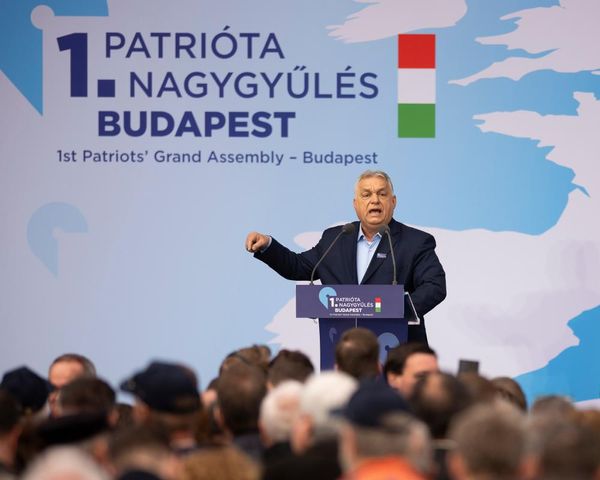
While Bolsonaro resembles Trump, Russia's Vladimir Putin, the Philippines' Rodrigo Duterte, Turkey's Tayyip Erdogan, Hungary's Viktor Orban and other populists for his often outrageous views _ he has repeatedly made offensive comments about women, blacks and gays _ some longtime Brazil watchers say he would not likely have the power to become an autocrat.
Unlike most authoritarian leaders, Bolsonaro would not have a majority in Congress or a loyalist Supreme Court. While Bolsonaro will have the second-largest congressional bloc after the Workers' Party, it will only hold 52 seats of the lower house's 513 congressional seats.
And it would not be easy for Bolsonaro to gradually grab absolute powers. Brazil's economy is in a shambles, and populist leaders _ from Erdogan to Venezuela's Hugo Chavez _ have most often been able to erode democratic institutions and accumulate growing powers in times of economic bonanzas.
"He would most likely be a weak leader," says Peter Hakim, a veteran Brazil analyst with the Inter-American Dialogue think tank in Washington, D.C. "While Trump came with the Republican Party, and the Republican Party controlled Congress, Bolsonaro comes with none of that."
Despite Bolsonaro's more than two decades in Congress, he went almost unnoticed there, and he has no managerial experience. He ran his campaign mainly aided by his children, and through Facebook, Twitter and Whatsapp.
But most Brazil experts fear that Bolsonaro would become an autocrat because, among other things, Brazil does not have a long history of democratic institutions. A law-and-order candidate in a country whose population is desperate for stronger measures to curb violence could easily give rise to a populist autocrat, they say.
Only last year, almost 64,000 people were murdered in Brazil. Not surprisingly, Bolsonaro's key campaign promise of giving more flexibility to police and security forces to shoot at criminals and drug dealers has been applauded by much of the population.
About half of respondents in a March poll by Ibope agreed with the statement "A good thief is a dead thief."
"Bolsonaro despises democracy, at least the version that has been practiced in Brazil over the past 30 years," writes Brian Winter in Americas Quarterly magazine.
Winter cites the fact that Bolsonaro, in the past, has called for Congress to be closed, said that Brazil's military dictatorship's biggest mistake was "to torture instead of kill," and that if elected president he would "start a dictatorship right away."
More recently, Bolsonaro has vowed to stack the Supreme Court with sympathetic judges and has picked a recently retired general _ who is also nostalgic of the military dictatorship _ as his running mate.
Despite Bolsonaro's latest claim that he would not seek to change the 1988 Constitution, "There is simply far more evidence that suggests Bolsonaro, when faced with resistance, will ignore or trample democratic practices and norms to get his way," Winter says.
That's bad news.
In Latin America, right-wing autocratic regimes tend to produce violent counter-reactions and generate new crops of radical leftist leaders.
The tragedy of Brazil's Oct. 28 election is that Bolsonaro's rival Haddad is also running on an authoritarian platform. Haddad may be a moderate within his Workers' Party, but that party has run amok. It is calling for "social controls over the administration of justice" and is led by an admirer of Maduro's dictatorship in Venezuela.
I hope I'm wrong about this, but it looks like _ whoever wins the runoff election _ Brazil is headed toward a chaotic populist autocracy.