At a time when growing numbers of democratically elected leaders are mingling with tyrants in the name of pragmatism, the president-elect of Uruguay has decided not to invite any dictator to his March 1 inauguration ceremony.
Bravo!
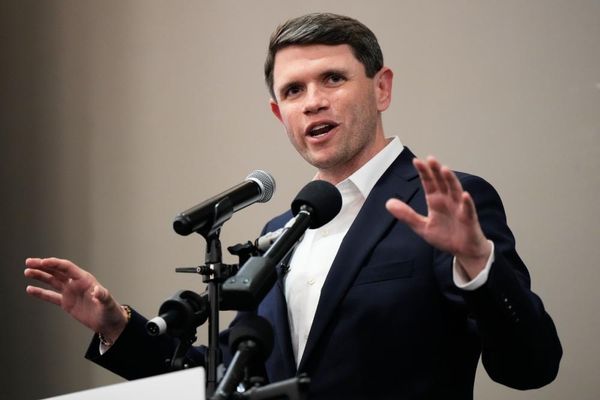
I called president-elect Luis Lacalle Pou, 46, to confirm the report in Uruguayan media.
"Yes, it's true," Lacalle Pou told me. "We have taken the decision not to invite the (heads of) governments of Venezuela, Cuba and Nicaragua to my inaugural ceremony. It's a personal decision of mine, which I take responsibility for."
It is a welcome development _ and in sharp contrast to what other presidents are doing these days.
U.S. President Donald Trump has posed, smiling, with North Korea's ruling despot, Kim Jong Un, giving him the de facto legitimacy he had long been denied (and, worse, in exchange for nothing).
Mexico's president, Andres Manuel Lopez Obrador, hosted Venezuelan dictator Nicolas Maduro at his 2018 inauguration in Mexico City.
Argentina's president, Alberto Fernandez, welcomed Venezuela's information minister, Jorge Rodriguez, to his December inauguration despite the fact that Rodriguez is on a blacklist of human rights abusers barred from traveling to the United States and several other countries.
Lacalle Pou, who will lead Uruguay's first center-right government after 15 years of left-of-center administrations, told me that his decision not to invite Venezuela's Maduro, Daniel Ortega of Nicaragua and Miguel Diaz-Canel of Cuba does not amount to breaking diplomatic ties with these countries. He will invite the Venezuelan, Nicaraguan and Cuban ambassadors to Uruguay to his inauguration, he added.
Uruguay _ a small country of 3.5 million people sandwiched between Brazil and Argentina _ has traditionally played a relatively big role in Latin American politics.
It is the headquarters of South America's Mercosur trade block, made up of Brazil, Argentina, Uruguay and Paraguay. Uruguay's recent left-of-center presidents had abstained from joining other Latin American countries in explicitly condemning the Maduro dictatorship in Venezuela.
Asked what will change in foreign affairs under his government, Lacalle Pou told me that Uruguay will withdraw from the so-called "Montevideo Mechanism," a partnership of Uruguay's departing government with Mexico that sought mediation with the Venezuelan regime. Critics say that the partnership was tacitly helping the Maduro regime's diplomatic agenda.
Uruguay's incoming government is forging ties with Europe's Venezuela Contact Group and the Lima Group of Latin American countries that seek a restoration of democracy in Venezuela, Lacalle Pou said.
He also said that Uruguay will seek to change the laws of the Mercosur trade bloc, which don't allow member countries to sign bilateral free-trade agreements with nonmember nations such as the United States. "We want to make Mercosur more flexible," he told me.
In addition, Uruguay will change its immigration rules to encourage more foreigners to become residents and invest in the country, he said.
Currently, Uruguay demands that foreigners invest at least $1.7 million to obtain residency, and some business groups have asked Lacalle Pou to lower it to $500,000. Lacalle Pou told me that this figure "is not outlandish," but that he has not yet made a decision on this.
"We want to generate economic conditions so that thousands and thousands of people can come and settle in Uruguay," he told me. "They can be from Argentina, Brazil or anywhere else in the world."
Granted, Lacalle Pou's decision not to invite the dictators in the region to his inaugural ceremony is a largely symbolic measure. But it's an important gesture that should send a powerful message: Despots should pay a price for their violation of basic freedoms.
If we don't turn them into international pariahs, we will be encouraging more presidents to break the rule of law. Tiny Uruguay deserves applause for reminding the world of this.