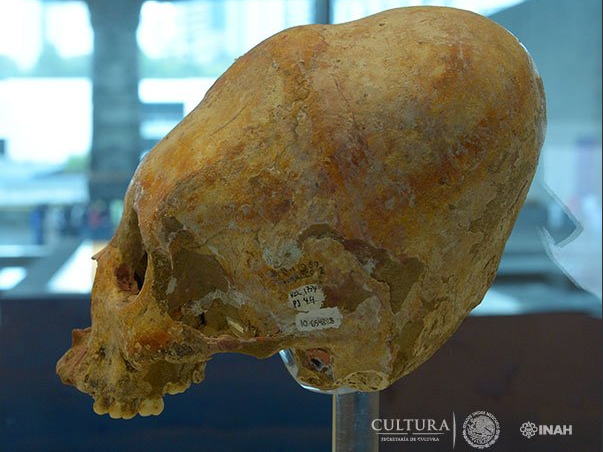
Ancient Mayan remains thought to be up to 7,000 years old have been discovered by archaeologists in Mexico.
Three skeletons were found in the Puyil cave, in the Tacotalpa municipality of Tabasco state, which is in the south of the country.
One of them is estimated to date back seven millennia, while the other two are thought to be 4,000 years old.
Researchers said the oldest of the skeletons was from a period when humans were transitioning from hunting to a more sedentary lifestyle.
Archaeologist Alberto Martos said: “Seven thousand years old is when we’ve just placed it, which is the period of transition from being hunters to sedentarism.
“There were different groups during this time that used the caves, clearly it wasn’t a domestic cave.
“In prehistoric times it was probably used for rituals and cemeteries so as to dispose of remains of people.
“For the Maya, it was a cave of ancestors.
“This cave was used by the Maya, they respected the remains that were already there and left their own remains inside.”
The remains are now on display in Mexico City‘s National Museum of Anthropology.
Also on display are stone beads, sandstone and pyrite artefacts, alongside a replica of a stalagmite found in the cave.
The Mayan civilisation included some of the grandest and most complex cities in Central America that were dotted across the southern states of present-day Mexico.
It spanned more than 3,000 years before the arrival of Europeans in the 15th century.