Archaeologists have discovered 18 Egyptian cemeteries along the Mediterranean, containing several coffins and artefacts, including two dozen “golden tongues”.
The discovery sheds more light on the coastal region’s ancient cultural diversity.
So far, nearly 45 cemeteries have been found along this coastal part of Egypt, enhancing the importance of the area as one of the most prominent coastal cities of the ancient world.
Of the 18 newly discovered tombs, 11 were found carved entirely onto rocks up to an average depth of eight meters, according to a statement by the Egyptian ministry of tourism and antiquities.
Seven others were surface tombs built of limestone, the ministry said.
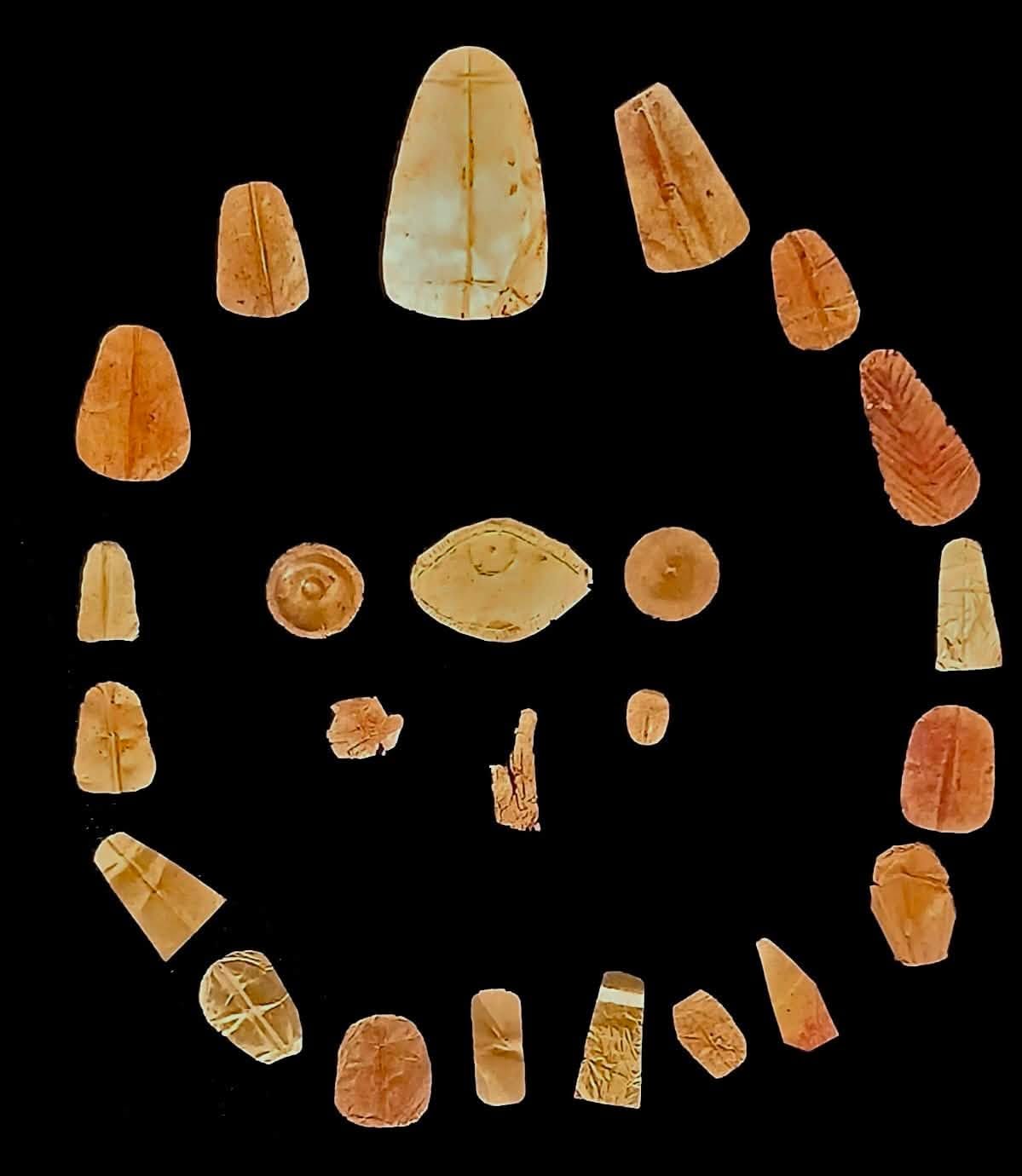
Among the most prominent discoveries here was 24 gold pieces placed inside the mouths of some of the deceased, dubbed “golden tongues”.
The tongues were thought to help the deceased communicate in the afterlife.
Most of the tombs found along this coast were in an “exceptional state of preservation” with stone slabs keeping the burials closed since the time they were built.
These were found on the northwestern coast of Egypt, about 100km west of Alexandria, and were likely part of the city of Leukaspis, mentioned by the Greek geographer Strapon.
The ancient city flourished from the Hellenistic era until the Byzantine era, and reached the height of its urban and economic activity during the first three centuries AD.
There were also surface burials in the vicinity of the newly discovered tombs, reflecting the social diversity of the city's residents, researchers say.
A water well was also found reused for burial purposes during a later period.
These finds point to the continuation of the ancient Egyptian funeral ritual and architectural influences during the later Ptolemaic and Roman eras, researchers say.
Some of the key artefacts found at the tomb sites include complete and semi-complete pottery, camphors, dishes, limestone altars and basins, along with several architectural elements associated with the tombs.
One limestone altar likely used to provide offerings had a “distinctive architecture”, according to researchers.
The altar had an incomplete marble statue likely representing the goddess Aphrodite, and what archaeologists thought mimicked the “imaginary door” known in the ancient Egyptian funeral doctrine.
One of the cemeteries also had a 2.5m-long granite coffin with its original cover still in place and containing the remains of a plaster sphinx.
The remains of the individual buried here are currently being studied.
Two dozen “golden tongue” artefacts were also found in the cemeteries, which are gold pieces placed inside the mouths of some of the deceased.
These were associated with funeral beliefs in that period as an important protective symbol, researchers say.