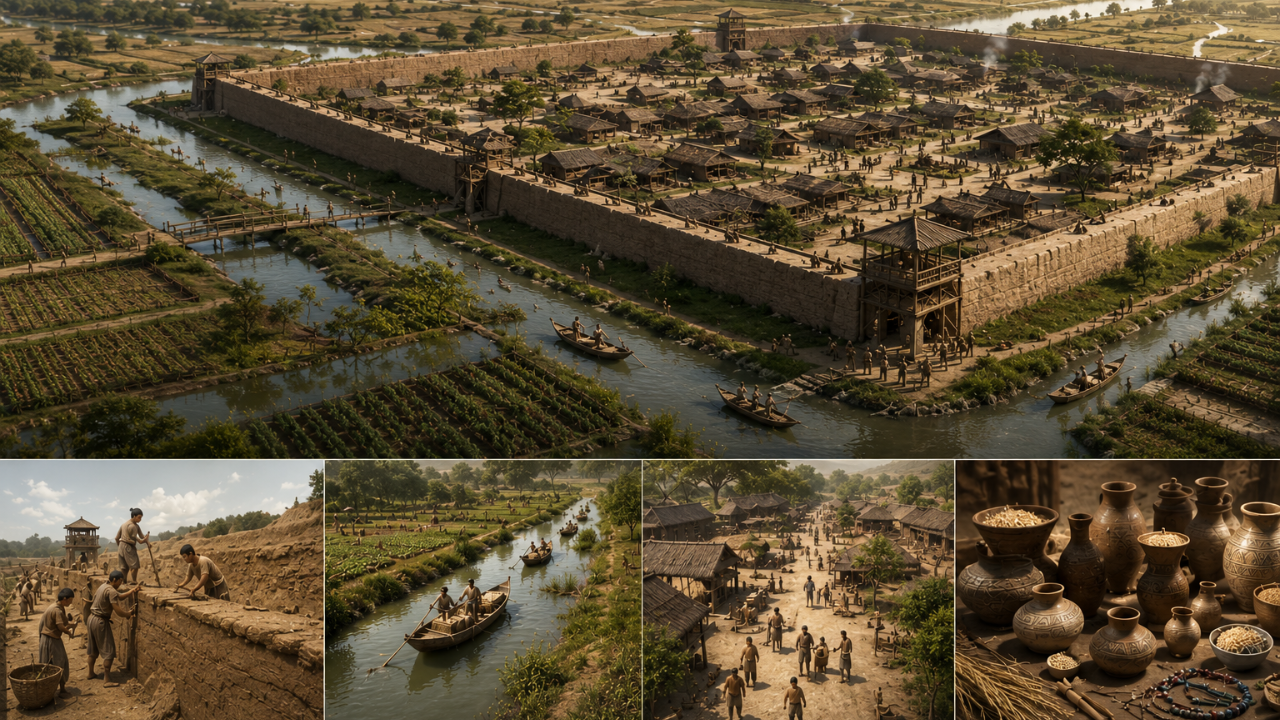
For thousands of years, the remains of a remarkable prehistoric city lay buried beneath the plains of central China, preserving clues to one of the Yangtze River region's earliest urban civilisations. Now, new visitor access and archaeological discoveries are shedding fresh light on the Shijiahe Culture, a sophisticated society that flourished between approximately 3900 and 1800 BCE. Long before the rise of China's first dynasties, the people of Shijiahe built sprawling settlements, engineered complex water-management systems, crafted exquisite jade artefacts and developed advanced religious traditions. As archaeologists continue to uncover the scale of this ancient urban centre, visitors are gaining an unprecedented opportunity to explore a site that is reshaping our understanding of early civilisation in East Asia and revealing how complex societies emerged thousands of years ago.
Get breaking news anytime, anywhere. Download the TOI app now!
Hidden 5,000-year-old city reveals advanced engineering and urban planning
Located in present-day Tianmen, Hubei Province, the Shijiahe archaeological site represents one of the largest prehistoric settlements discovered in the middle Yangtze River basin. According to the General Office of Hubei Provincial People's Government, Hubei Province lies in the middle reach of the Yangtze River with an area of 186,000 square kilometres. Situated 108 '21"-116' 07" east longitude and 29 '05" -33' 20" north latitude, it got its name from being north of the Dongting Lake. The terrain of Hubei Province is high in the west and low in the east and wide open to the south, the Jianghan Plain and serves as the political, economic and cultural centre of the Shijiahe Culture.
Archaeological investigations have revealed extensive city walls, residential districts, ceremonial areas and sophisticated hydraulic infrastructure designed to control water resources and protect the settlement from flooding. The city is enclosed by the rammed wall. Inside it, there are many palace relics. Outside it are the workshop relics and cemeteries.
Researchers writing in the journal Antiquity note that the Shijiahe settlement system demonstrates a level of social organisation and landscape management that reflects the emergence of an advanced urban society in prehistoric China.
The site's scale suggests that it was not merely a village but a regional centre capable of coordinating labour, managing resources and sustaining a large population.
How the Shijiahe civilisation mastered jade, pottery and sacred rituals
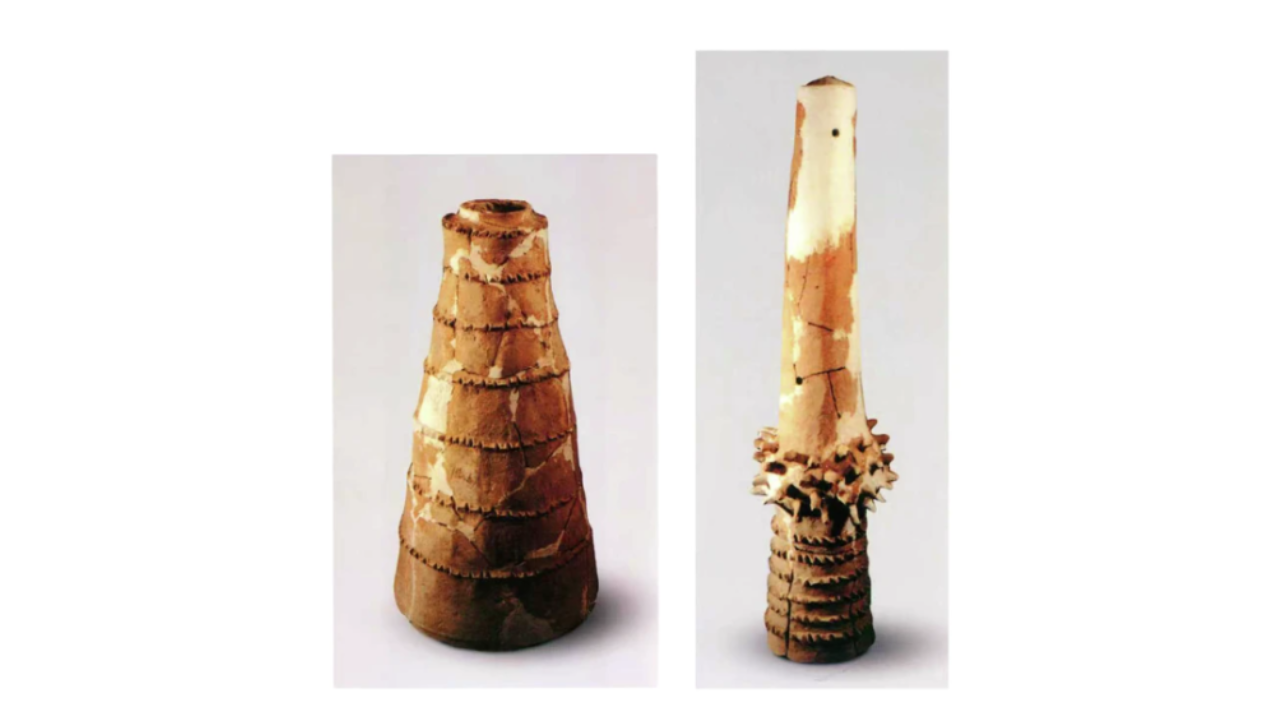
Among the most significant discoveries at Shijiahe are its extraordinary jade artefacts. Archaeologists have uncovered finely crafted ceremonial objects, including intricately carved human and animal figures that demonstrate remarkable artistic skill and specialised craftsmanship.
According to Siwei Shan from the Department of Archaeology, School of History, Wuhan University:
"Shijiahe represents the highest level of prehistoric civilisation development in the middle reaches of the Yangtze River."
The culture also maintained a highly organised pottery industry. Evidence of mass pottery production sites indicates the existence of specialised workshops and advanced production methods.
Religion seems to have been an integral part of the civilisation. Ritual buildings, evidence of animal sacrifices, and ritualistic objects suggest the existence of organised belief systems and elaborate rituals. This evidence gives important insight into the potential contribution of ritual authority to social and political control in early civilisations.
Why the Shijiahe site is transforming our understanding of ancient China
For decades, discussions of China's earliest civilisations focused primarily on communities associated with the Yellow River basin. However, discoveries at Shijiahe have highlighted the importance of the Yangtze River region as an independent centre of cultural innovation and social development.
The cultural heritage of humanity is a key source of information regarding mankind's common history. Examples like the Shijiahe site indicate that it was not just one civilisation but various civilisations in different regions that played their roles in the evolution of early Chinese society.
New discoveries from the region prove that China in prehistory had many different and interlinked centres of development instead of being the only cradle of civilisation, thus contradicting the earlier narratives. As new parts of the site become available for excavation and viewing by visitors and researchers alike, the Shijiahe site becomes one of the few places in the world where one can learn about a civilisation that thrived almost five thousand years ago.