The Fine Arts Department on Monday announced further progress in the excavation of the Don Yai Thong archaeological site in Ban Lat district, Phetchaburi, with the discovery of another human skeleton, bringing the total to nine.
Fine Arts Department Director-General Phnombootra Chandrajoti said the latest remains are believed to belong to a child under 12. Archaeologists also found the jaw and teeth of a ruminant animal, likely cattle or buffalo, which may be linked to prehistoric burial rituals.
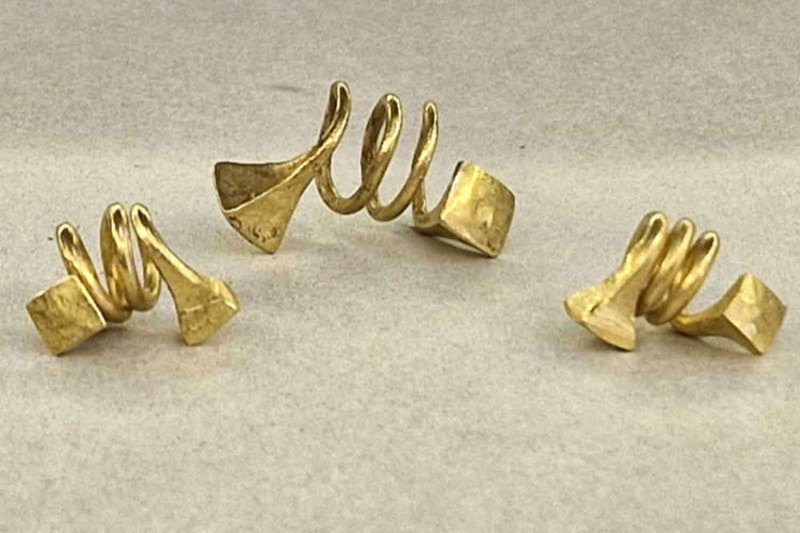
Excavations began on Feb 9 after a bronze drum was discovered. Since then, archaeologists have unearthed six bronze drums, nine human skeletons and numerous artefacts, including gold ornaments, glass beads, pottery and bronze vessels. The finds date back about 1,500-2,000 years and provide important evidence of an ancient community.
Mr Phnombootra said Skeleton No. 1 was buried with rings, bangles, earrings and gold pendants, suggesting the deceased held high status. The discovery also indicates the community was prosperous and practised elaborate burial rituals with offerings to the dead.
All nine skeletons were buried in the same orientation, with their heads facing northeast and bronze placed over the head area. Mr Phnombootra said this distinctive practice is rarely found at other archaeological sites in Thailand.
The latest burial also contained a bronze object resembling a gong, glass beads, pottery, fired clay lumps and an intact cattle or buffalo jaw. Researchers believe the animal remains may indicate ritual animal burials, although further study is needed.
Excavation is currently suspended because of flood risks during the rainy season, he said.
The department plans to recover all skeletons and artefacts in July before conservation and scientific analysis. It will also conduct 3D scans of the site and send charcoal samples to the United States for scientific dating, with results expected in about three months.
Mr Phnombootra said universities in Guangxi, China, have expressed interest in collaborating because bronze drums form part of a shared cultural heritage across southern China, Vietnam, Thailand and Malaysia.
Before formal conservation begins, the artefacts will be displayed to the public for three to five days. The department also plans to work with Phetchaburi province to establish a permanent exhibition.