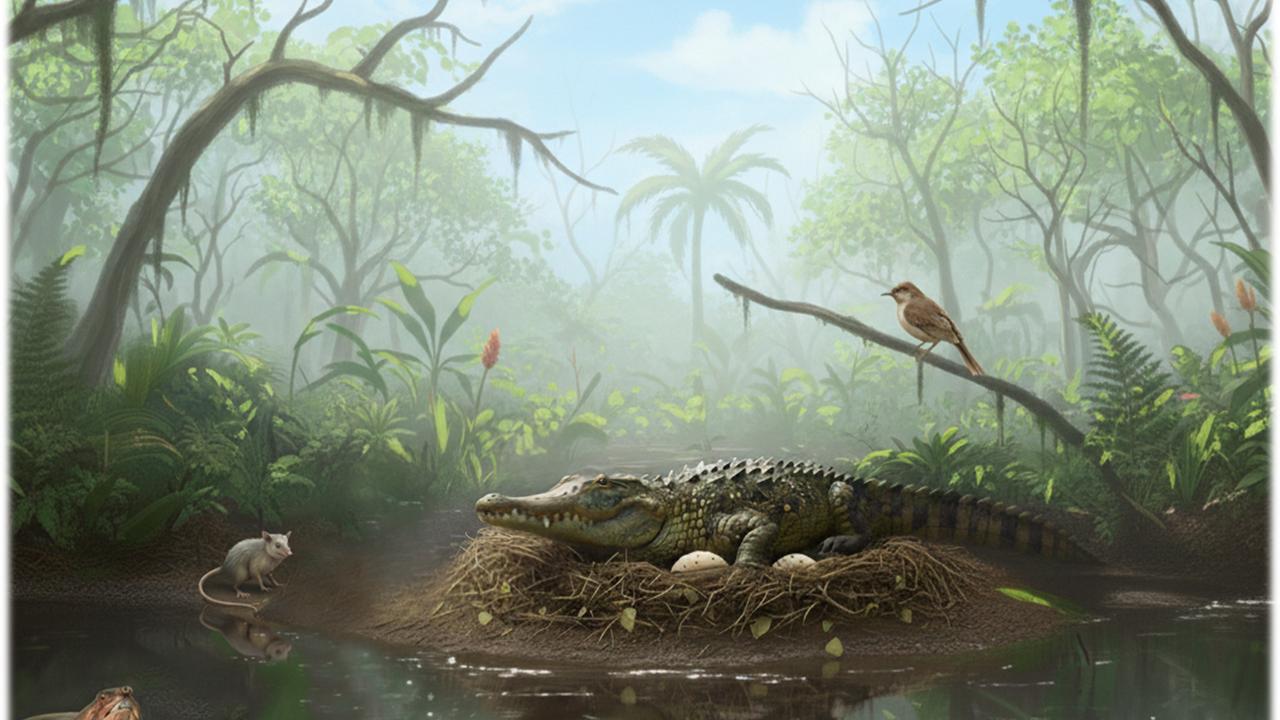
The oldest crocodile eggshells ever uncovered in Australia are shedding light on an ancient species that hunted in forests and might also have been "drop crocs", leaping onto their prey from trees.
Found by scientists digging in clay pits near the southeast Queensland town of Murgon, the shell fragments are from now-extinct mekosuchine crocodiles.
They dominated Australia's inland waters 55 million years ago, with modern saltwater and freshwater crocs only arriving 3.8 million years ago.
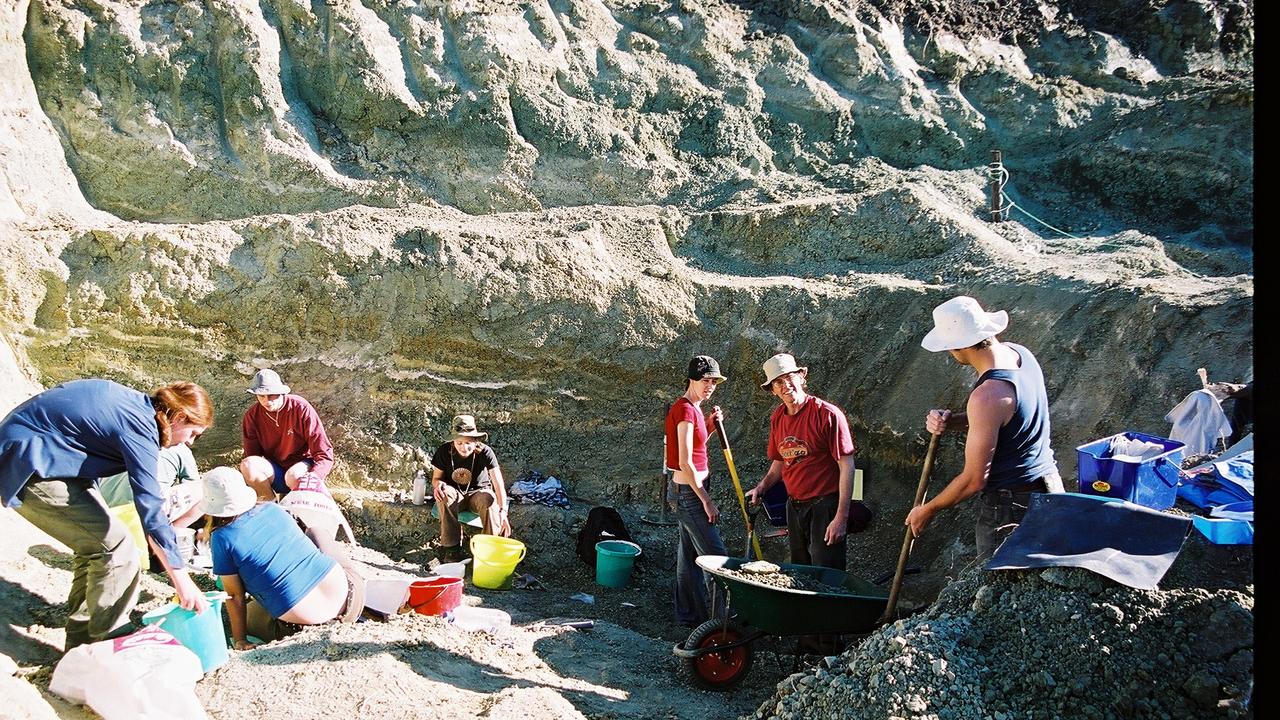
A team including researchers from UNSW Sydney and Spain's Miquel Crusafont Catalan Institute of Paleontology have examined the eggshell fragments from the clay pits where scientists have been digging since 1983.
Unlike today's water-bound reptiles, mekosuchines were a group of "very weird crocodiles", UNSW paleontologist Michael Archer told AAP.
Catalan institute scientists identified the eggshell fragments as crocodilian and that fitted with ancient mekosuchine crocodile skulls unearthed at Riversleigh World Heritage Area in northwest Queensland, he said.
The mekosuchines were perhaps a group from the ancient Gondwana supercontinent and some were "seriously strange".
The standard jokes were about people coming to Australia and worrying about what will gobble them up, such as drop bears and drop crocs, Professor Archer said.
"Slowly we are finding in the fossil record that this wasn't so much of a joke if you step back in time."
One of the mekosuchines found at Riversleigh appears to have been at least a semi-arboreal crocodile, "like a leopard croc, jumping on top of you from the trees, not leaping up from river systems", Prof Archer said.
The mekosuchines had no competition from other types of crocs and appear to have occupied an ecosystem niche now occupied by goannas, which are big lizards that spend a lot of time in trees.
The evidence suggested that some mekosuchines were terrestrial, "running around in the forest" and not being tied to water, Prof Archer said.
The arboreal mekosuchines were understandably smaller crocs.
"In those days, prior to these modern crocs arriving, you had to be aware of crocodiles everywhere."
The eggshell study's lead author, Xavier Panades i Blas, said eggshells were an underused resource in vertebrate paleontology.
"They preserve microstructural and geochemical signals that tell us not only what kinds of animals laid them, but also where they nested and how they bred," he said in a statement.
The Murgon shell fragments were examined under optical and electron microscopes.
Their microstructure suggests the crocs laid eggs on the margins of a lake, with their reproductive strategy adapting to changing conditions.
Study co-author Michael Stein said mekosuchine crocs might have lost much of their inland territory due to encroaching dryland, having then to compete with new predators while their big prey dwindled.