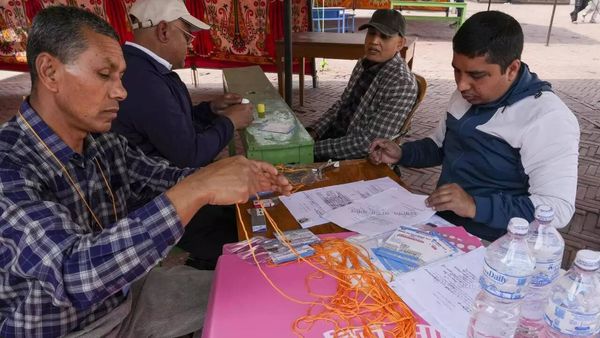
Designer Anavila Misra, whose signature label is known for handwoven cotton and linen saris and apparels, recently gave away the first batch of washable and reusable two-ply masks made at her manufacturing unit to the staff of Khar Post Office, Mumbai. It was her goodwill gesture to the frontline staff who have been working tirelessly through the COVID-19 lockdown.
Anavila has been using the postal service to connect with her weavers and craftspeople based in rural pockets of West Bengal and Jharkhand for the last nine years. “Private courier services don’t reach these villages. We used to send paper designs and small colour swatches to weavers, through post. Today the weavers are tech-savvy and designs can be sent through WhatsApp and we have an online database of colours. However, we continue to send raw material and receive the finished work through post,” says Anavila, in a telephonic conversation from Mumbai, adding that she intends to supply more masks to the Indian Postal Service.
Her workshops in Mumbai and Gurgaon, like other handloom and textile enterprises across the country, halted all operations in mid-March, before the nationwide lockdown was announced. “This gave migrant workers enough time to take trains and get back home,” she adds.
Six embroiderers from her Gurgaon workshop who returned home to Bihar, set up a small unit and continued their work. “It didn’t make sense to ask them to travel back even after travel restrictions were eased, given the pandemic situation. Luckily, these embroiderers live in nearby areas and can coordinate and work,” says Anavila.
Shifting focus
While weavers have traditionally been working from home, Anavila says she is encouraging all her craftspeople to work from their homes. A few of the staff from her Mumbai team began making masks, with help from two tailors. These cloth masks have an outer layer of linen and an inner layer of mulmul, and the elastic is covered with a cotton layer.
Two masks are given complimentary for every Anavila purchase made online and at the Mumbai store. But Anavila doesn’t intend to continue selling masks. “That’s not our primary focus [of revenue],” she says.
There is a gradual revival of interest among buyers, says Anavila. “We are in for a long haul and have to find ways of staying safe and adapting to the new normal. In the initial stages of the lockdown, priority was for essentials. Now people are placing orders for clothes.”
- Anavila’s spring-summer 2020 line of saris and garments are accentuated with handwoven floral jamdani detailing, handblock prints for the blouses, and Khatwa embroidery with sequins.
She hopes that the lessons learnt during the lockdown will make more people opt for sustainable choices in food, lifestyle and fashion: “I think there is an appreciation towards clothes that can transcend seasonal fashion trends, as opposed to fast fashion,” she says.
Does she foresee a surge in handloom patronage? “We cannot expect people to buy a sari or garment simply because it’s handloom. As designers, we have the responsibility of making stylish, quality handloom products that will make people want to own them. Mediocrity won’t work,” she says, signing off.