- Tesla has shared Wall Street's delivery projections on its own investor relations website.
- Analysts are expecting a sharp year-over-year drop in fourth-quarter and annual deliveries.
- However, they're projecting Tesla sales to nearly double by the end of the decade.
As 2025 draws to a close, automakers are expected to release their fourth-quarter and full-year sales figures in the coming days and weeks.
But in unusual fashion, Tesla has shared Wall Street’s fourth quarter sales estimates, as well as sales projections through the end of the decade, on its own investor relations website a few days before its official sales numbers will be published.
The automaker shared what it called the “company-compiled delivery consensus of sell-side analysts,” sharing sales estimates from as many as 20 financial firms, including Wedbush Securities, Morgan Stanley, Barclays, Wells Fargo and HSBC. And the numbers paint a picture of a difficult year for America's dominant EV player.

According to the estimates, Tesla’s Q4 2025 global deliveries will fall about 15% year-over-year to 422,850, from 495,570 during the same period last year. Despite the company's efforts to roll out some fresh metal and lather on discounts like free Supercharging, Tesla is on track for another down year of global sales too.
Analysts project that Tesla's full-year deliveries worldwide will drop 8.3% year-over-year to 1.64 million units, down from 1.79 million in 2024 and 1.81 million in 2023.
That’s not too surprising. Analysts have long expected industry-wide electric vehicle sales to decline in Q4 after the Trump administration axed the $7,500 federal tax credit and heavily revised the federal fuel economy standards. EV sales growth in general has slowed, even before incentives were slashed. And Tesla has been suffering from a stale model lineup.
Plus, Tesla delivered nearly half a million EVs in the third quarter of this year, as buyers rushed to claim the tax credit before it ended. So the previous quarter stole sales from the current one. On top of it all, there's the "Elon Effect," which saw Tesla customers defect from the brand in droves this year.
That’s not all. Tesla also shared analysts' projections through 2029. They don't expect the company to beat 2023's all-time high until 2027.
The firms expect Tesla deliveries to grow 6.6% to 1.75 million in 2026, hit the 2.0 million mark in 2027, 2.35 million in 2028 and more than 3.0 million in 2029. That's far off from some of Tesla's earlier growth projections. For years, it targeted 20 million vehicle sales in 2030. It quietly dropped that number from its public plans.
There's also a pretty broad "standard deviation" metric that Tesla has added in these projections. That means analysts have different estimates of how Tesla's growth will pan out. For example, the standard deviation for 2029 deliveries is nearly a million units, meaning some analysts are extremely bullish, others have modest growth estimates and their guesses are very far apart.
But broadly, Wall Street seems to agree that Tesla's growth story will continue. Officially, that growth rests on the Cybercab. The sleek, two-door robotaxi with scissor doors and no steering wheel is slated to hit production in April 2026.
Beyond that, Tesla hasn’t announced any new high-volume models for the future. It canceled an affordable, $25,000 EV last year to focus on AI and robotics. The newly launched Model Y Standard and Model 3 Standard are just decontented versions of existing cars. They don’t seem to have boosted Q4 sales in any meaningful way. The Roadster supercar is apparently still on the way, but it doesn't exactly have mass appeal.

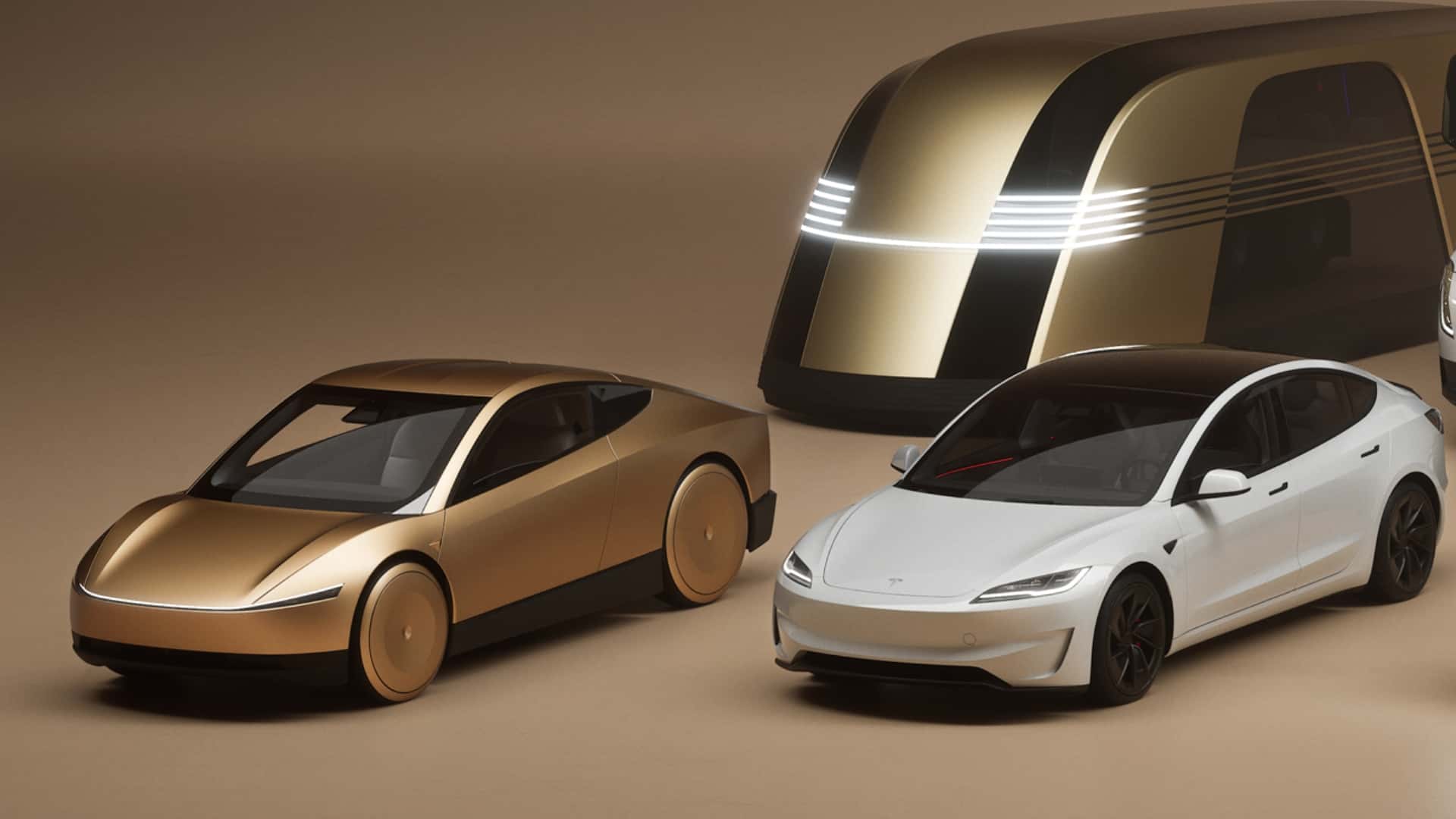
Tesla teased a Cybertruck-inspired SUV and van earlier this year in its Master Plan IV. But given the Cybertruck’s sales collapse this year, it’s unclear if the automaker would go ahead with those plans.
Instead, Tesla is betting its future on humanoid robots and robotaxis. Some of the taxis are now operational in San Francisco and Austin, but in a very limited capacity and with human safety monitors on board. CEO Elon Musk said earlier this year that Tesla would have 500 robotaxis in Austin and about 1,000 in San Francisco by the end of this year.
According to Robotaxi Tracker, which uses crowd-sourced data, there are only 35 Model Ys shuttling around Austin and about 129 around the Bay Area as of writing. To put it simply, Tesla's robotaxi rollout is going far slower than expected.
The company aims to rapidly expand to more cities, and that's where the Cybercab would come in. But, seeing as it doesn't meet Federal Motor Vehicle Safety Standards, Tesla would need a regulatory change in the U.S. to deploy more than 2,500 of them annually. Its underlying autonomous technology is also unproven. It started testing empty cars in Austin this month, while industry-leader Waymo handled some 14 million autonomous rides this year.
For Tesla deliveries to begin growing rapidly again in the coming years, the company would need a breakthrough in autonomy or new and exciting models that can help bring back some of its long-lost charm.
Have a tip? Contact the author: suvrat.kothari@insideevs.com




.png?w=600)