Analysts say the highly centralized and opaque structure of power in Cuba makes it difficult to identify who could lead a political transition on the island, even as Washington signals talks with figures inside the government and speculation grows about possible changes under pressure from the United States, according to a new report.
"The regimes that are totalitarian are very opaque and it is impossible to guess who could play the role of Delcy Rodríguez in Cuba," Sebastián Arcos, interim director of the Cuban Research Institute at Florida International University, told Spanish news agency EFE.
Referring to the situation in Venezuela after the capture of Nicolás Maduro and the emergence of a transitional authority, Arcos cautioned that "Cuba is not Venezuela," adding that the island's political system has been dominated for decades by a tightly controlled military elite unified around former president Raúl Castro.
"Cuba has been a totalitarian regime for almost 70 years, where power is extremely hierarchical and the elite is unified behind a real power," Arcos told EFE, warning that negotiating with the United States outside that structure would carry severe consequences.
-
Fuel Shortages Further Strain Cuba's Tourism Sector as Travelers Choose Other Destinations Amid Deepening Crisis

-
Top U.S. Official In Cuba Says The Regime Will Fall Before The End of The Year: 'We Believe Change Is Coming'

-
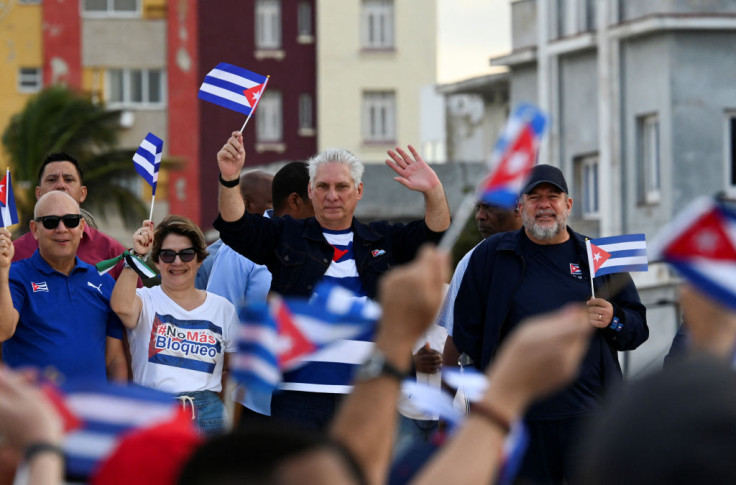
Trump Admin Views Cuban President Díaz-Canel as 'Obstacle' in Talks About Future Of The Island: Report


Andrés Pertierra, a historian at the University of Wisconsin–Madison, echoed Arcos, saying that Cuba's centralized system and cohesive ruling elite make it "even more difficult to identify a transitional figure than in Venezuela." Even if such a figure existed, he added, it would remain unclear who would have the authority to manage internal unrest while responding to U.S. demands.
The debate comes as U.S. officials indicate that quiet contacts with Cuban authorities may be underway. In an interview with Telemundo in mid-February, the head of the U.S. diplomatic mission in Havana, Mike Hammer, said Washington has held discussions with senior figures in the Cuban government and that a potential transitional figure comparable to Venezuela's interim leader exists. Hammer declined to identify the person.
Reports have suggested that the Trump administration is exploring a broader arrangement that could include easing some travel restrictions while allowing members of the Castro family to remain on the island rather than go into exile.
Such proposals, however, have drawn criticism from some Cuban exile leaders. Ramón Saúl Sánchez of the Movimiento Democracia earlier this week called the possibility of a deal allowing the Castro family to remain in Cuba "an offense and a humiliation for the Cuban people."
Despite growing speculation, analysts consulted by EFE say the island's power structure remains difficult to decipher. "We cannot know who will lead the desired transition," Arcos said, adding that any future change is likely to involve the military, which he described as the country's "real power."
© 2025 Latin Times. All rights reserved. Do not reproduce without permission.