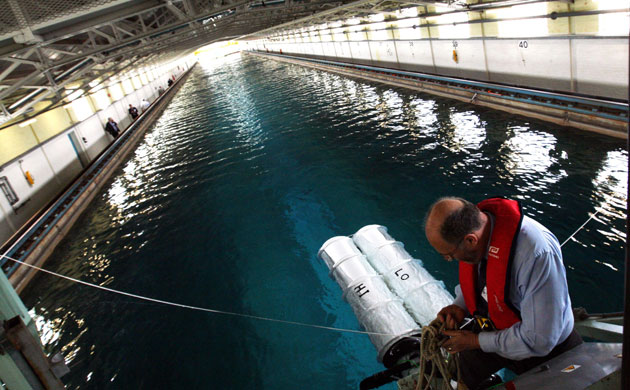
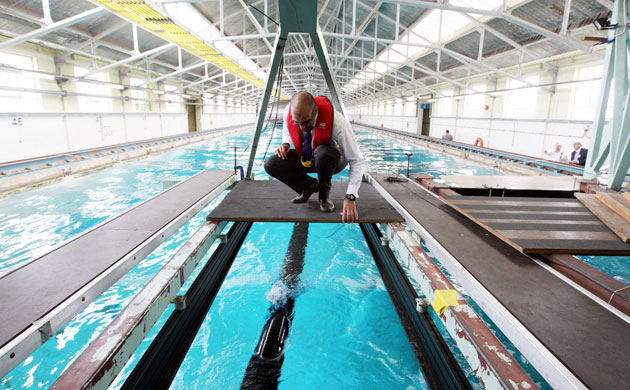
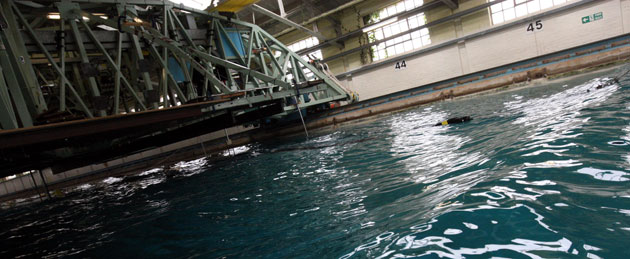
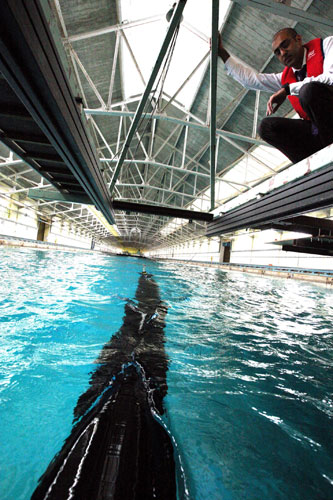
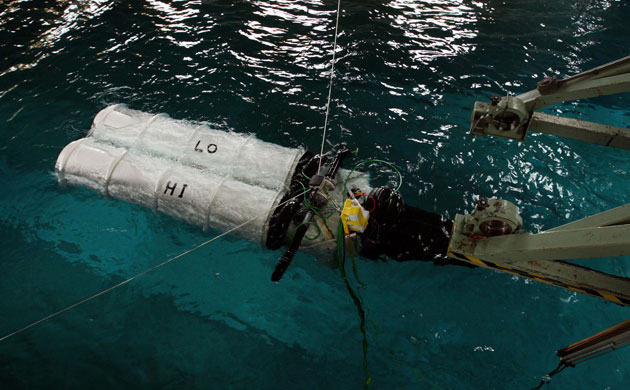
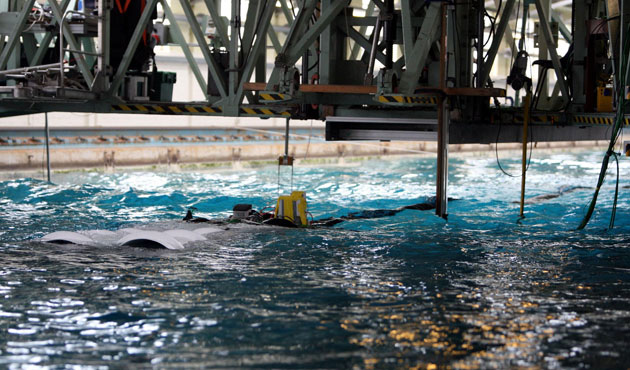
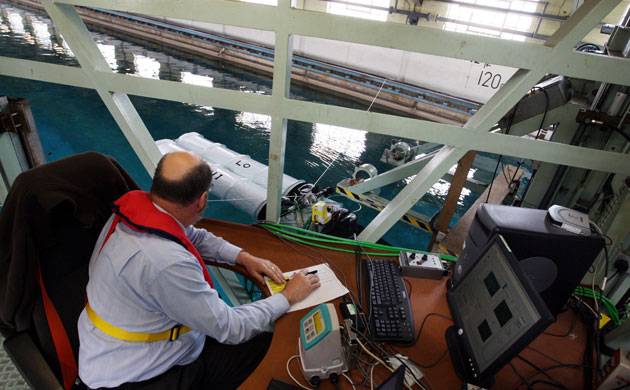
Project manager Steve Rimmer checks on the Anaconda wave-energy converter as it is tested at QinetiQ test tank in Gosport, HampshirePhotograph: Steve Parsons/PAProject engineer Uspal Thind checks on the Anaconda wave-energy converter Photograph: Steve Parsons/PAThe Anaconda wave-energy converter is tested at QinetiQ test tank. Made from a composite of fabric and natural rubber, the Anaconda rides oncoming waves and uses the motion to drive a turbine in its tailPhotograph: Steve Parsons/PA Wire
Uspal Thind checks on the Anaconda wave-energy converter. The test device is nine metres long but its developers say that a full-scale device could be up to 200m in lengthPhotograph: Steve Parsons/PAThe Anaconda could be capable of producing 1MW of power, enough for a thousand homes. Farms of 50 or more could be placed underwater a few miles from the coastPhotograph: Steve Parsons/PAHarnessing wave power could contribute significantly to the UK's target of sourcing 15% of its energy from renewable sources by 2020Photograph: Steve Parsons/PASteve Rimmer checks on the Anaconda wave-energy converter. The Carbon Trust found that wave and tidal stream technologies could add 10-20GW of electricity capacity to the UK by 2050, in particular from areas such as north-west Scotland and south-west EnglandPhotograph: Steve Parsons/PA
Sign up to read this article
Read news from 100’s of titles, curated specifically for you.