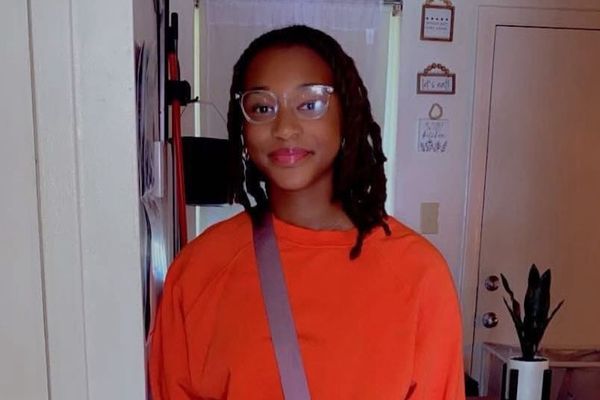
At age 14, Nikki Mattocks began to hear voices in her head that drove her to self-harm. Plagued with suicidal thoughts, she sought help from her school and GP, but she was not immediately referred to a mental health professional. The next six months, before she was diagnosed, was a blur of suicide attempts and trips to the accident and emergency unit, sometimes as often as twice a week.
“I went to A&E millions of times,” said Mattocks, who is now 17 and studying psychology and sociology at Coulsdon sixth form college in Surrey. “I was incredibly suicidal. They would turn me away and I would go home and I would hurt myself and I would go back again.”
Eventually, she was assessed by Children and Adolescent Mental Health Services (CAMHS) and diagnosed with post-traumatic stress disorder, borderline personality disorder and depressive disorder. She was provided with a psychologist once a week. It wasn’t enough, she said. “When you are in that place, you don’t know what you need. I just needed more help.”
What followed was a series of admissions to adolescent psychiatric units, all in different parts of the country and with different staff, for periods of time ranging from one to five weeks. While she considered herself eventually “lucky enough to get a doctor that took it seriously”, she said her recovery was hampered by a lack of continuity in her care. “It was a different place every time,” she said. “It was a repeating cycle. It was horrible. Every time, you would have to repeat your story, you would have to build up trust and then it would be broken when you left. I found it incredibly difficult. It takes a lot of courage to ask for help. A lot of the time I couldn’t face it. There would be lots of different doctors. Sometimes I would have to get my dad to explain.”
She said that the first time she was admitted to a psychiatric unit she was “terrified” as she was unsure of what to expect. It was only after her fourth admission to a psychiatric unit that she began to open up to the medical staff, enabling her to make progress in her treatment.
Mattocks said that during one period of admission, to a facility in Kent, where she spent five weeks, she did not see her family for seven days. “I didn’t see anyone for a week, because my dad, who has a low paying job, could not afford to come and see me.”
A report by the parliamentary health select committee, on Tuesday, found “serious and deeply engrained” problems with access to inpatient mental health services for young people, which compromised their health as they waited for available beds. Often when beds are available, they were in distant parts of the country, making contact with family and friends more difficult, the report found.
A year after her initial diagnosis, Mattocks was finally given dialectical behavioural therapy (DBT) which was “the first treatment that genuinely helped.”
It set her on a path to recovery. “I’ve started college and moved house and a lot of things have changed. It made a massive difference and now I’m recovering.”
Mattocks said young people in crisis needed early intervention. “If you are self-harming, if you are taking overdoses, they need to see you. When they start to get ill, not when they start to harm themselves. People can die.”



.jpg?w=600)