Graduation ceremonies follow a familiar script. Someone stands up and says something inspiring about the future. Everyone files out clutching their diplomas. The class of 2026 at NC State University’s Wilson College of Textiles thought they were about to receive just that. What they got was something different.
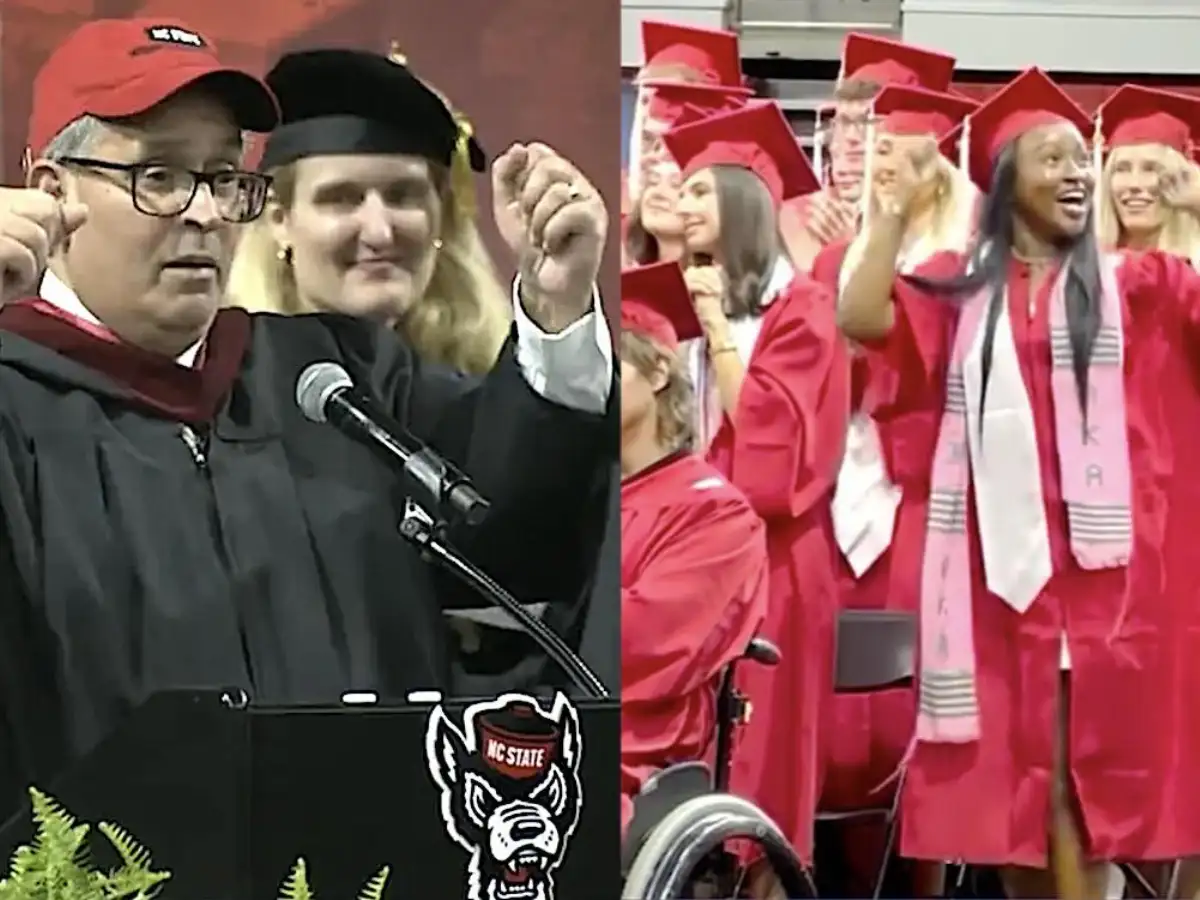
More than 170 students filled Reynolds Coliseum in Raleigh on May 8 as commencement speaker Anil Kochhar stepped to the mic. Kochhar, whose father was a member of the school's 1950 and 1952 classes, had been invited to speak at the Wilson College of Textiles graduation. But he hadn't come just to talk.
Kochhar said he and his wife, Marilyn, will pay off all student loans taken out by graduates of Wilson College of Textiles in the 2025-2026 school year. The room exploded. According to Fortune, other publications noted that 176 bachelor’s degree recipients were helped by the gift, with another 26 master’s degree recipients also receiving relief.
“Marilyn and I hope that all of you leave Reynolds Coliseum today not only with a degree but with greater freedom to pursue your goals, take risks, and build the lives you've worked so hard to achieve,” Kochhar told the crowd.
Why this hits differently right now
For anyone who’s watched a student loan balance dominate every career decision they’ve ever made, the importance of that announcement can’t be overstated.
Today, millennials are the largest group of student loan borrowers in the US, with 14 million student loan borrowers and $476 billion in total debt at an average of $34,000 per borrower. And the effect extends far beyond the monthly payments.
A frequently cited study in the Journal of Public Economics by researchers at Princeton University and UC Berkeley found that student debt doesn’t just strain finances; it actually influences job choices for graduates. The study found that graduates with larger loan burdens were more likely to take higher-paying jobs and less likely to enter lower-paying fields they might otherwise have preferred, including public service and nonprofit work.