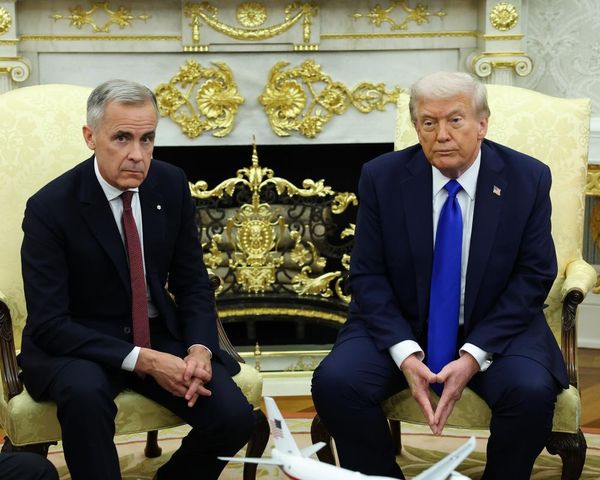
With leaders of the world's 2 largest economies signaling they have no intention of backing down from a drawn-out trade war, a rollback of the globalization model that has helped create record stock prices and company profits looks firmly in motion.
What's happening: President Trump's America First agenda is the biggest driver of this trend but far from the only one. Countries have been putting up new barriers to cross-border trade and investment since before Trump took office.
- From January to August 2016, countries in the G20 alone introduced more than 350 trade regulation measures versus 100 to liberalize trade, and 10 times more measures restricting than easing foreign direct investment, according to Stéphane J.G. Girod, a professor at IMD business school in Switzerland.
- The World Trade Organization last month slashed its global trade growth projection for 2019 to the lowest in 3 years, citing the impact of rising tensions and tariffs. It's the second straight year the organization has lowered expectations.
Why it matters: While many market strategists have been warning of the damage a reversal of globalization will do to asset prices, the market has yet to react meaningfully. That is a risk in itself, says Alan Ruskin, chief international strategist at Deutsche Bank.
- "The longer markets prove resilient to tariffs, the more tariffs will become a more permanent feature of the international trade landscape – 'a new trade normal,'" Ruskin wrote in a note to clients.
The big picture: The ability of companies to conduct business globally has allowed firms to find new materials, reach new customers and outsource their largest cost — labor.
Its reversal is bad news for all parties involved, argue strategists at UBS, and includes a number of unexpected risks that could impact markets, such as reducing global demand for commodities like oil. That could knock as much as a percentage point off U.S. GDP because of America's new position as a major oil producer.
The bottom line: Vinay Pande, UBS' head of trading strategies, says a reversal of globalization's impact is worth "at least 20% in present value terms on the S&P 500."
- "Globalization is up the escalator but de-globalization is down the elevator shaft."
- "De-globalization is like a guillotine, in that it comes very fast."
Go deeper: The world can't afford a trade war right now