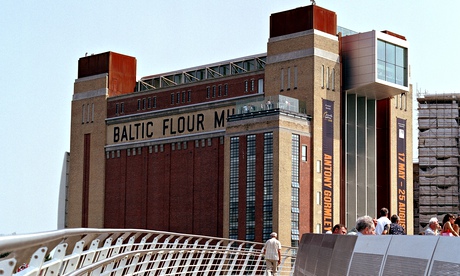
Paul Kingsnorth says that English means osiers, while British means dark satanic mills (England’s uncertain future, Review, 14 March). In fact, as all singers of Jerusalem know, the dark satanic mills were in England. We don’t need to worry about the mills any more, they are now bijou flats or art galleries. But we do need to worry about the tendency to distort the multifaceted nature of our identities by imagining that one of them needs to drive out the other. We can be – for example – English, British, European and Muslim at the same time, and there should be no contradiction in that. To encourage other ideas is not so much romantic as atavistic and dangerous. Osiers sound harmless enough but see what Hitler did with oak leaves.
Paul Stephenson
London
• If an English identity existed, Paul Kingsnorth wouldn’t have to struggle so much to describe it. He is clinging to an outdated grand narrative. National identities have been radically diluted by increased mobility, cultural globalisation, migration and communications technology. The ubiquity of the English language has accelerated this process for the British. People’s identity is threatened when it is no longer relevant, and they need to find new ones. How about “European”, or even “citizen of the world”?
John Linfoot
Bournemouth
• The flying of a flag, be it a St George’s cross or a saltire, may well be seen as an act of defiance or “the sign of a people that lost” but it does not define national identity. Kingsnorth thinks the yes campaign “did a good job of building a civic Scottish identity that people could feel a part of whether or not they were ethnically Scottish”. Born and brought up here, I was one of the 55% of voters who looked beyond the lure of Braveheart fantasies and oil-based economics peddled by nationalists still smarting from ancient battles lost, and deep-seated inferiority complexes leading to selective racism, namely Anglophobia. If that qualifies as a “romantic dream” then Kingsnorth should be careful what he wishes for.
Carolyn Kirton
Aberdeen
• I have lived in England all my life, as did my parents. I like cricket, tea and real ale. If asked, I say I come from England, not Britain. But we live in a connected world. International corporations have more power than governments and can only be tackled by international cooperation. We know almost as much about the problems of people in Greece as our own (and we frequently come into contact with Greek and Spanish people).
I can talk about cricket to Indian call centres or taxi drivers originally from Jamaica more sensibly than with many of my neighbours. So why does anyone obsess about “belonging”?
National pride has been used throughout the ages to persuade us to defend our, often repressive, governments against people from other countries, so it is about time we dumped the idea and realised that solidarity across national boundaries is more important than identifying with the exploiters who share our nationality.
Martin Wright
Sale
• How awful to say flying the flag is like the sign of a people that lost. Lost what exactly? One can have a sense of being British even if everything else changes – isn’t that true for most of us?
Silvia Daley
Harrow
• Black granite outcrops in Calderdale? If Paul Kingsnorth has in mind the valley from Brighouse up to Todmorden, then it’s gritstone, not granite. But Emily Brontë made the same mistake.
Michael Haslam
Hebden Bridge