An ancient ocean on Mars, space buckyballs and a star's near-death experience – in pictures
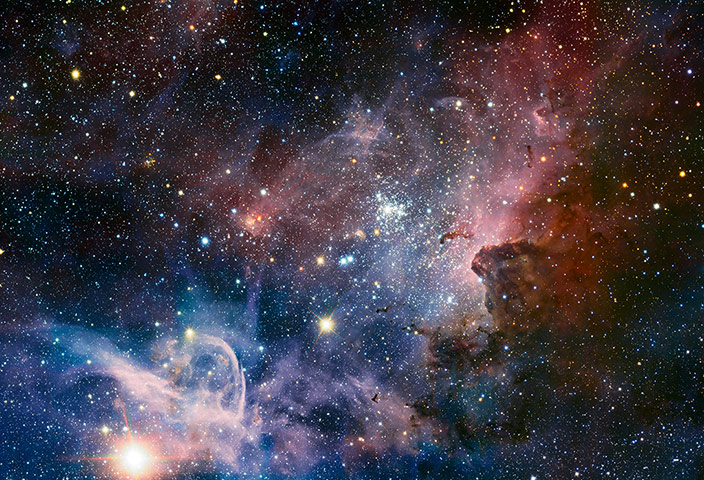
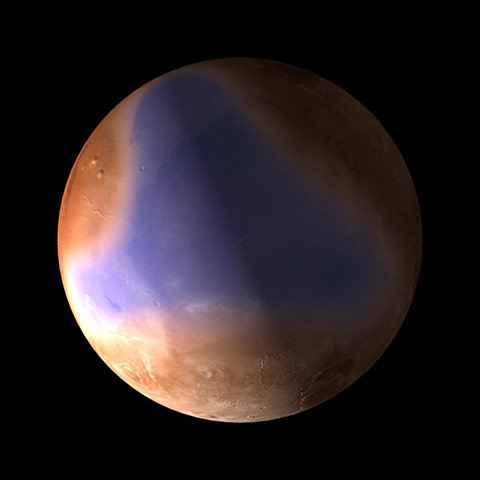
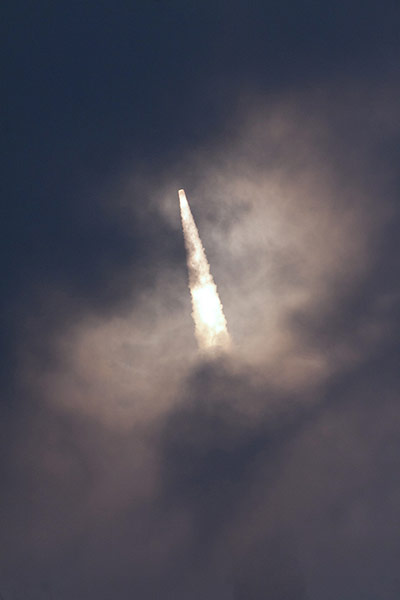
This panorama of the Carina Nebula, a region of massive star formation in the southern skies, was taken in infrared light using the HAWK-I camera on ESO’s Very Large Telescope. Many previously hidden features, scattered across a spectacular celestial landscape of gas, dust and young stars, have emergedPhotograph: T. Preibisch/ESOMars Express found strong evidence for an ocean that would have covered the northern plains of Mars billions of years ago. Using radar, the spacecraft detected sediments reminiscent of an ocean floor bounded by ancient shorelines Photograph: C. Carreau/ESAA Vega rocket launches from Europe's Kourou Space Centre in French Guiana on 13 February. On its inaugural flight, the new lightweight rocket was carrying two satellites and seven 'picosatellites'Photograph: Jerome Valette/AFP
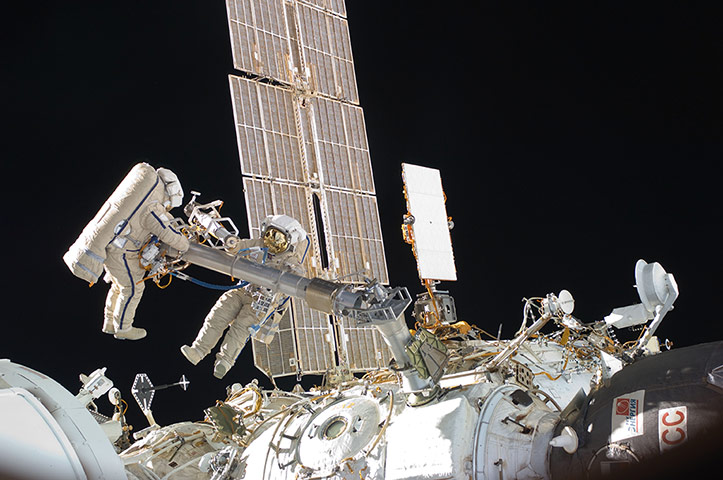
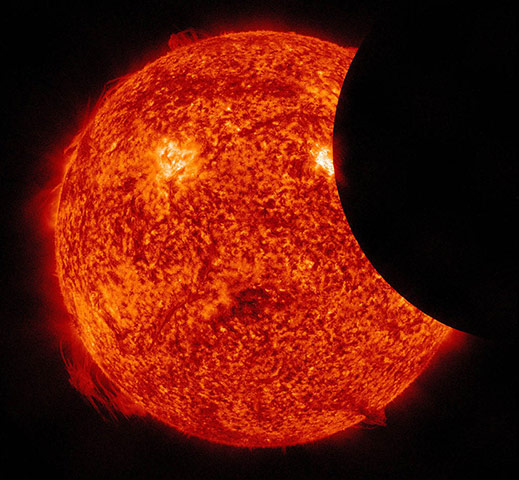
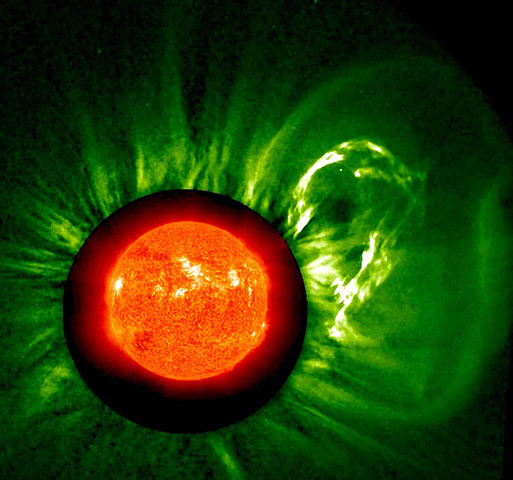
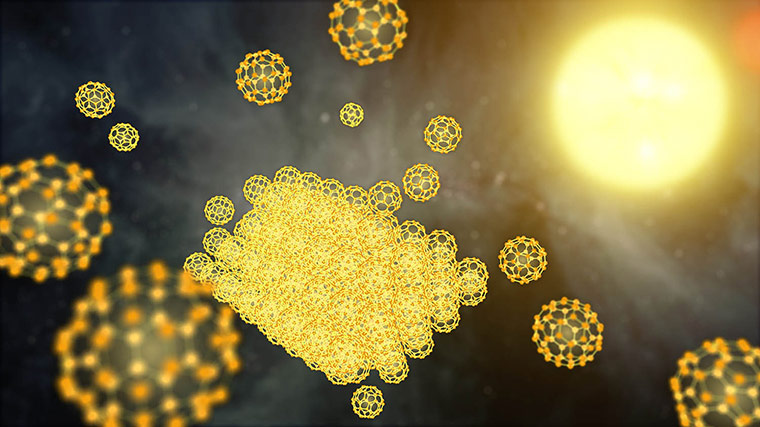
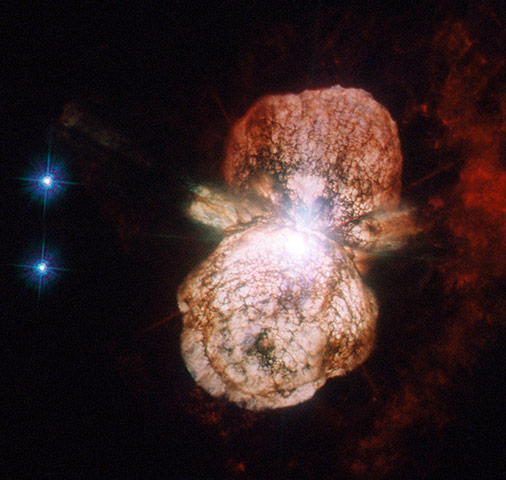
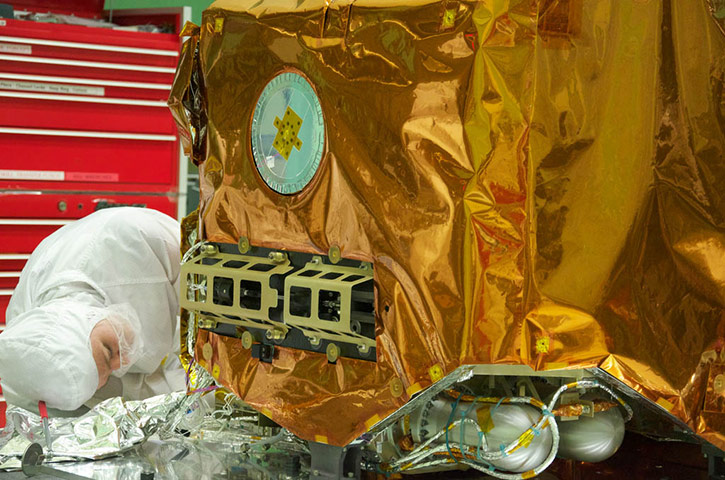
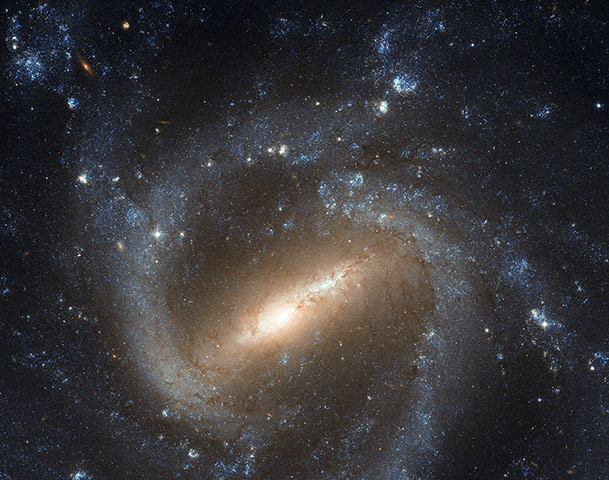
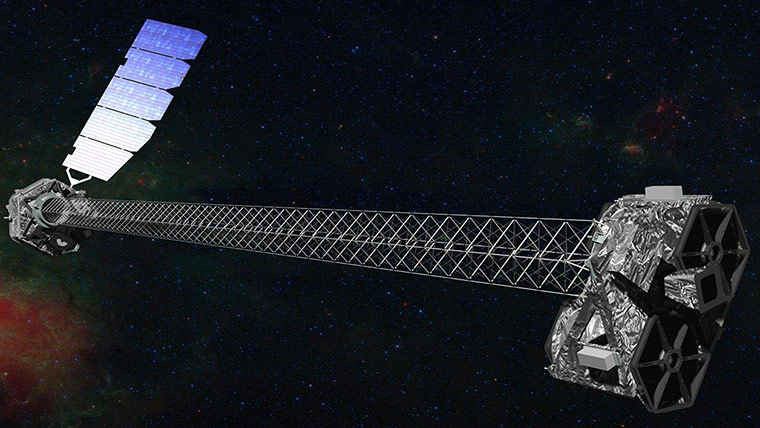
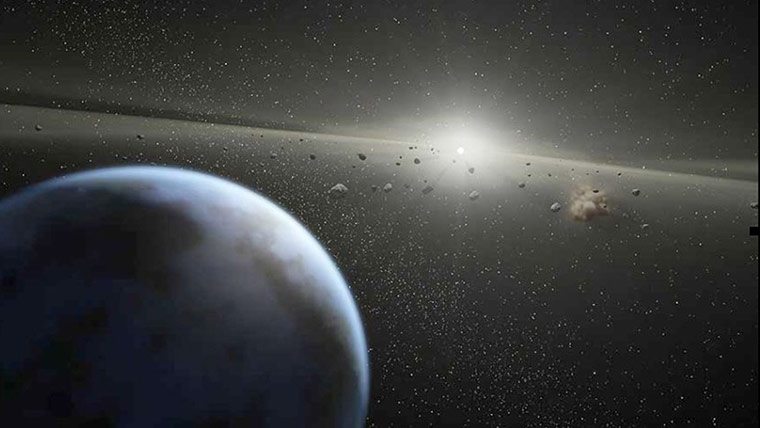
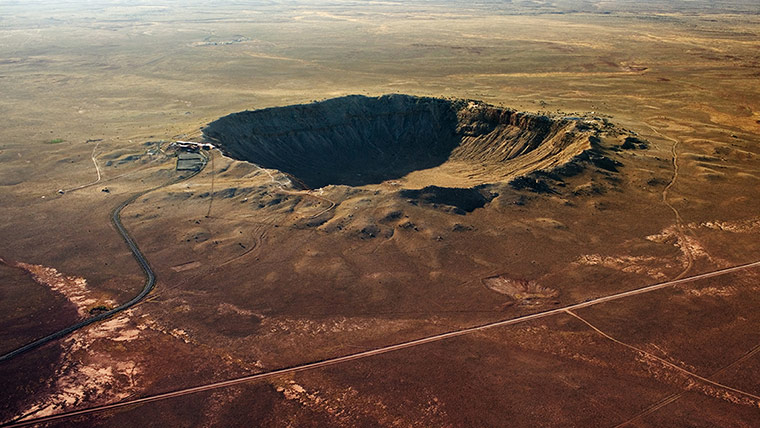
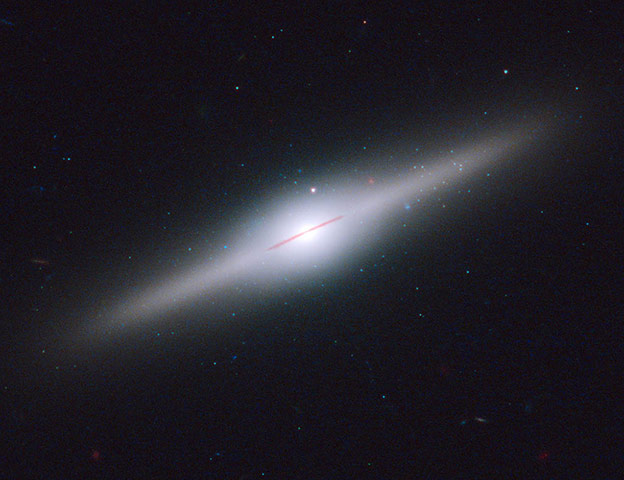
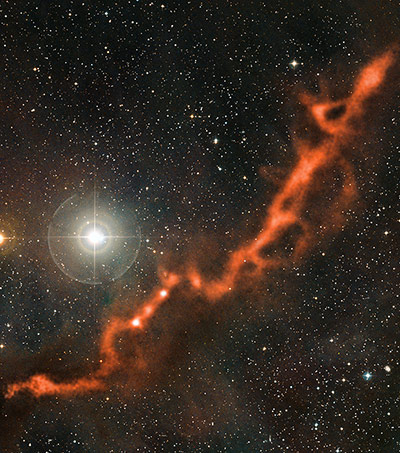
Russian cosmonauts Oleg Kononenko and Anton Shkaplerov work on the International Space Station on 16 February. Their task was to reposition a crane used on the Russian docking module, which is due to be replaced in 2013 by a new multipurpose laboratory. Watch a video of the cosmonauts at workPhotograph: ISS/NASAOn 28 February the moon came between the Solar Dynamics Observatory (SDO) satellite and the sun (seen here in extreme ultraviolet light) to produce a space-based partial solar eclipsePhotograph: SDOA solar eruption on 9 February and the ensuing cloud of particles that blasted into space over the next 10 hours. The sun itself was imaged in extreme ultraviolet during a coronal mass ejection. This orange image has been superimposed on a coronagraph (green) from the Stereo COR1 instrumentPhotograph: GSFC/NASAThe solid form of buckyballs was detected in space for the first time, by Nasa's Spitzer Space Telescope. To form a solid particle, buckyballs must stack together, as illustrated above. The buckyball particles were spotted around a small, hot star 6,500 light-years from Earth. Buckyballs are made up of 60 carbon atoms arranged to form hollow spheres resembling footballsPhotograph: Spitzer Space TelescopeOne of the two stars in the Eta Carinae system, aka the Homunculus Nebula, as seen by the Hubble Space Telescope. The dumbell-shaped cloud of matter was ejected in a "near-death" experience observed from Earth in 1843: a 'supernova' explosion that just stopped short of destroying the starPhotograph: Hubble Telescope/ESA/NASAA technician inspects the fastenings of the multi-layer insulation blanket on the Thermal Infrared Sensor instrument at Nasa's Goddard Space Flight Centre. TIRS will fly on the next satellite in the Landsat programme, a series of Earth-observing missions managed by Nasa and the US Geological SurveyPhotograph: Rebecca Roth/GSFC/NASAThe Hubble Space Telescope captured this image of the barred spiral galaxy NGC 1073 in the constellation Cetus Photograph: Hubble Telescope/ESA/NASAAn artist's impression of NuSTAR (Nuclear Spectroscopic Telescope Array) in orbit with its 10-metre mast deployed. The mast separates the optics modules (right) from the detectors (left). NuSTAR's scheduled launch on 16 March has been postponed to allow additional time to check flight software. The high-energy X-ray telescope will observe some of the hottest, densest and most energetic objects in the universe, including black holes and supernova remnantsPhotograph: JPL/NASAOver the next three and a half years, Project NEOShield (Near Earth Object Shield) will investigate how to prevent impacts by asteroids and comets. Asteroids typically approach Earth at speeds of between five and 30 kilometres per second. Thousands of near-Earth objects (NEOs) have been discovered in the past 20 yearsPhotograph: JPL-Caltech/NASAThe 1,200-metre diameter Barringer Crater in Arizona is the result of an impact with an asteroid 50 metres acrossPhotograph: Stefan Seip/DLRAstronomers using the Hubble Space Telescope may have found evidence for a cluster of young, blue stars encircling HLX-1, one of the first intermediate-mass black holes ever discovered. The black hole may once have been at the core of a dwarf galaxy, long since disintegrated. The discovery has important implications for understanding the evolution of supermassive black holes and galaxiesPhotograph: S. Farrell/Sydney Institute for Astronomy/Hubble Telescope/ESA/NASAFledgling stars flicker in the heart of the Orion nebula. This new image combines far-infrared observations from the Herschel Space Observatory with mid-infrared observations from NASA's Spitzer Space Telescope to reveal embryonic stars within extensive clouds of gas and dustPhotograph: ESA/PACS/NASA/Spitzer Space TelescopeA sinuous filament of cosmic dust more than 10 light years long, part of the Taurus Molecular Cloud. Newborn stars are hidden within, and dense clouds of gas are on the verge of collapsing to form yet more stars. The cosmic dust grains are so cold that observations at submillimetre wavelengths, such as these made by the Apex radio telescope in the Atacama desert, are needed to detect their faint glow. The submillimetre-wavelength observations (orange) are superimposed on a visible-light image of the region. The bright star above the filament is φ TauriPhotograph: APEX telescope/European Southern Observatory
Sign up to read this article
Read news from 100's of titles, curated specifically for you.