You are on your couch, laptop open, Wi-Fi bars at their strongest. Feels safe, right? Except that same signal is probably drifting right through your walls and your windows and out into the street. This isn’t paranoia; it’s basic physics.
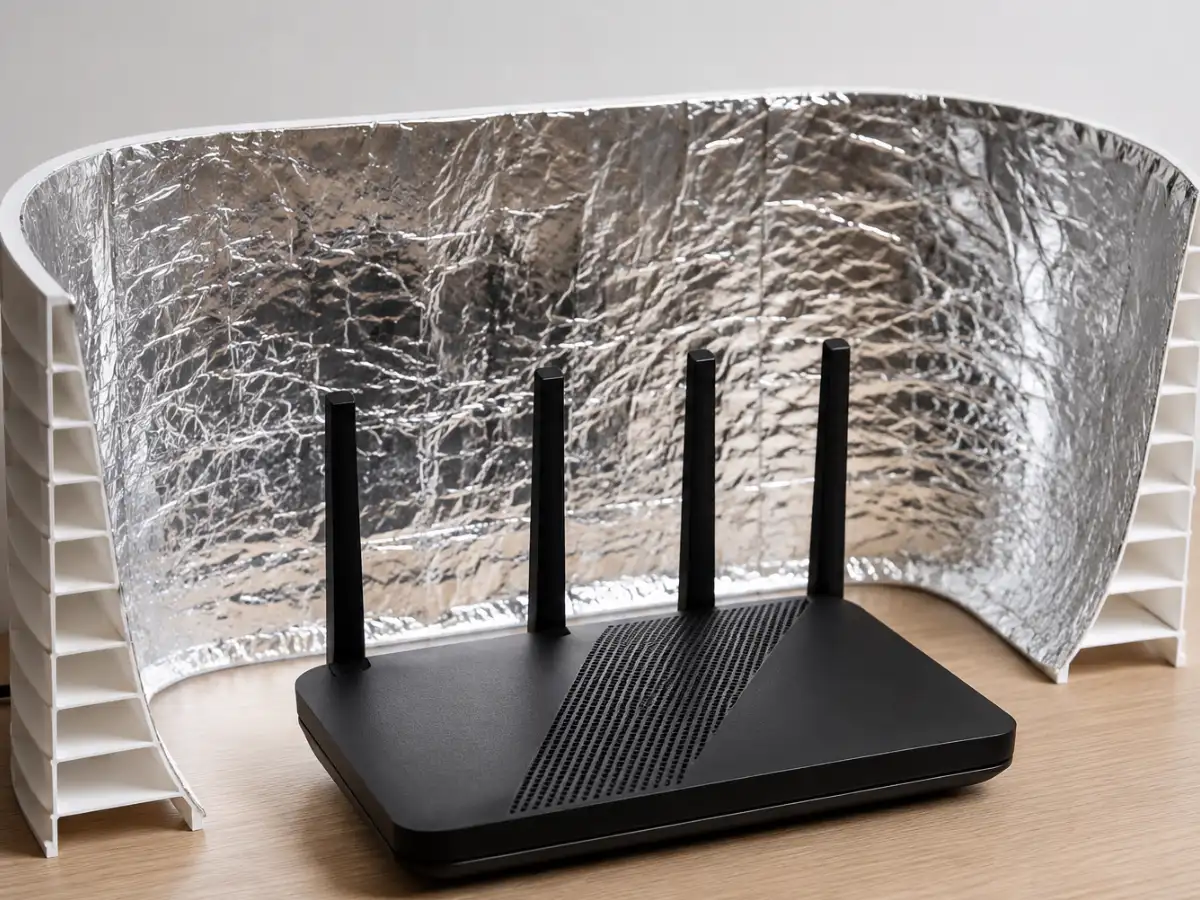
And that’s precisely the problem a team of computer scientists set out to fix with something surprisingly low-tech: a bit of 3D-printed plastic wrapped in regular aluminum foil. According to Dartmouth College's official research announcement, researchers built a custom-shaped reflector to redirect a router's signal where it is needed and reduce it where it is not.
Your Wi-Fi is probably leaking past your front door
Most of us assume Wi-Fi is contained within our own four walls. It does not. A typical home router can transmit between 150 and 300 feet indoors, and that range can extend to nearly 1,000 feet outdoors, according to CISA, the U.S. government’s cybersecurity agency. CISA also points out that this is precisely what enables “wardriving,” where someone just scans a neighbourhood for open signals.
If you live in a duplex, an apartment building, or a row of townhouses, your neighbors, and perhaps even strangers with the right equipment, can often pick up your network even if they can’t log into it. Encryption like WPA2 or WPA3 will keep your data safe, but the same CISA guidance says it does nothing to prevent the signal itself from travelling physically further than it needs to.