Amnesty International is calling on the government of Haiti to protect the families of a murdered journalist and an opposition activist who were gunned down on a Port-au-Prince street a week before the assassination of the country’s president, Jovenel Moïse, and to make progress in their investigation.
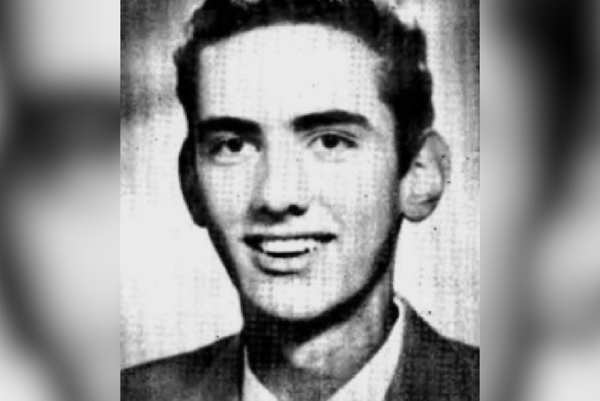
Diego Charles, a journalist with Radio Vision 2000 and website Larepiblik Magazine, and Antoinette “Netty” Duclaire, an outspoken activist who co-founded the magazine, were gunned down at about 11 p.m. June 29 by unknown attackers riding a motorcycle. They were among at least 15 people killed that night in the country’s capital in what police say they suspected were revenge attacks after the death of a Haiti National Police officer.
Duclair, spokesperson for Matris Liberasyon, was dropping Charles off at home in the Christ-Roi area of Port-au-Prince when they were both killed. She was shot seven times, including in the head, and Charles was shot twice, according to a judicial police report reviewed by Amnesty International. Both were 33 years old. Photos of her bloodied body in her car and of Charles lying dead on the ground circulated on Haitian social media.
Since the killing, family members and close confidants of Charles and Duclaire have told Amnesty International that both had received threats prior to their murder, and that they themselves are now facing intimidation for speaking to the authorities, who announced that an investigation had been opened to track down “all the perpetrators and co-perpetrators of the crimes committed.”
“The grieving families of Diego Charles and Antoinette Duclaire must be protected as they continue to seek justice, and witnesses must be free to speak to police without intimidation,” said Erika Guevara-Rosas, Amnesty International’s Americas Director. “The Haitian authorities must thoroughly investigate the cold-blooded killings of Charles and Duclaire, who were likely targeted for their human rights work and their pursuit of truth.”
Amnesty International said it has interviewed nine people, including family members and colleagues of both victims, as well as two members of civil society and one witness to the killings. Many remain worried for their safety, believing they are at risk of reprisal attacks.
Frede Duclaire, Antoinette’s brother, told Amnesty International that the family had been the subject of multiple threats and acts of intimidation in recent months, including a shootout that targeted the family home on Feb. 23, and that Antoinette had been regularly changing where she slept since December 2020. He said: “Even after the killing of Netty, they keep calling us, they tell us what we saw is nothing, that ‘the worst is yet to come.’ ”
Marie Samuelle Charles, Charles’ sister, said: “I would like [for authorities] ... to find out what happened. My brother was just 33 years old. He tried to do everything society expected of him. He worked hard on himself. I want to know what happened to him. Why did they kill him?”
Days after the killings, the Committee to Protect Journalists called on Haitian authorities to conduct a swift and comprehensive investigation to determine if Charles was targeted for his reporting, and to ensure that those responsible are brought to justice. It raised concerns if the deaths should be grouped with the other “serial killings” that police described as being part of a revenge killing.
“As deadly attacks against Haitian journalists continue, authorities seem all too willing to sweep these incidents under the rug, blaming the killings on general gang violence or opening empty investigations with no results, fueling a cycle of violence and impunity,” CPJ South and Central America Program Coordinator Natalie Southwick said at the time.
The human rights group is also calling on the Haitian government to do more to ensure the safety of journalists, activists and human rights defenders, who “remain at extreme risk simply for doing their job and exercising their right to freedom of expression.”
In recent years there has been a marked increase in attacks on journalists and human rights defenders in Haiti. Those attacks have only increased amid the rampant violence afflicting the country and the chaos surrounding the July 7 assassination of Moïse. Journalists covering the slain president’s funeral in Cap-Haïtien, for example, were called “assassins,” and others reported having to wear T-shirts of his supporters featuring his image in order to safely move through the streets of the northern city after his July 23 funeral.
Jacques Desrosiers, secretary general of the Association of Haitian Journalists, said that while the police and justice system always report opening an investigation, there are never any end results from these investigations.
Among the examples is the still unsolved killing of photojournalist Vladjimir Legagneur, who went to the now gang-controlled Martissant neighborhood of the capital on a reporting assignment in 2018 and was never heard from again. Three years after he disappeared, police still have not published the results of DNA tests performed on a body found a few days later.
In 2019 journalists Pétion Rospide and Néhémie Joseph were also killed and their deaths remain unsolved.
“As long as the police and the justice system don’t conclude their investigations and present their findings, the impunity will continue.” Desrosiers said. “As long as there is no justice for journalists who were killed, the situation will stay the same.”
____