BOGOTA, Colombia _ Venezuela is seeing a groundswell of support for a presidential recall amid a grinding economic and political crisis, and if the vote is allowed to proceed, President Nicolas Maduro would be ousted by a decisive majority, a new poll found.
Even as the conviction grows that a change at the top is the only way out of the malaise, it remains far from clear if the socialist administration will allow the recall to move forward.
A poll by Caracas-based Venebarometro released Monday found that 58 percent said they were "very willing" to sign a recall petition versus just 40 percent in February. That figure is key, as organizers will need 20 percent of registered voters, or 3.9 million people, to sign a petition to trigger the recall.
In addition, 65 percent said that if they were given a chance they would vote to oust Maduro. Only 29 percent said they wanted him to complete his term through 2019, while 6 percent remained undecided.
When Venebarometro narrowed the field to those who said they were "likely voters" in a potential recall, the Maduro-ouster camp rose to 88.4 percent. That translates to 10.8 million votes, according to the firm. By law, at least 7.6 million people _ the same number who elected Maduro in 2013 _ need to vote to oust him for the measure to take effect.
"The opposition is experiencing a groundswell of support for the referendum initiative," said Michael McCarthy, a political analyst and international associate with Venebarometro. "The jump in those willing to sign the petition compared to February is noteworthy _ that's what makes the difference in activating the process."
The poll was conducted from June 11-20 in 1,200 households and has a 90 percent confidence level, the firm said, with a margin of error of 2.37 percent. It's also in line with other surveys that show Maduro's popularity near all-time lows amid food shortages and violence.
Last month, the opposition jumped through the second hoop of the recall process when a portion of Venezuelans went to the polls to "validate" their signatures. In theory, the National Electoral Council has until July 26 to sign off on that stage of the process. The next step will require organizers to gather 3.9 million signatures in just three days.
Even so, many fear the administration will drag its feet as long as possible. If the recall happens this year, it triggers new elections. If it happens after Jan. 10, however, Maduro's vice president, Aristobulo Isturiz, would complete the presidential term.
The more support there is for a recall, the more difficult it will be for the administration to try to derail it, McCarthy said.
"If these trends continue, the cost of the government blocking it could be potentially high in terms of public outrage," he said.
On Monday, former presidential candidate and opposition leader Henrique Capriles said the nation should be prepared to take to the street to demand that the electoral council do its job.
Over the past several weeks, Maduro and his Cabinet have said the recall won't happen this year, and they've also suggested it's part of a larger plot to destabilize the government.
Asked what actions should be taken if the referendum doesn't happen this year, the poll found that 34 percent said Maduro should resign, 27 percent said the country should wait for new elections in 2018, and 20 percent said a constitutional assembly should be convened, which would cut short the terms of all elected officials. Only 14 percent thought a recall should be pursued in 2017.
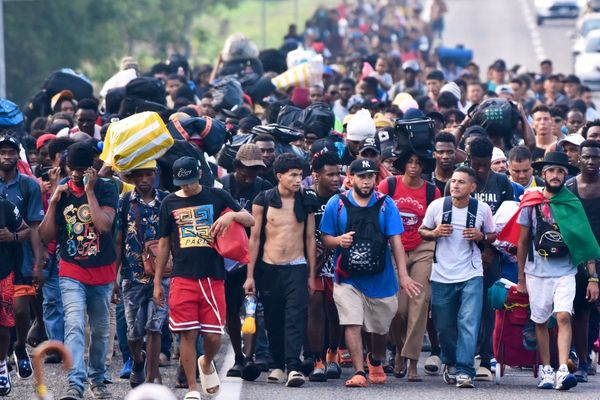
The poll comes as symptoms of the crisis abound. Over the weekend, more than 120,000 Venezuelans flooded into Colombia after Caracas allowed a temporary opening of the border to allow people to buy food, medicine and other goods.
"What's happening on the border is a clear indication that there's a humanitarian crisis in Venezuela," opposition lawmaker Richard Blanco said in a statement. "People are desperate ... and suffering calamities in search of some food and medicine, just to get by, just to survive, because there's nothing here."