GUAYANILLA, Puerto Rico _ At "Campamento Estrella" all three dozen people and four dogs have a tent or car to sleep in, a generator to keep their cellphones juiced, and coffee _ served hot and sweet at the break of dawn.
As Puerto Rico's southern coast continues to recover from Tuesday's 6.4 magnitude earthquake that left one dead, damaged hundreds of buildings and knocked out power to much of the island, hundreds, if not thousands, have been seeking safety outdoors, in municipal and makeshift camps.
At Campamento Estrella, or Star Camp, an impromptu tent city in hard-hit Guayanilla, some are here because they were left homeless by the earthquake, others are simply too scared to sleep indoors amid continuous aftershocks that have made walls, ceilings and refrigerators objects that can no longer be trusted to stay still or standing.
Just a few minutes after Tuesday's predawn earthquake, Sandra Mattei, 55, and her husband parked their pickup on the grassy vacant lot. The site was perfect: on high ground (no tsunami threat), no utility polls that might come crashing down, and, as a perk, it's across from the city's only operational bakery.
Within hours of their arrival, family and friends had joined them. By Thursday, the site looked like a tiny music festival _ tents, trucks, blankets, babies, dogs and lawn chairs scattered about, beer and coffee making the rounds.
Mattei said the camp came together organically.
"One person brought a generator, another person brought a grill, another person brought a tarp," she said. "Here we can all keep an eye on each other, you don't have to wonder where your brother or cousin is, they're all here."
It's unclear how many people have been left homeless by the spate of earthquakes that began Dec. 28, but several hundred _ if not more _ are psychologically homeless: too spooked to sleep indoors. Washington has declared a territorywide state of emergency and roads to the south were clogged late Wednesday with caravans carrying cots and generators.
Municipal governments have also set up mass shelters at stadiums in Guanica, Guayanilla and Ponce, but there are also hundreds of impromptu villages popping up in parks and dusty lots.
Nelson Torres, the mayor of Guanica, said there were more than 250 people camped out at the local stadium and more were arriving by the hour.
While the damage done by the earthquake might be minimal compared to Hurricane Maria in 2017, Torres said the earthquakes seemed more sinister because they hit without warning.
"We've never lived through something like this, there's no way to plan for it," he said, as he supervised a mobile soup kitchen that had fed more than 500 people Wednesday. "We can get people meals and deliver water, but what worries me is their emotional health."
Asked how long the municipality would allow residents to sleep on the street, he shrugged: "Until it quits shaking, but nobody knows when that's going to happen."
Adding to the anxiety is that some structures long considered safe were hammered. In Guayanilla, the Catholic church, built in the 1900s and often used as a hurricane shelter, collapsed. And in Guanica, a three-story middle school was destroyed. The government has said it will inspect all of the island's more than 800 educational centers before children are allowed to return to school from Christmas break.
"Construction codes in Puerto Rico have included seismic requirements since 1987, but much of the buildings were completed before then," Ricardo Alvarez-Diaz, a member of the Construction Council of Puerto Rico, said in a statement. "As a result, most of the island's schools are not in compliance, yet the government regularly uses these buildings as places of refuge in emergencies. That creates a serious planning issue."
While the seismic activity has been focused along Puerto Rico's southern coast, the effects have been islandwide.
In particular, Tuesday's twin quakes severely damaged the Costa Sur power plant complex. Puerto Rico Electric Power Authority CEO Jorge Ortiz told local media Wednesday that it could take months, perhaps a year, for the complex to be fully repaired. Even so, the company said it hoped to restore power to most Puerto Ricans over the weekend _ even as large swaths of the U.S. territory remained without electricity Thursday.
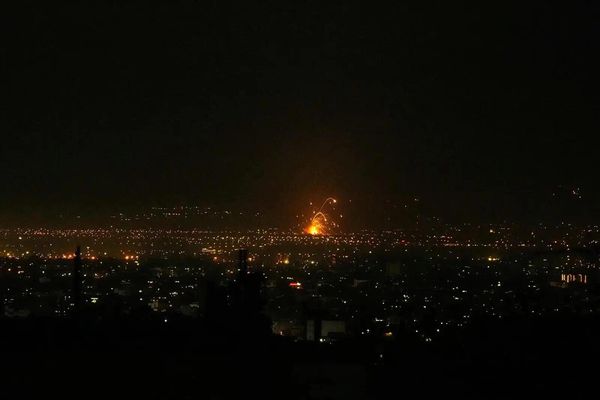
Hector Caraballo, 32, and his girlfriend had parked their car by Campamento Estrella Wednesday night, soaking up some of the ambient light in a city that was otherwise eerily dark.
Caraballo said he was still sleeping at his home, but in the living room by his front door, ready to bolt at the slightest shake. While he said the uncertainty was stressful, the aftereffects of the earthquake have been far milder than Hurricane Maria, which knocked out power to the island for months in some areas.
"During Maria we lost mobile phone service, the roads were impassable, I spent two weeks without water or electricity," he said. This time, Guanica has only been without power for three days, and there were hopes that it could come back soon. "This is like practice for us," he said.
For others, the damage runs deeper. Edna Rivera, a 64-year-old former schoolteacher, shuddered as she described the sounds of Tuesday's earthquakes.
"It was like thunder, growling. It's hard to explain," she said.
When she finally saw her house in the town of Yauco in the light of day, there was a deep crack starting outside that cut straight through the facade. To her untrained eye, the thick fissure looked structurally fatal, beyond repair. It was also emotionally jarring.
"What I felt, the serenity that I had at home, I don't have that anymore," she said. "No matter what, I can't go back to that home."
Along with hundreds of others, Rivera was spending the night under a tarp in the middle of a baseball field in Guayanilla. As she prepared to sleep on a narrow green cot _ not her treasured queen-sized bed abandoned inside her home of 40 years _ she said she was in shock at how fickle life is.
"You go to bed thinking you'll just be up the next day," she said, "and then your house comes down ... . It's hard to explain this feeling."
At Campamento Estrella, Mattei woke up Thursday tired and groggy after sleeping in the front seat of the pickup truck, waking repeatedly due to aftershocks. Despite the discomfort, she said she was more peaceful amid the crowds and hubbub of the camp.
While tremors come all day and night, they seem stronger, more menacing after sunset, she said.
"It's like I'm becoming scared of the dark again," she said. "It's like you're dreading nightfall because you're anticipating the earthquakes."
Asked how long she would be a resident of Campamento Estrella, she said it was out of her hands.
"While it's still shaking," she said, "we can't go home."