A critically ill Wiltshire couple may have been contaminated by residues of the nerve agent used to poison Sergei and Yulia Skripal, according to security and defence sources.
The new victims are likely to have been affected by novichok used in the attack on the former MI6 agent and his daughter four months ago, tests conducted at the Ministry of Defence research laboratory at Porton Down have indicated.
Initial investigations have found nothing to indicate Dawn Sturgess and Charlie Rowley, who collapsed hours apart on Saturday, had any link with the Russian father and daughter or are likely to have been targeted in an assassination attempt.
The security agencies and Scotland Yard’s counterterrorism command say they are keeping an open mind about what lay behind the couple’s sudden illness as they remain in a critical condition in hospital.
But there will be deep concern about public safety if the novichok connection is proved after authorities declared the area safe following the March attack, reopening businesses in Salisbury ahead of a royal visit.
Police initially believed Ms Sturgess and Mr Rowley had ingested contaminated heroin or crack cocaine, which have been reported in the Wiltshire area. However, the symptoms shown by the couple and their rapid deterioration made them realise that other factors were at work.
The couple were, it is believed, in Salisbury on Friday near roads which had been sealed off during the Skripal inquiry. However, at least one other person who was with them at the time is yet to show any symptoms.
Tracing Ms Sturgess and Mr Rowley’s movements may help the continuing police investigation into the Skripal case, sources said.
They are both being treated in isolation and under police guard at Salisbury district hospital, which previously treated Mr Skripal and his daughter Yulia for exposure to novichok.
A second meeting of the government’s Cobra emergency committee was due to take place on Wednesday evening to update senior Whitehall officials, following an initial meeting in the morning.
A Downing Street spokesperson said: “This is an incident which understandably is being treated with the utmost seriousness. Ministers and the prime minister are being kept updated and there was a meeting this morning of officials to receive updates on the facts of the situation.”
Police have cordoned off several sites visited by the pair, including a park and supported accommodation for homeless people in Salisbury, Mr Rowley’s home in Amesbury, and a chemist and Baptist church he visited before falling ill.
Queen Elizabeth Gardens sits just metres away from where the Skripals were found unconscious on a bench in The Maltings shopping district of Salisbury, while John Baker House is just a four-minute walk from a Zizzi’s restaurant where the victims ate.
Public health officials initially said there was no risk to the public in March, but later told diners to wash their clothing and jewellery as military personnel moved in wearing protective suits to cordon off potentially contaminated sites.
When decontamination work started in April, a Department for Environment, Food & Rural Affairs (Defra) official revealed that novichok had been spread on Mr Skripal’s front door in liquid form and spread around Salisbury by infected people.
He said the nerve agent could “move between sites by direct transfer by a contaminated person or item” and warned that it “doesn’t just disappear”.
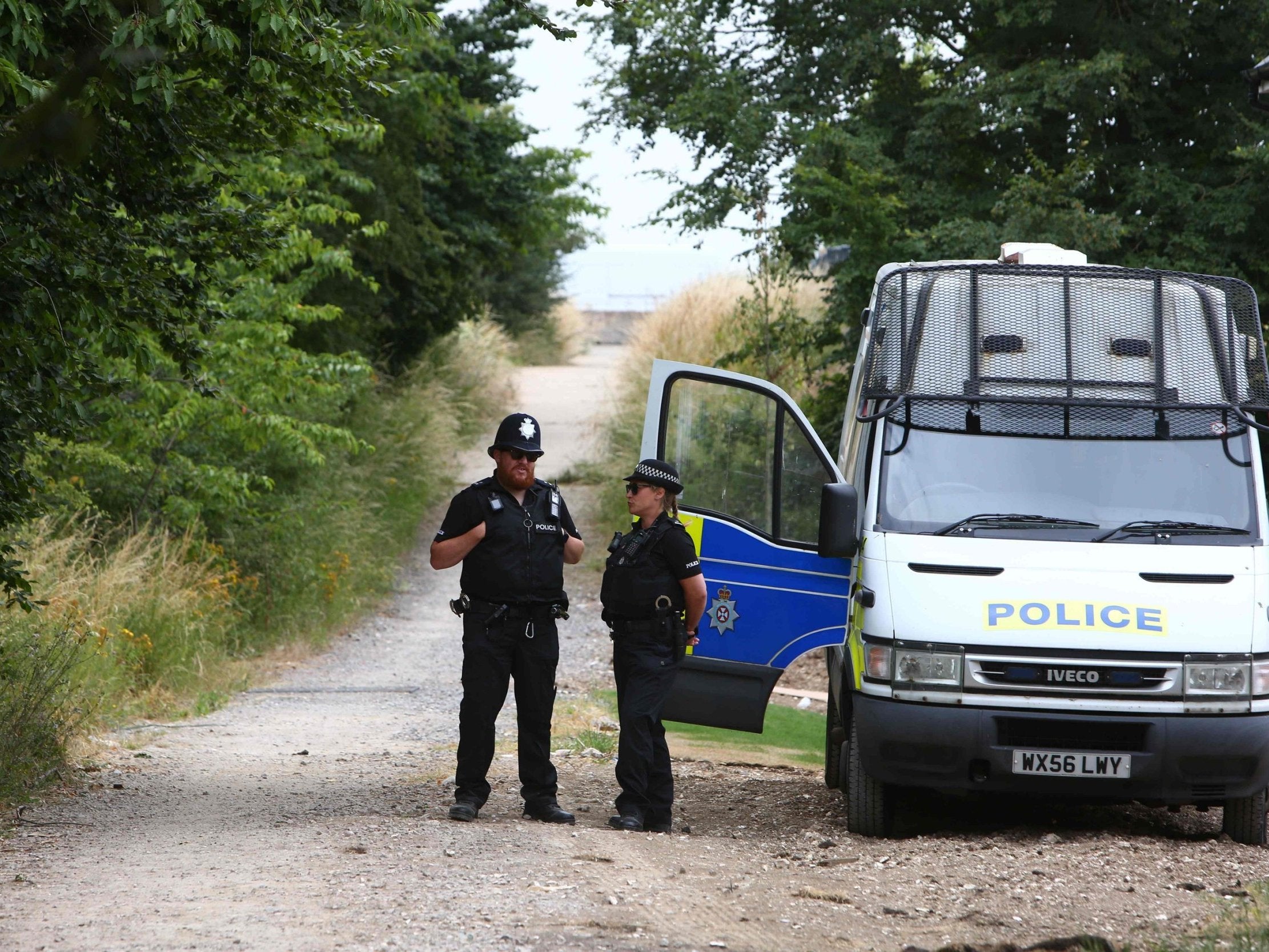
Defra’s chief scientific adviser, Ian Boyd, confirmed that the substance could still be toxic in some locations but in May officials reopened The Maltings shopping area and declared it safe.
Ms Sturgess and Mr Rowley spent Friday evening in Salisbury with friend Sam Hobson, who saw them both fall ill the following day.
The 29-year-old said he witnessed Ms Sturgess being carried into an ambulance on a stretcher at around 11am after she fell unconscious.
“She was having assistance with her breathing,” he said. “Paramedics said they needed to do a heart and brain scan and so Charlie and I were told we couldn’t see her. Charlie was fine at first.”
Mr Hobson said the “great couple” aged in their 40s, have one daughter each from previous relationships and have been together for several months.
He recalled taking Mr Rowley to collect a prescription from Boots in Amesbury and on to eat lunch at Amesbury Baptist church fair, before returning to his friend’s home in Muggleton Road. Both the church and chemist have now been cordoned off.
Mr Hobson said Mr Rowley started falling ill around four hours after Ms Sturgess was taken to hospital, while they were preparing clothes to take to her.
“He felt ill and went for a shower. Then his eyes went bloodshot and like two pin pricks, he began garbling incoherently… he was making weird noises and acting like a zombie. It was a zombie-like state. He slumped against the wall.”
Mr Hobson described frantically calling an ambulance for his friend, adding: “This doesn’t make any sense, I can’t see why they’d be targeted… they are a great couple and always there for me.”
He has not been tested for possible exposure but said authorities are making regular checks on his health.
Residents near Mr Rowley’s home described seeing police cars, fire engines and people in “green suits” arrive on Saturday night.
Chloe Edwards said families were told to stay in their homes for several hours and had connected a hosepipe to the water mains – a procedure that is commonly used for decontamination.
Public Health England said there was not believed to be a significant health risk to the wider public and no other patients have been taken ill.
Chief Constable Paul Mills, of Wiltshire Police, urged members of the public with concerns to call a dedicated helpline.
“Our priority at this time remains to understand the circumstances surrounding how these two individuals became unwell,” he added.
“I would like to appeal to anyone who might have information concerning the circumstances surrounding this incident to come forward.”