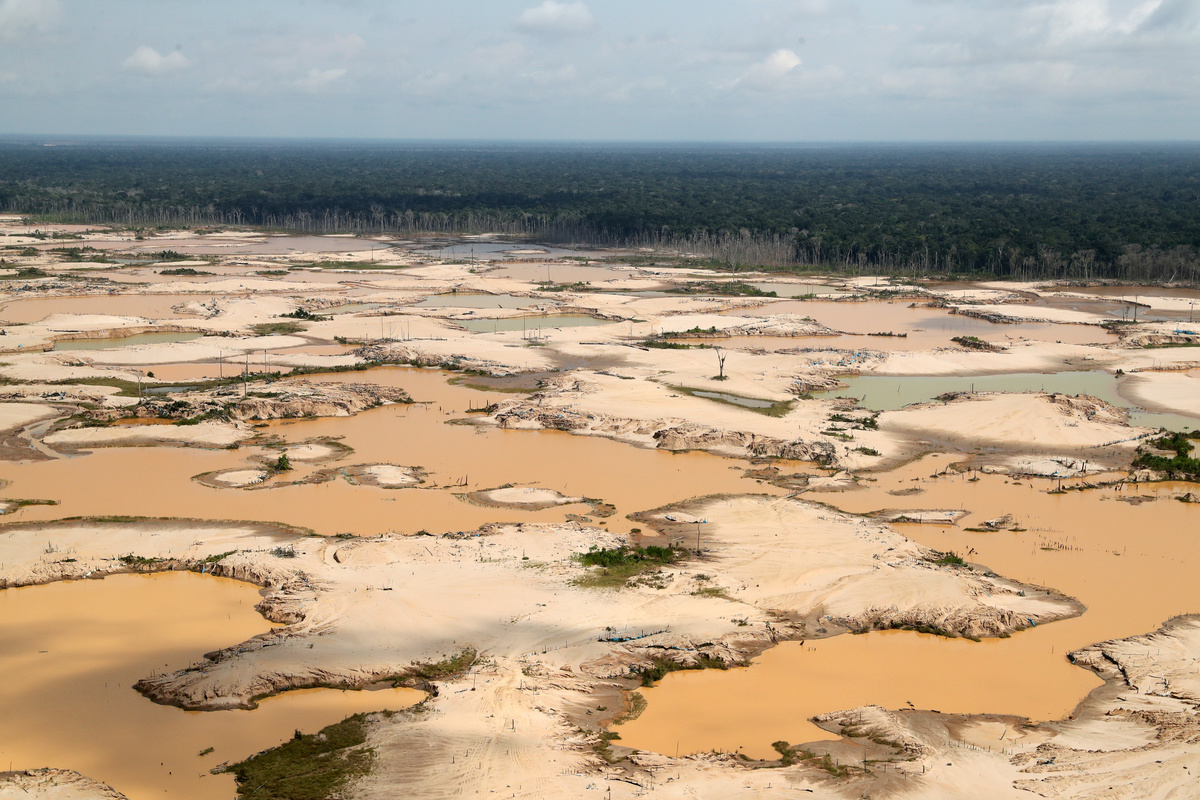
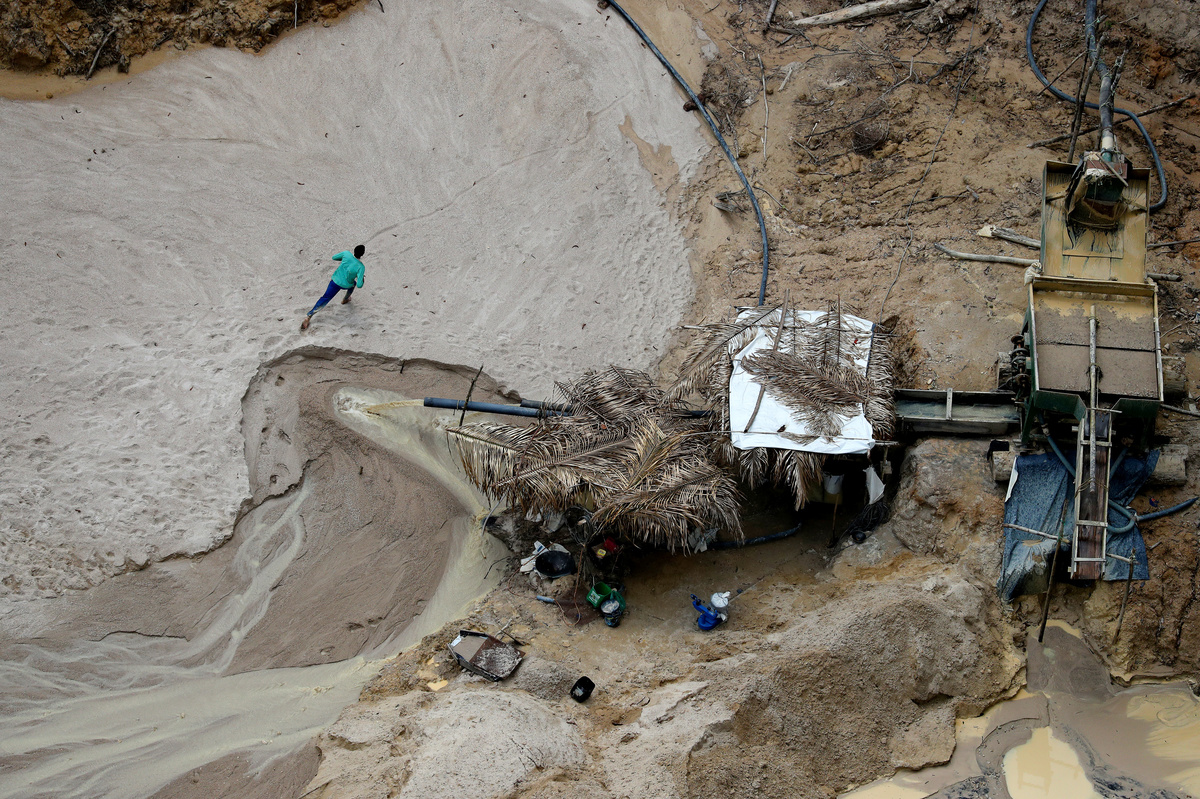
Mining concessions and illegal mining operations overlap more than a fifth of indigenous land in the Amazon, causing higher deforestation rates, said a report published on Wednesday.
Some 1.5 million indigenous people live in the Amazon, where mining activities affect some 445,000 square kilometers of their lands, said a report from the World Resources Institute (WRI) and the Amazon Network of Georeferenced Socio-Environmental Information (RAISG).
Data was not available for indigenous lands in French Guiana and Suriname, the report said.
Though inactive mining concessions account for most of these intersections, around a third of indigenous land is overlapped by active concessions and illegal mining operations, increasing deforestation, the report added.
"Indigenous lands with mining showed a higher rate of forest loss in the 15-year period from 2000 to 2015 than indigenous lands that are not directly affected by mining," Peter Veit, director of WRI's land and resources initiative, said in a press conference.
Indigenous lands affected by mining in Bolivia, Ecuador and Peru saw a rate of deforestation at least three times higher than in unaffected areas, while in Colombia and Venezuela the rate was one to two times higher, the report said.
The situation has been exacerbated by the coronavirus pandemic, as rising gold prices and withdrawal of military and law enforcement has permitted illegal mining operations to expand.
"Under the cover of the COVID-19 pandemic it has only gotten worse," said Michael McGarrell, a representative for the Amerindian People's Association in Guyana.
McGarrell stressed indigenous communities were not against mining if done responsibly, citing traditional artisanal mining practices.
"We are not opposed to development," McGarrell said. "Responsible mining will benefit the environment, and all of us."
(Reporting by Oliver Griffin; Editing by David Gregorio)