Samsung presented its first version of The Frame in 2017, part of a lifestyle approach to TVs. For many years, it ticked along as an oddity – a slightly under-specced TV that was all about the design rather than the performance.
In the intervening years, something else happened: dependency on connected devices went into decline as streaming services – including gaming services – came into the ascendancy. As homes have adopted larger screens, many have opted to wall-mount and suddenly that oddity makes a lot more sense.
That explains why, in 2026, there's more choices than ever, with TCL and Hisense vying for a slice of this pie and new entrant Amazon on the scene too. But with "Art TVs" the trend of 2026 and beyond, has Amazon's first foray got the goods to back up its intent?
Price & Availability
The Amazon Ember Artline is now available to order from Amazon, in 55- and 65-inch sizes. It's available in the UK and the USA.
As it has only just gone on sale in the UK, it is already enjoying a run of discounts – down as low as £719.99 for the 55-inch model, making it really competitive.
Amazon faces competition from Samsung with The Frame, TCL NXTVISION and Hisense Canvas TV. The discounted price makes it cheaper than the TCL A300W, Samsung LS03 and Hisense rivals, but the regular price is more expensive than both TCL and Hisense.
Amazon Ember Artline: How is it different to the Ember QLED?
Amazon has a number of TVs under its own Ember brand, ranging from the Ember 2-Series through to the Ember Mini-LED at the top of the range. The Ember QLED is the closest to the Artline in terms of specification, although it's much cheaper in price.
The Artline has a matte finish to the screen for a glare-free experience, while the Ember QLED doesn't. Both are 4K QLED panels, but while the Ember QLED is direct LED with numerous dimming zones, the Ember Artline is not. Most of the specifications are the same, but the picture quality is lower on the Artline.
The design is different, with the Artline much slimmer, designed with interchangeable frames, with a slim wall-mount in the box. It's thinner but also heavier than the Ember QLED.
Finally, I reviewed this model with Amazon's new Fire TV interface in place, which is faster and cleaner than the previous experience, although much the same in terms of features – the Ember QLED is expected to update at some point in the future.
Design & Features
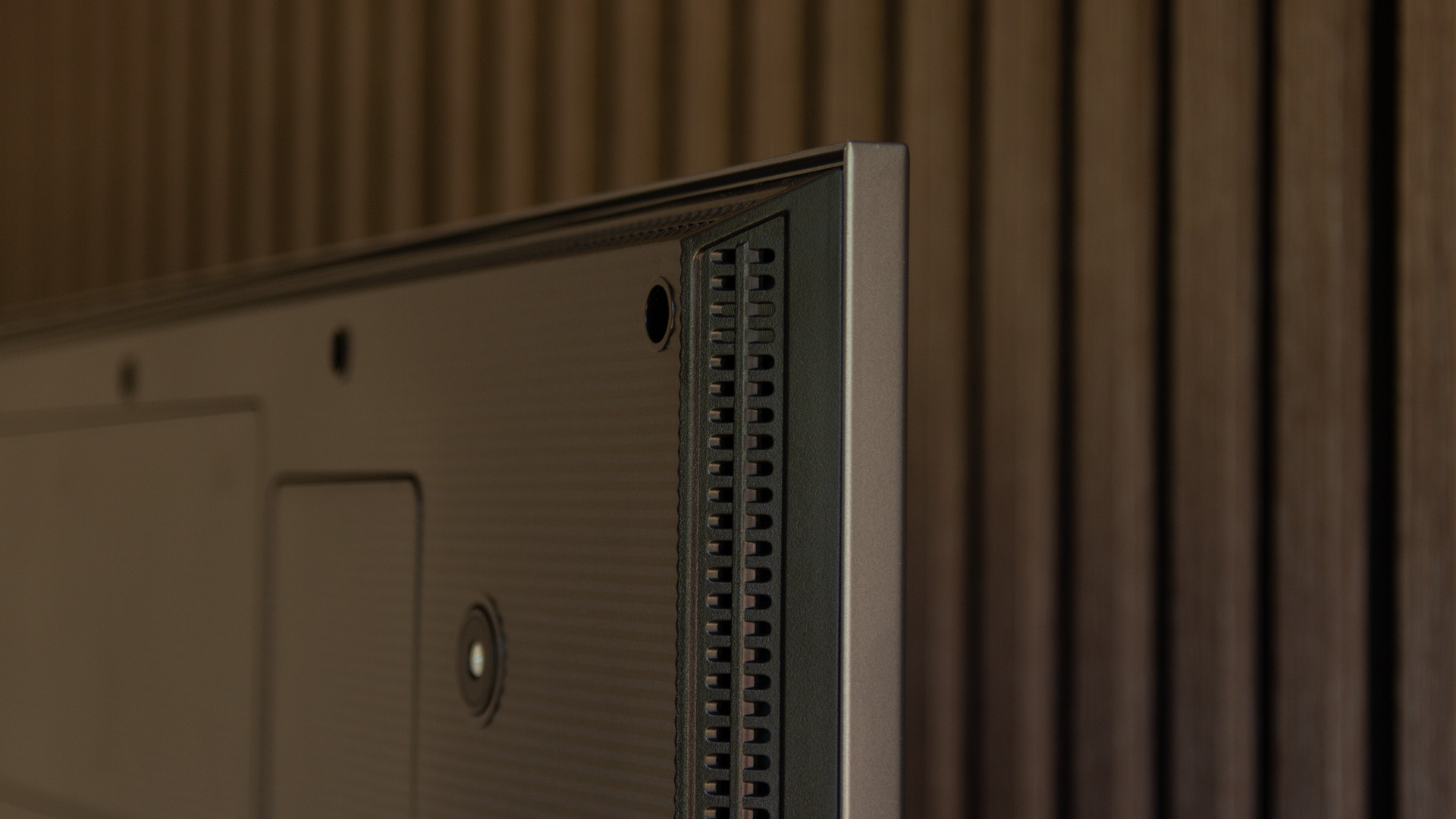
The Amazon Ember Artline is all about design. Following the trend for TVs that look like a picture hanging on the wall, this TV is 39mm thick. It has a flat back, with all the connection points in recessed sections, with channels to run the cables in.
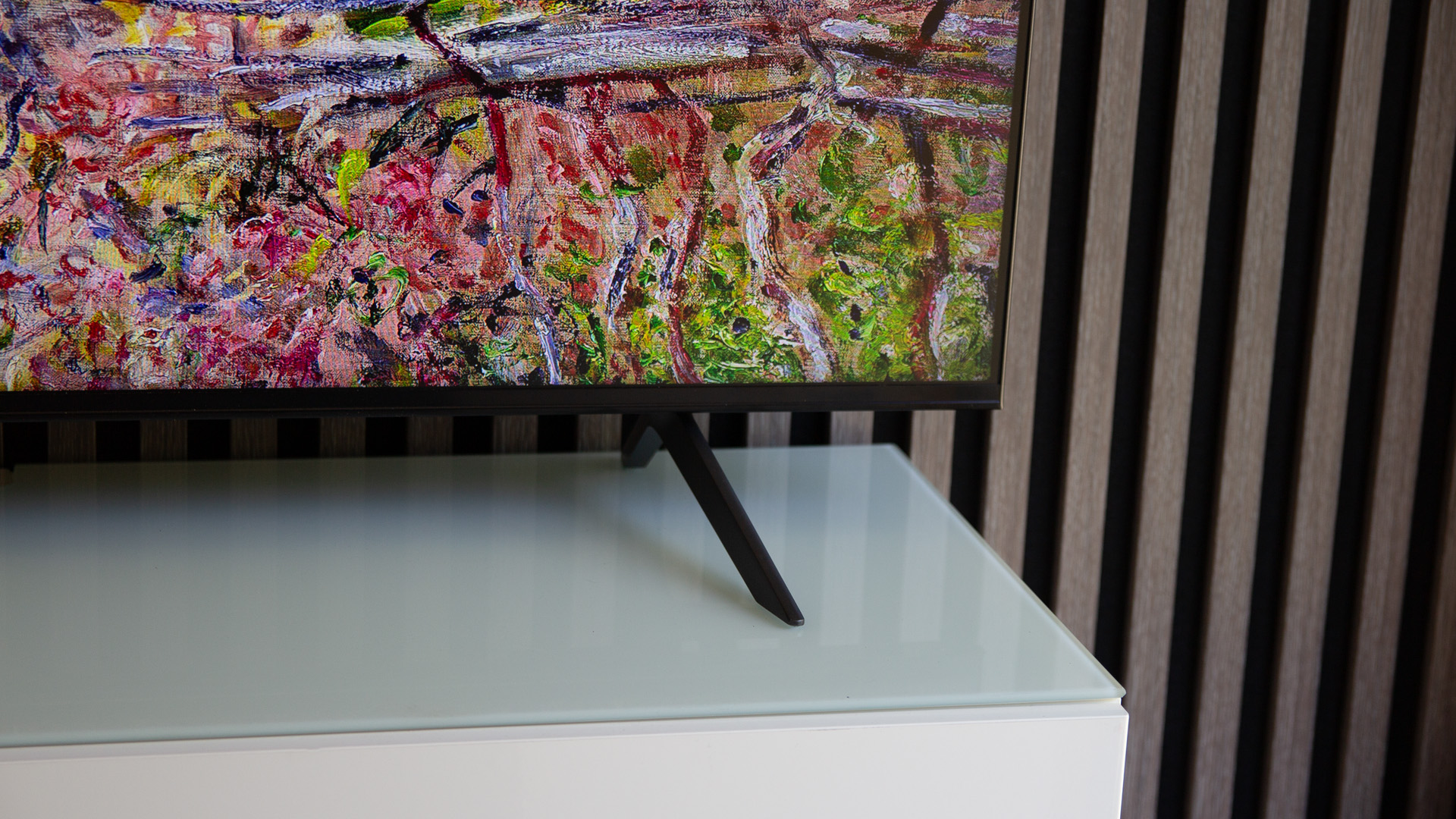
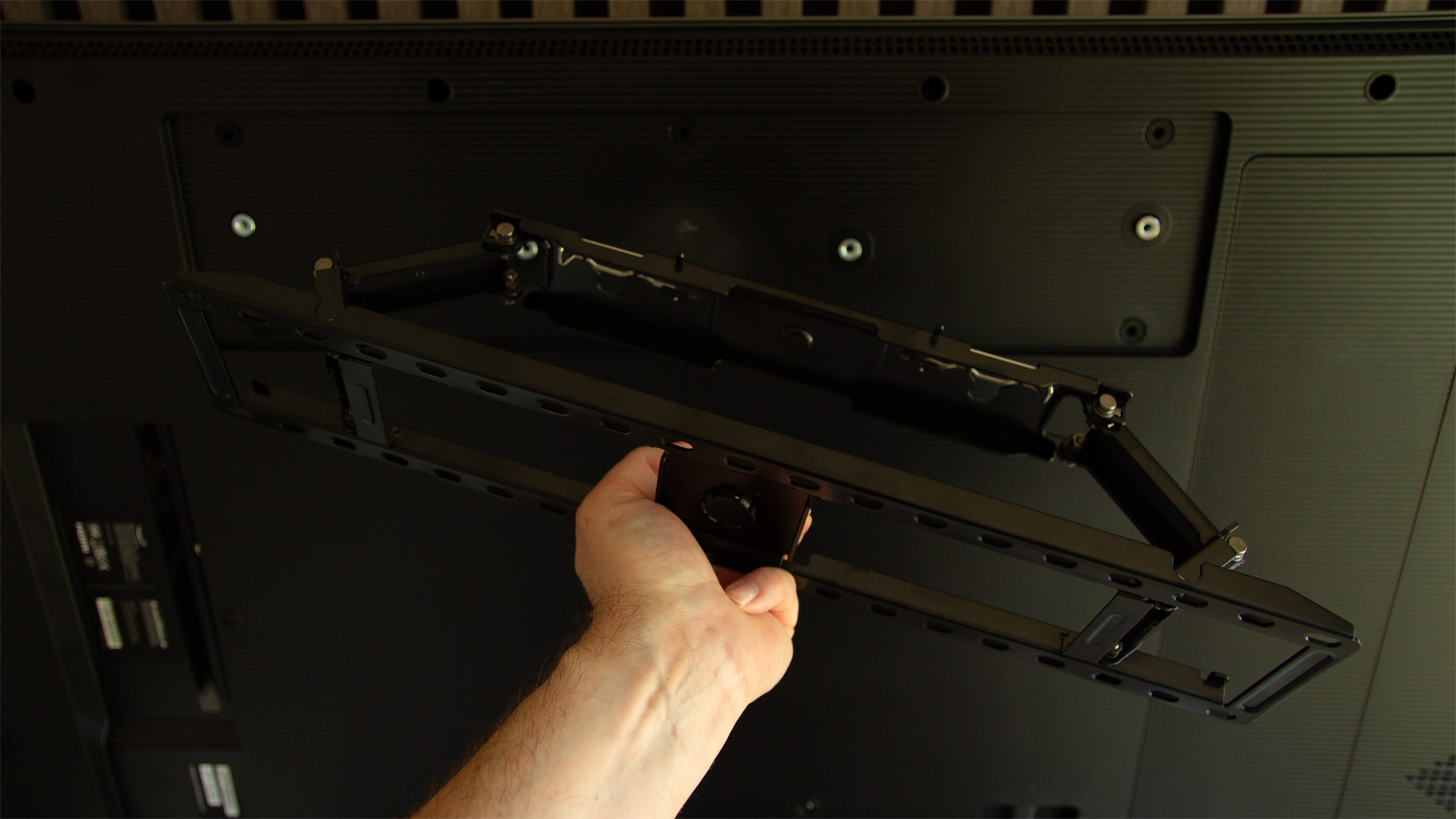
There are no legs in the box (although they are available to buy for £19.99 seen in this review), while there's a slim-fit wall mount provided in the box. To make mounting easy there's a template in the packaging that you can stick to the wall to help you line up the mount and drill in the right places.
This isn't a standard VESA mount (although VESA is also supported), instead it's a mount that attaches near the top of the TV, allowing a small degree of movement to access the rear. Four magnetic discs are also supplied for the corners, so once it's mounted, the magnets make sure it doesn't wobble. You'll need some DIY skills, but screws and plugs for mounting are provided.
The TV itself features a metal bezel around the screen, to which your choice of frame can attach. When you buy it, you get to choose a colour with 10 different options available. These include wood finishes and different colours, some bevelled for a slightly different look. That means you can match it to your room easily.
There's another interesting detail when the frame is attached: it covers the border to the screen, so the picture runs right up to the edge. That's something that not all premium TVs offer, with the exception of TCL and its Zero Border Technology.
Compared to Samsung's The Frame, however, the Ember Artline looks like a normal TV with a flatter back – it's not as well designed as the Samsung model, but it is cheaper.
Amazon has been offering its Ambient Experience on TVs for a while, so the evolution to an art display isn't much of a leap. In reality, it's an extension of the existing system but with 2000+ free works of art.
You can choose the style of art – contemporary, modern, neo-impressionism, for example – with artist spotlights, seasonal collections and other broad categories. It's not hard to find something you like, with plenty of options for control.
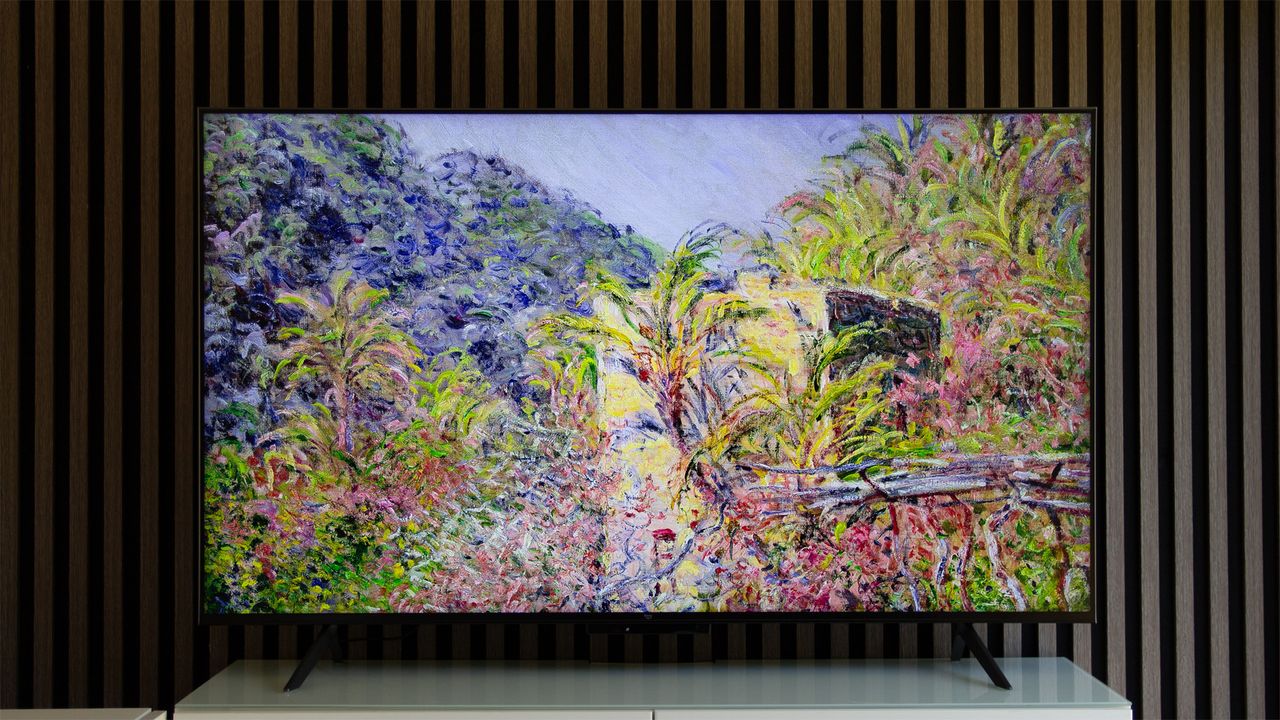
The matte display really sets this off, killing those reflections so it doesn't look like a TV, while it doesn't emit a lot of light either, so it's not a shiny object showing pictures on your wall, instead it looks like a framed work. Mission accomplished in that regard.
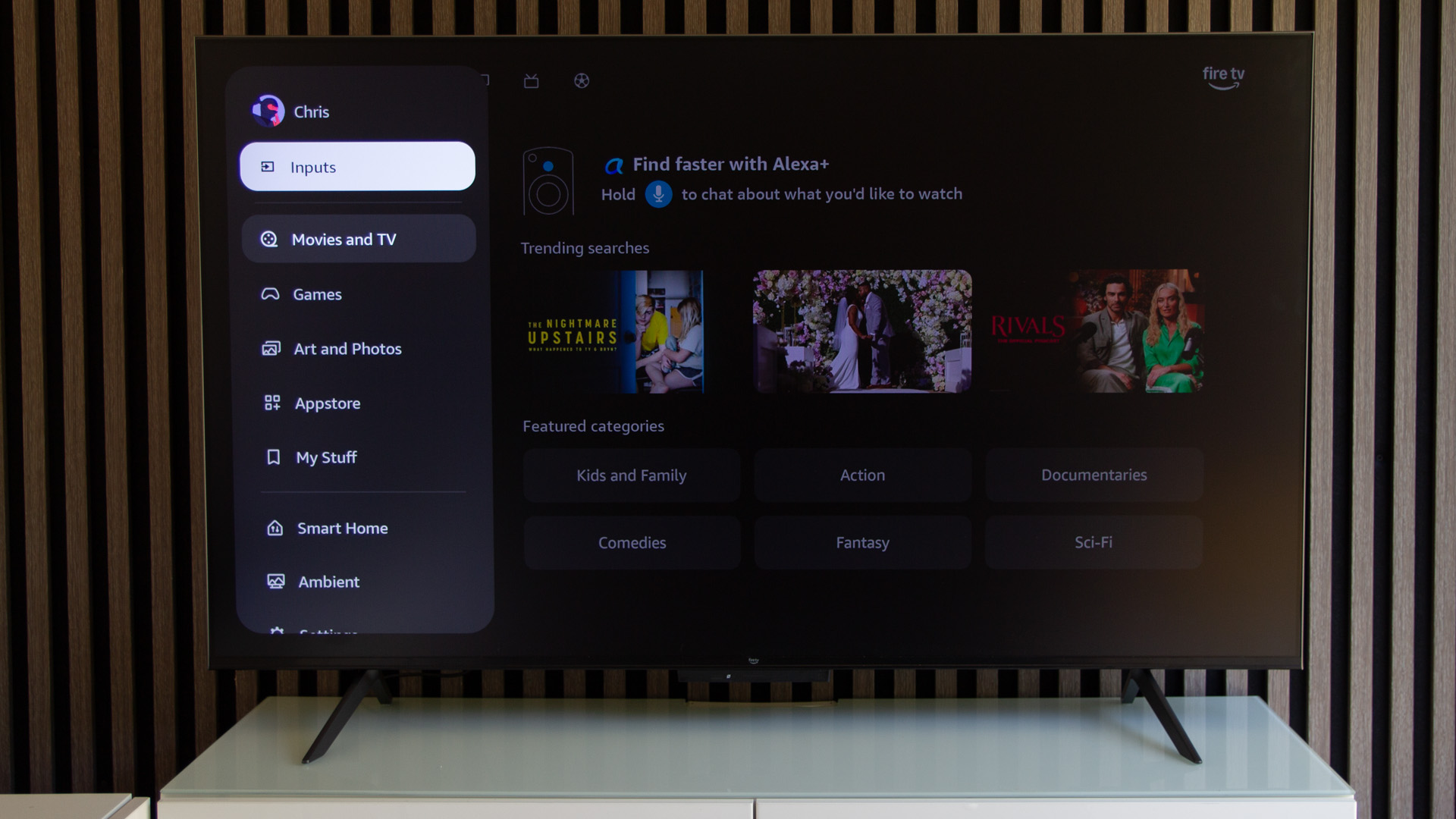
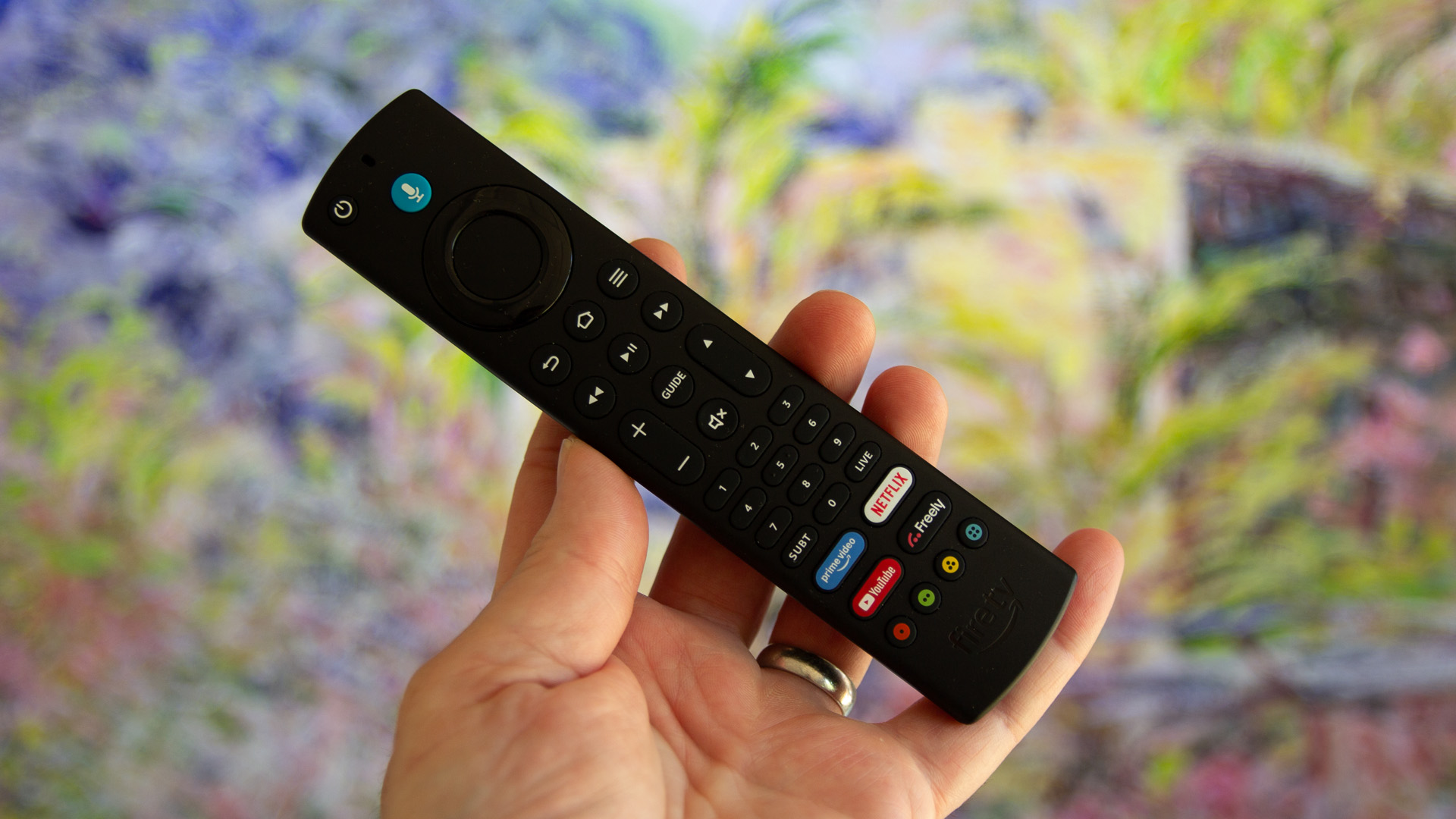
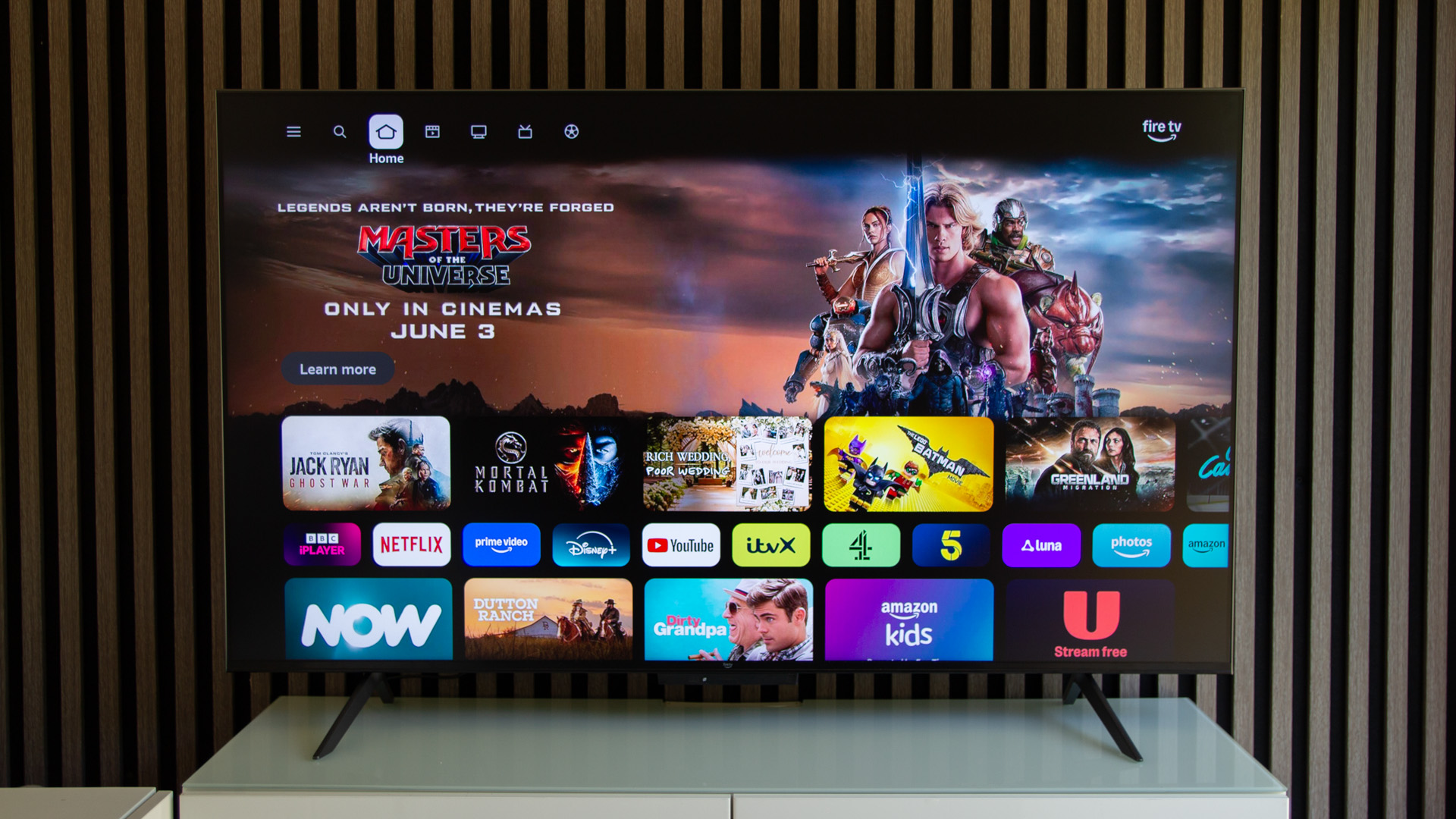
Amazon's new Fire TV experience also gives a lift. Amazon said this was faster than the older version and it certainly feels easier to skip around – although many of the features remain the same. There's a little less clutter, but you are still faced with adverts while using it, which is a universal drawback of Fire TV OS.
Picture Quality
But the thing you'll notice once you have that Monet on your wall, is that the viewing angles are narrow. As you start to move off-axis the brightness dips quickly until you can barely make out what's on the screen. That's partly because the brightness is low in art mode, but also that this panel type simply doesn't support wide viewing angles.
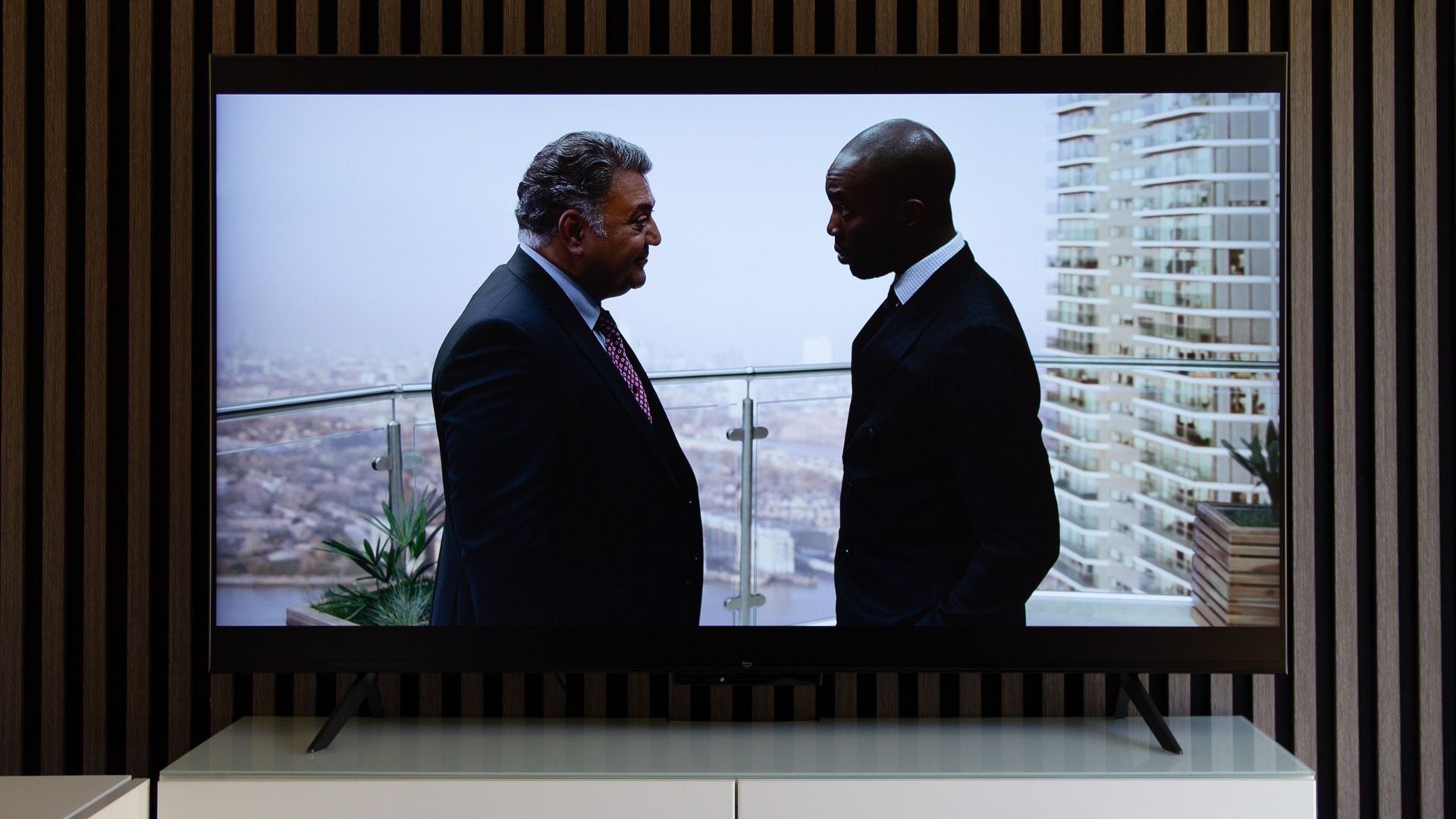
That takes us back to the panel itself: I mentioned that this was QLED, but it isn't Mini-LED, or even direct lit. There aren't numerous viewing zones and the brightness isn't high. While that suits its ambient ambitions to showcase art, it limits the picture quality potential when it comes to regular TV watching.
The QLED part of this TV will give rich colours, but out of the box it's prone to some really gloomy scenes by default, and plenty of black crush where you end up just watching the specular highlights, with other elements of the scene sinking into gloom.
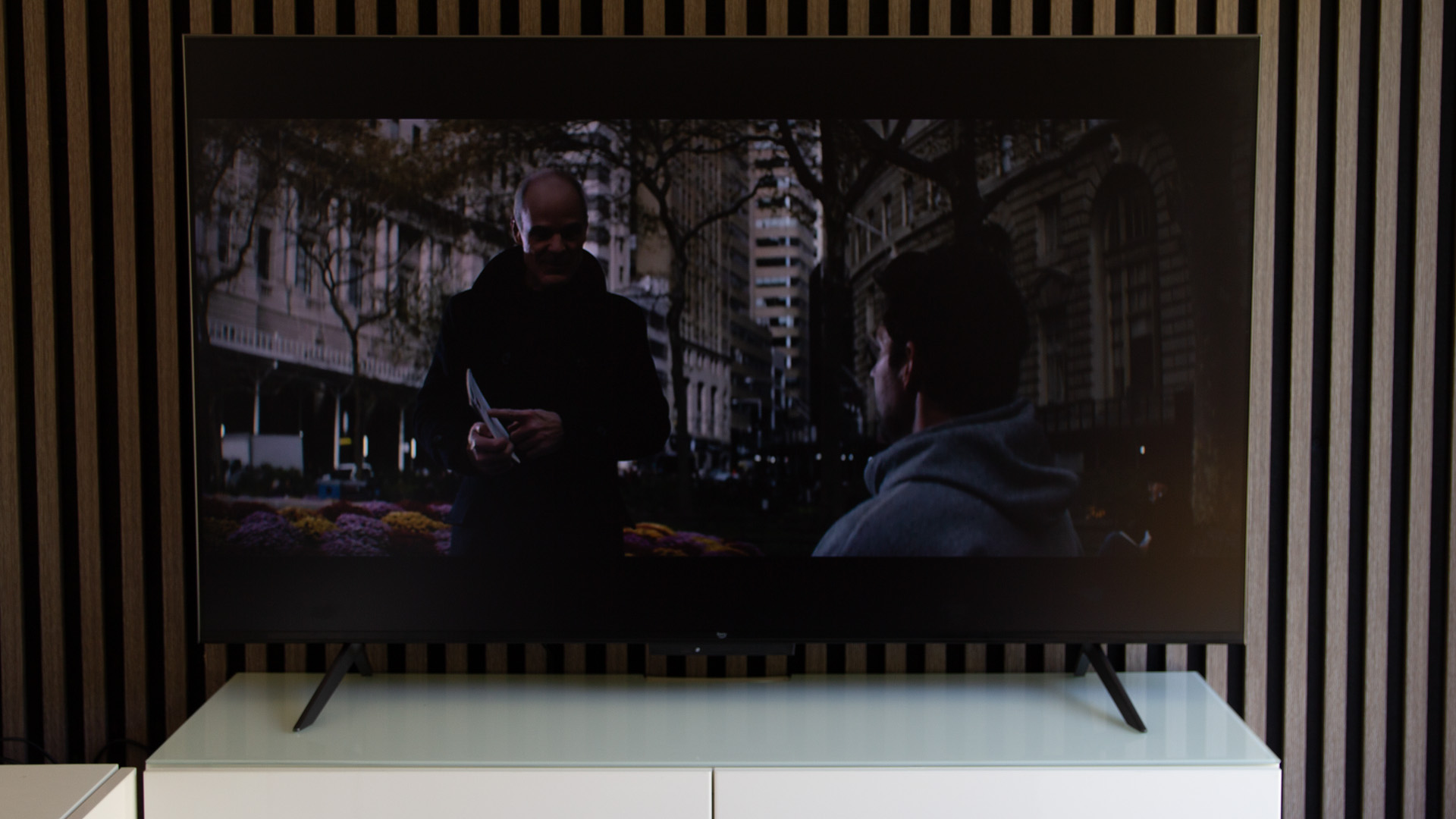
That can see faces not appear clearly and a loss of texture in dark elements, such as fabrics. This is a particular problem with HDR content: Dolby Vision doesn't come with the lift you'd expect and even switching to Dolby Vision Bright or Dolby Vision Vivid didn't do much to relieve the problem. HDR10+ is equally bad – I tweaked the gamma to lift the blacks to make things more watchable, but it can't compare to a regular direct-LED TV for picture quality.
Bizarrely, Filmmaker Mode (FMM) appears to be slightly brighter than Standard on the Ember Artline, so it's worth turning on for movies as you'll be able to see more.
While watching standard dynamic range (SDR) content things are clearer (because it's not attempting to deliver the increased contrast that HDR demands) so ironically, in daylight, lower-quality content looks better. I fired up Ready Player One on a standard Blu-ray disc (so no HDR) and while the black crush is still a problem, it's a better overall picture than delivered from HDR sources.
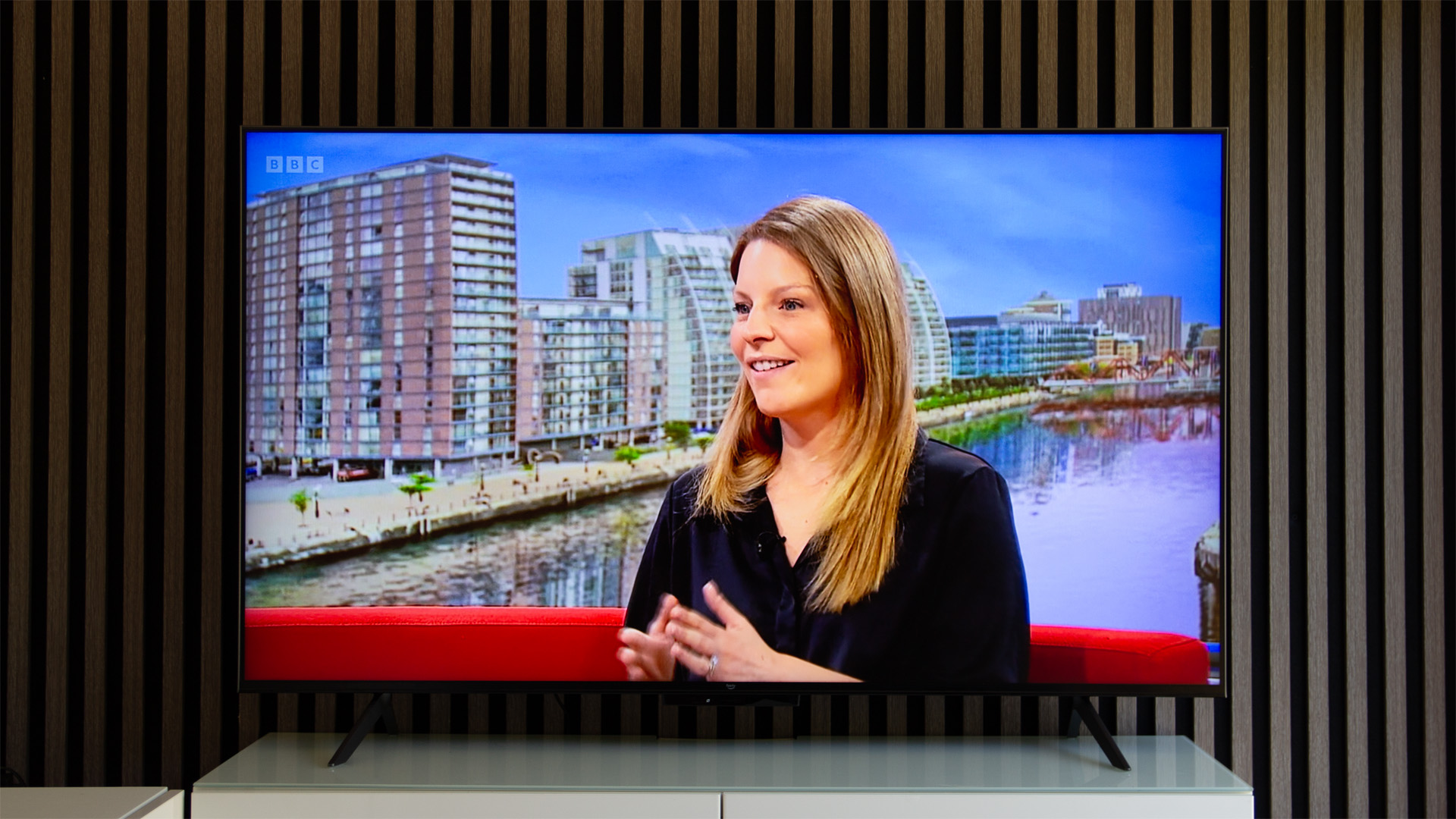
I found myself switching to Vivid Mode on occasion, something I almost never do watching TV. I tweaked it to a warmer colour tone to be more watchable and for a lot of content it made for a better viewing experience.
The motion smoothing on picture modes is set to 10 by default and this leads to pronounced soap opera effect, with excessive smoothing. So my first port of call was to knock this down to 5 in order to reduce that. FMM, which isn't supposed to have any smoothing applied, looks like it is using motion smoothing – and that can't be adjusted.
The picture on the Amazon Ember Artline is significantly different to the Ember QLED, which I'd say is superior in all conditions, except for reflection handling. The downside of the matte finish of the Artline, however, is that direct bright light makes darker tones look grey. As I said, it looks great when showing artwork, but the performance for other content doesn't match that of regular televisions.
Sound quality
There are a pair of 10W speakers in the 55-inch version of the Ember Artline, moving to 12W in the 65-inch version. While the TV purportedly supports Dolby Atmos, you won't get that sort of immersive experience from the TV's own speakers.
The speakers aren't downfiring like many TVs, instead they are left and right in the sides of the TV, providing a little more width. They are supported by a number of sound modes, with Smart adding a little more immersion over Standard. Otherwise, the sound modes don't make a significant difference, apart from Clear Voice, which can sound a little harsh – it makes voice "clearer", but it sounds tinny overall.
The Ember Artline comes with one HDMI 2.1 port, which is also the eARC. This would be where you connect a soundbar and, in truth, even a basic soundbar will bring an uplift to this TV's performance – while there's some immersion, it just sounds a little boxed in.
Of course, with that HDMI being the only one supporting HDMI 2.1, it's also the ideal choice for games consoles. That said, this is only a 60Hz screen (not 120Hz+), so you're not missing out on too much should you choose one of the three remaining HDMI 2.0 instead!
Amazon Ember Artline review: Verdict
The Ember Artline marks a move into a new category for Amazon, taking on 'Art TV' rivals from Samsung, TCL and Hisense. From a design perspective, Amazon has an interesting offer: it comes with the wall mount, the installation guide is clear, and the magnetic discs add extra stability.
The included 2000+ works of art provide plenty of choice to find something you like, which look great when idly showing on the TV. Your choice of frame makes it easy to fit into your décor, too, so it's easy for you to disguise this TV as if it's a work of art.
But while the TV comes with some attractive features – Dolby Vision and HDR10+ support, for example – it lacks the display to really deliver the visuals. The result is a TV that doesn’t perform as well as those half its full retail price.
There are compromises for choosing a design-focused TV over a TV for performance. That's also the case for all the Artline's rivals. What the Ember Artline adds is choice, with regular discounts likely to be the big appeal. But for regular TV viewing or streaming it lacks where it matters.
Also consider
The best-established option in this segment is The Frame from Samsung, which is updated annually, presenting cheaper discounted versions worth considering. There's a step-up model, The Frame Pro, for those wanting a boost in picture performance.
Alternatively, TCL's NXTVISION A300W is cheaper, but suffers with picture quality issues thanks to a similar edge-lit design as Amazon's Ember Artline.