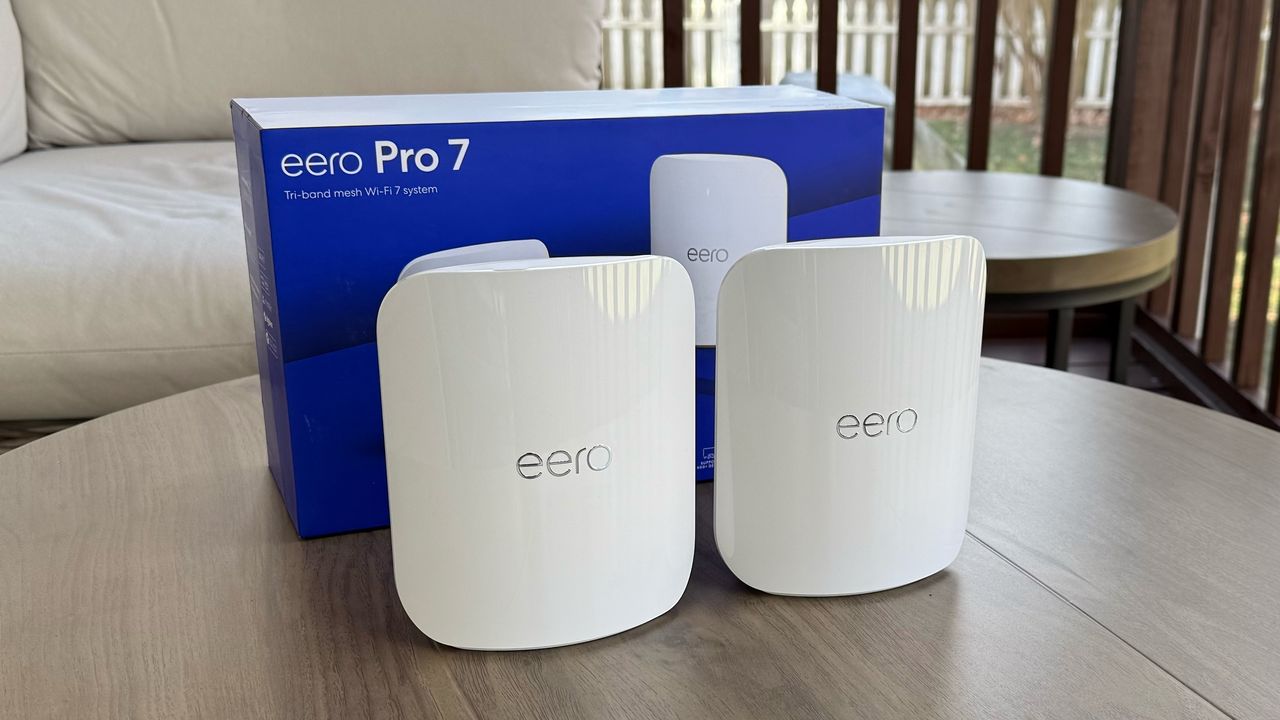
Amazon’s Eero is the latest router manufacturer to gain “Conditional Approval” from the Federal Communications Commission (FCC) to sell its routers in the United States. Netgear was the first to announce that it received the FCC’s blessing last week to bypass the router ban. Router manufacturers have been working around the clock to submit documentation to the FCC and provide assurances regarding the origin of components used in their products and where they're assembled to comply with an increased focus on national security.
In March, the FCC deemed that manufacturers selling routers produced in a foreign country be added to the "Covered List," as they "pose an unacceptable risk to the national security of the United States or the security and safety of United States persons.” Moving from the Covered List to Conditional Approval ensures that manufacturers of the best Wi-Fi routers can continue to sell in the United States for a set period.
"As part of this effort, router manufacturers were asked to submit information allowing the government to assess safety risks associated with their devices," the Eero team wrote in a blog post. "We’re pleased to share that the U.S. government has recognized eero as a trusted and secure provider of routers... We remain committed to delivering innovative, reliable products our customers can depend on."
For customers inquiring what this means for the Eero products that they currently own or wish to purchase in the near future, the Eero team continues, "Your experience remains the same. You can continue to use and buy eero products with the certainty that they meet rigorous standards."
According to FCC documentation, the Conditional Approval applies to Eero, Eero Pro, Eero Max, Eero PoE, Eero Outdoor, and Eero Signal. In other words, every product in the Eero/Leo family can be imported and sold without any further interference.
For the Eero products, the Conditional Approval is guaranteed from April 22, 2026, through October 31, 2027, covering the 18-month FCC exemption period. It also covers all previous and current Eero/Amazon Leo products, as well as certifications for new, unreleased products.
Although Eero did not go into any specific details on what documentation it submitted to the FCC, at least one requirement was to provide a “detailed, time-bound plan to establish or expand manufacturing in the United States" and a “description of committed and planned capital expenditures, financing, or other investments dedicated to U.S.-based manufacturing and assembly over the next 1-5 years, including expected timelines and milestones.” Given the substantial capital investment required to build factories in the United States and the need to support a higher-paid American workforce, this part of the plan submitted to the FCC will be the most interesting detail to learn as these discussions proceed.
While Netgear and Eero can breathe a sigh of relief (at least for the next 18 months), TP-Link is still waiting for its Conditional Approval. The company submitted its proposal earlier this week as it attempts to convince the U.S. government that it has divested itself of previously concerning Chinese ownership ties. According to its own internal statistics, TP-Link controls 20% of the U.S. consumer retail router market.